
How two fighters, four ropes, and a single unforgiving bell still produce the purest drama in world sport
A boxing ring measures eighteen to twenty feet of canvas, four ropes, and two people who cannot run and cannot hide. Nothing else in sport strips a contest down so completely. There is no ball to control, no teammate to lean on, and no clock to simply survive.
| That bare simplicity is exactly why boxing still casts a spell over more of the world than almost any other sport. It turns two human beings and their preparation into pure, unmediated drama. |
This is the story of that magic: where it comes from, who sustains it, and why it still moves millions of people who will never throw a punch in their life.
THE THEATER OF THE RING
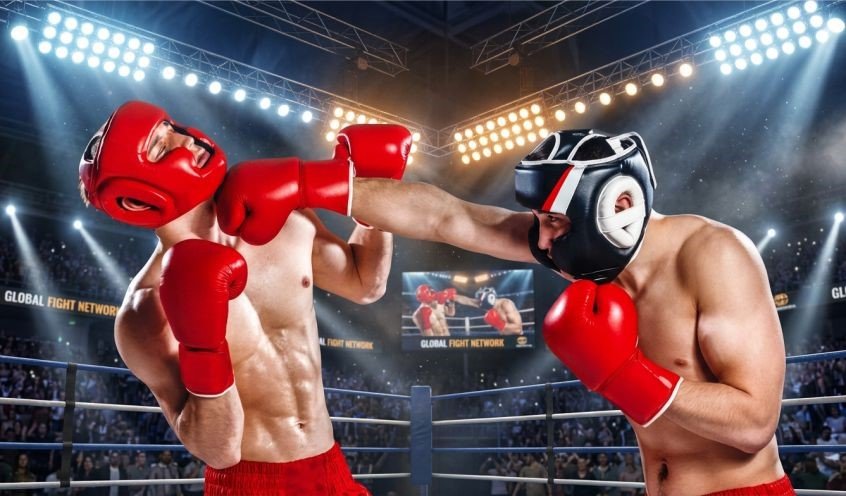
Every great sport produces highlights. Boxing produces myths. In 1974, an aging Muhammad Ali faced George Foreman, a heavyweight so feared that experts questioned whether Ali would survive the fight, let alone win it. Ali leaned against the ropes for round after round, absorbing Foreman’s power while the champion punched himself into exhaustion, then rose in the eighth round to knock him out. The strategy became known as the rope a dope, and the fight became a permanent reference point for what patience and belief can accomplish against raw force.
Boxing keeps producing that same shock. In 1990, James “Buster” Douglas, a long shot priced at forty two to one, entered the ring in Tokyo only three weeks after burying his mother and knocked out an undefeated Mike Tyson. In 2019, Andy Ruiz Jr, a late replacement opponent, dropped Anthony Joshua four times to win the heavyweight championship at Madison Square Garden. Tyson Fury built his own legend by returning from a public battle with depression to reclaim the same title, and by rising from a fight ending knockdown against Deontay Wilder to finish the round on his feet. Even a screenwriter would call some of these stories excessive. Boxing simply calls them Tuesday.
| A single punch in boxing can rewrite a life story in three seconds, and no sport sells that possibility more honestly than this one. |
Fans do not attend a fight hoping for a comfortable, predictable outcome. They attend because boxing, more than any sport, guarantees that anything remains possible until the final bell.
A GLOBAL LANGUAGE
Boxing speaks fluently in the language of national pride, and few fighters carry that weight the way Saul Alvarez does for Mexico. Twice a year, on Cinco de Mayo weekend and around Mexican Independence Day, Alvarez headlines a card that functions as much as a national celebration as a sporting event, complete with mariachi bands at his entrance and crowds that sing the Mexican national anthem loud enough to raise the hair on a stranger’s arms. Alvarez has described representing his country as motivation rather than pressure, and he has said that the support of millions of Mexicans pushes him to give everything once the bell rings. Mexico’s boxing tradition, often called Mexican Style, prizes forward pressure and a refusal to retreat, and it has produced champions from Julio Cesar Chavez to Erik Morales to Alvarez himself.
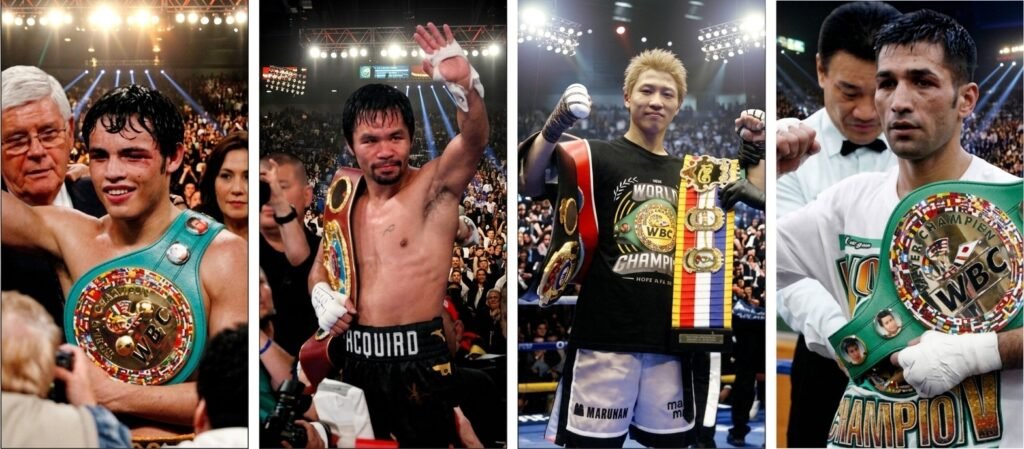
The Philippines found its own version of that magic in Manny Pacquiao, a fighter who rose from poverty to become the only boxer in history to win world titles across eight different weight divisions. Pacquiao’s story, of a barefoot boy from General Santos City who became a senator and a global icon, gave an entire nation a symbol of what discipline and hope could produce, and boxing fans across Asia still measure new stars against his legacy.
Japan has built its own boxing folk hero in Naoya Inoue, a fighter so dominant that Pacquiao himself named Inoue his favorite active boxer to watch, praising his speed and his refusal to stay in one corner. In May 2026, Inoue defended his undisputed super bantamweight titles in front of a sold out crowd near fifty five thousand at the Tokyo Dome, proof that a single gifted fighter can turn an entire country into a devoted boxing audience within a single generation. Muhammad Waseem from Pakistan (who features in this magazine’s May 2026 issue) has shown that a fighter’s fists can carry a nation’s hope in a way that a flag alone cannot. In 2016, he won the World Boxing Council (WBC) Silver Flyweight title in Seoul, becoming the first Pakistani boxer to claim a professional title of that stature and Pakistan’s only world title holder in the sport at the time.
By December 2021, Waseem reached the number one ranking in the World Boxing Association (WBA) flyweight division, the first Muslim and the first Pakistani boxer to hold that position. That same month, he won the WBC Silver title a second time
| Boxing does not need a shared language to move a crowd, because a national anthem, a hometown roar, and a fighter’s raised glove already say everything that needs to be said. |
Few sports translate a nation’s pride into ninety seconds of pure noise as effectively as a big fight night does.
THE BUSINESS OF SPECTACLE
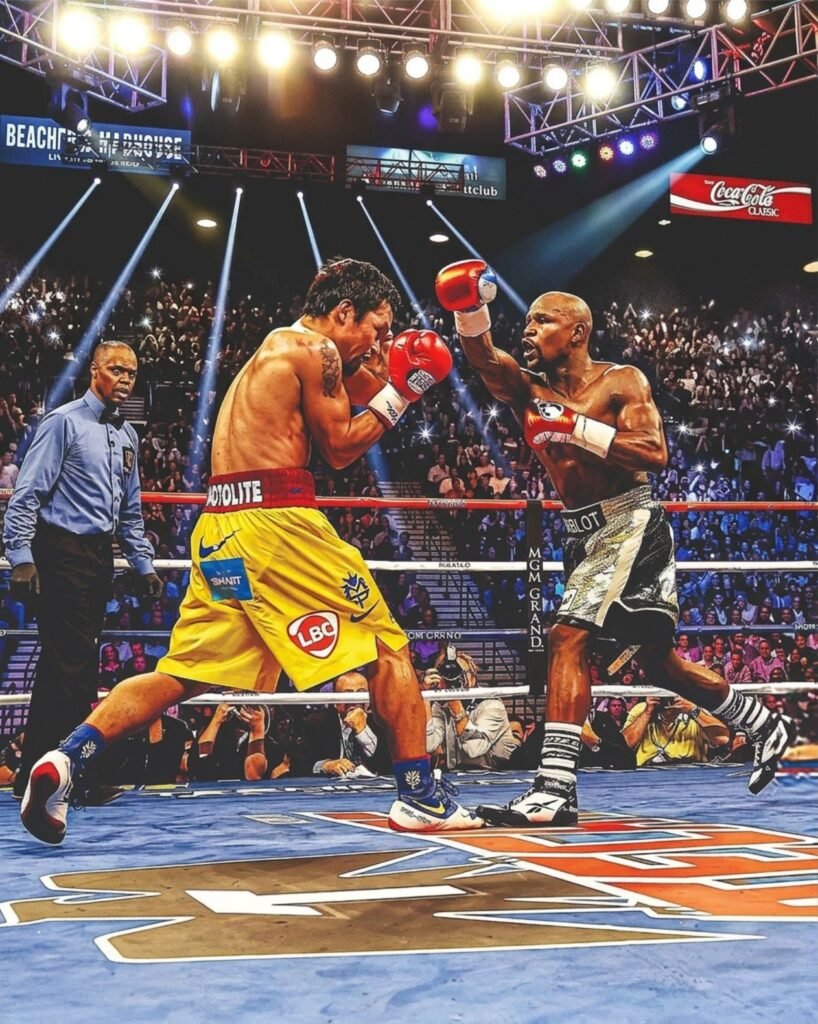
Boxing’s drama has always doubled as extraordinary business. When Floyd Mayweather and Manny Pacquiao finally met in the ring in 2015, the fight generated more than four million pay per view purchases in the United States alone and a live gate above seventy two million dollars, figures that made it, at the time, the richest single sporting event ever staged. Mayweather’s later fight against Conor McGregor and his string of blockbuster bouts against Pacquiao, Canelo Alvarez, and Oscar De La Hoya built a template that promoters have chased ever since: two names, one date, and a worldwide audience willing to pay for a single night.
That business has kept reinventing its own distribution. For decades, boxing’s broadcast picture was as fractured as its championship picture, split across premium cable networks, individual pay per view purchases, and promoters who guarded their fighters and their television contracts as private territory. A fan wanting to follow the sport closely often needed several subscriptions at once, on top of paying separately for the biggest cards.
The streaming service DAZN reshaped that picture piece by piece. DAZN began carrying Eddie Hearn’s Matchroom Boxing in 2021, folding many of its cards into a single subscription rather than a per fight purchase. Frank Warren’s Queensberry Promotions joined in April 2025, Oscar De La Hoya’s Golden Boy Promotions renewed its own agreement soon after, and Bob Arum’s Top Rank signed on in the spring of 2026. This month, Premier Boxing Champions completed the picture, bringing fighters such as David Benavidez, Errol Spence Jr, and Jaime Munguia onto the same platform. For the first time in a generation, nearly every major promotional company in the sport now runs its fights through a single broadcaster, and cross promotional fights that old rivalries once made impossible have become, at least on paper, simple matters of negotiation rather than years of standoff.
| A sport with no central league office still manages to produce some of the largest single day audiences in all of sports, because a great fight sells itself in a way that no marketing budget ever could. |
Distribution keeps consolidating and reinventing itself. The hunger to see two great fighters finally share a ring never does.
BOXING, BY THE NUMBERS
| 4.4 million | Pay per view buys for Mayweather vs Pacquiao, 2015, still a boxing record |
| $18 million | Purse split by Katie Taylor and Amanda Serrano for their 2025 trilogy fight, the richest payday in women’s boxing history |
| 124 and 124 | Equal Olympic quota places for men and women boxers at the Los Angeles 2028 Games, a first in the sport’s Olympic history |
| $132.8 million | Reported purse for Oleksandr Usyk’s July 2025 rematch against Daniel Dubois, among the largest single payouts in boxing history |
| 6 to 8 weeks | Typical length of a professional training camp before a single fight |
THE GRIT BEHIND THE GLAMOUR
None of that spectacle exists without an unglamorous foundation built months in advance. A professional training camp typically runs six to eight weeks, and it starts before sunrise. Fighters lace up for roadwork at five in the morning to build the aerobic base that carries them through a tenth or twelfth round, when their legs and their opponent’s punches have both grown heavy. Afternoons bring two to three hours of technical work: shadowboxing, mitt work, heavy bag rounds, and sparring sessions kept to a few days a week to limit accumulated damage. Nutrition, hydration, and sleep are managed as closely as the sparring itself, since a body forced to make weight punishes any lapse in discipline.
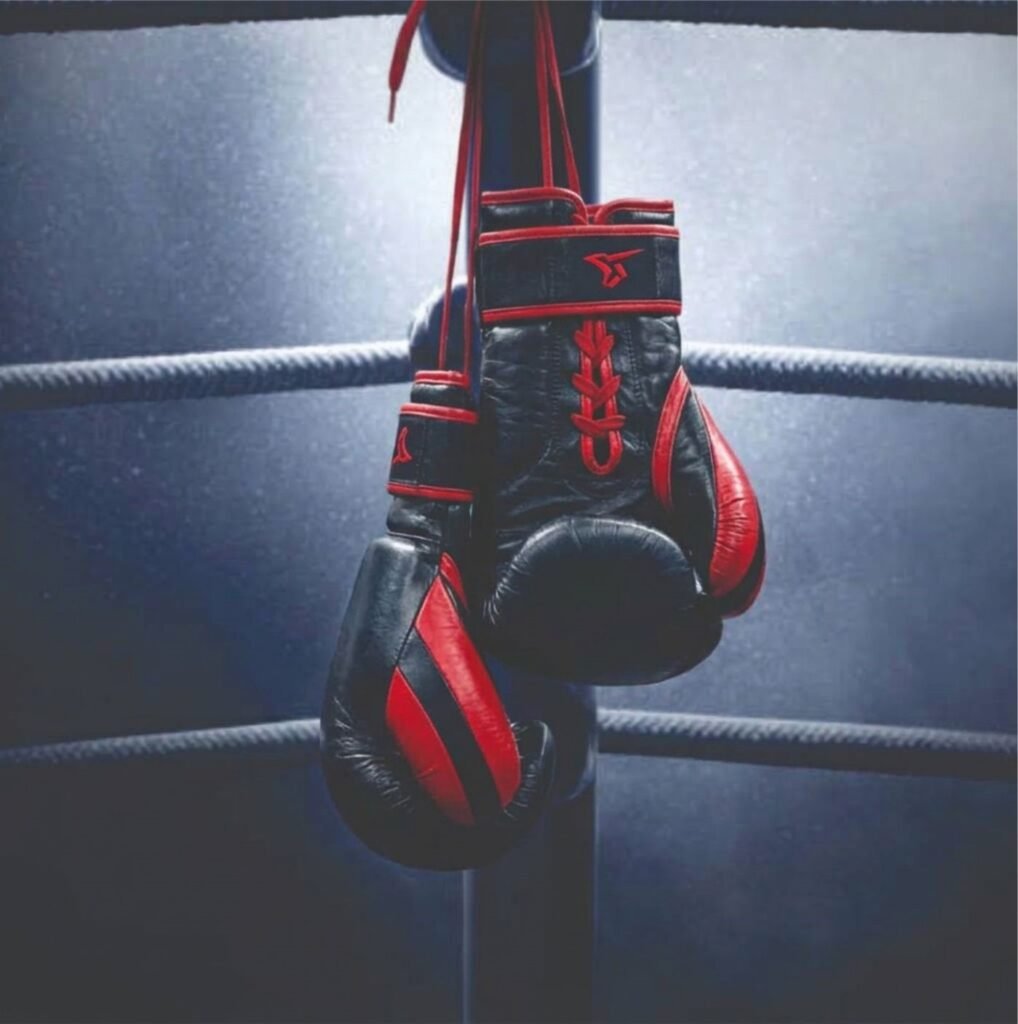
| This is the part of boxing that never appears on a highlight reel, yet it decides every fight before either boxer enters the ring. Muhammad Ali once said that the fight is won or lost far away from witnesses, long before the fighter dances under the lights. |
Boxing rewards no shortcut, and every knockout the world remembers was purchased months earlier by a fighter running alone in the dark. That invisible labor is the real foundation the magic stands on.
WHAT THE SPORT ASKS IN RETURN

None of this comes without a cost, and an honest magazine story about this sport owes its readers that fact plainly. Boxing asks fighters to absorb blows to the head for a living, and the sport has spent the last two decades building a more careful structure around that reality. Modern commissions require a ringside physician with the authority to stop a fight regardless of a corner’s objection, and a fighter who is knocked out or badly hurt now faces a mandatory medical suspension before a new license will be issued. Prefight medical screening, once a formality in many jurisdictions, increasingly includes brain imaging, cardiac testing, and detailed neurological review. None of this erases the risk that a fighter accepts every time gloves go on. It narrows that risk, and it gives fighters and their families a clearer picture of what they are agreeing to before the first bell rings.
That same seriousness has begun to shape how careers end, not only how they are fought. When Oleksandr Usyk stepped away from his heavyweight belts in June 2026, he did so unbeaten and on his own schedule, a version of an ending that boxing has not always been able to offer its champions. The sport still carries real danger inside the ropes, and no amount of medical protocol will change that fact. It has, at least, grown more honest about naming that danger and building around it, rather than treating the subject as too uncomfortable for a magazine that otherwise celebrates the sport without reservation. A cover story that only tells half of boxing’s story is not telling the whole truth about why the magic matters.
A NEW CHAPTER WRITING ITSELF
Two of the sport’s newest chapters prove the magic is not confined to its past. On July 11, 2025, Katie Taylor and Amanda Serrano closed their trilogy at Madison Square Garden in the first all women’s card in the venue’s history, and Taylor completed a career sweep of the rivalry with a majority decision win, retaining her undisputed super lightweight titles. The bout, streamed globally on Netflix, drew a worldwide audience near six million viewers, and in the United States alone it averaged 4.2 million viewers across the main event, the most watched professional women’s sporting event of 2025 in the country. The two fighters split a purse of eighteen million dollars, the largest single payday in the history of women’s boxing, proof that a card built entirely around women could fill a legendary arena and hold a global audience.
Boxing also fought its way back from the brink of losing its oldest stage. After years of governance turmoil inside its previous Olympic federation, the sport faced real doubt about its place at the 2028 Los Angeles Games. A new governing body, World Boxing, built support across more than eighty national federations, and on March 20, 2025, the International Olympic Committee voted unanimously to include boxing in the Los Angeles program. The following month, the IOC confirmed a qualification system built around seven weight classes for men and seven for women, with an equal share of two hundred forty eight quota places for each gender, the first time in Olympic boxing history that the men’s and women’s competitions will stand on equal footing.
| A sport that seemed at risk of losing its own Olympic home rebuilt that home from nothing, in the same years that two women filled New York’s most famous arena on their own merit. |
Both stories say the same thing in different words: boxing’s magic renews itself in every generation that refuses to let the sport go quiet.
WHY THE MAGIC ENDURES
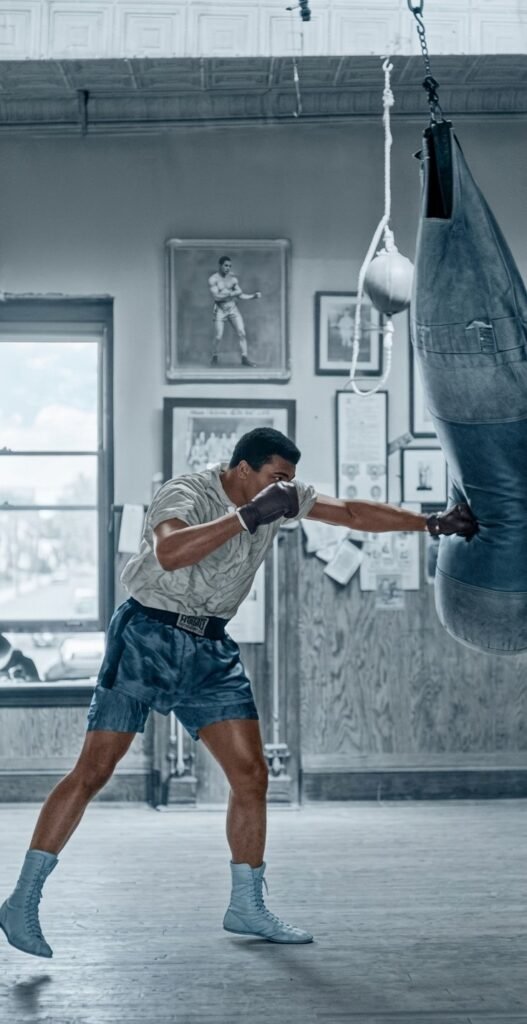
Boxing has no scoreboard clock to hide behind and no teammate to share the blame with. It asks two people to walk into a lit square and find out, in front of everyone, what they are made of. That is a brutal thing to ask of anyone, and it is exactly why the sport still holds so many people in its grip. A nation sings its anthem before a hometown fighter walks out, and what that fighter does next inside the ring belongs to no one else. Spectators picture themselves at the center of that stage more often than they might admit, and the energy of a big fight night is contagious in a way that few other spectacles can match.
Every thread in this story braids back to that same point. The mariachi bands outside Alvarez’s dressing room, the roadwork Ali once ran before sunrise, the ringside physician now watching every step a champion takes down from the ring, the seven weight classes now waiting for men and seven more waiting for women at the Los Angeles Games: all of it exists because two people agreed to walk into a lit square and show everyone, without a scoreboard to hide behind, what they are made of. The business changes broadcasters. The rules keep getting safer. The names change with every generation. The trade at the center of the sport does not.
| None of it happens because boxing is easy to organize or safe to watch. It happens because the sport keeps handing ordinary people a stage large enough to become extraordinary, and that trade, discipline for glory, sacrifice for a single unforgettable night, is the oldest magic sport has ever offered. |
Leave a Reply