For decades, sport has carried messages that the law would not allow on their own. Around the world, regulators are now closing one door after another. For Pakistan, where faith, the Constitution, and the law already speak clearly on intoxicants and gambling, the question is not whether surrogate marketing works. It is whether our game should carry it at all.
A Soda Nobody Drinks
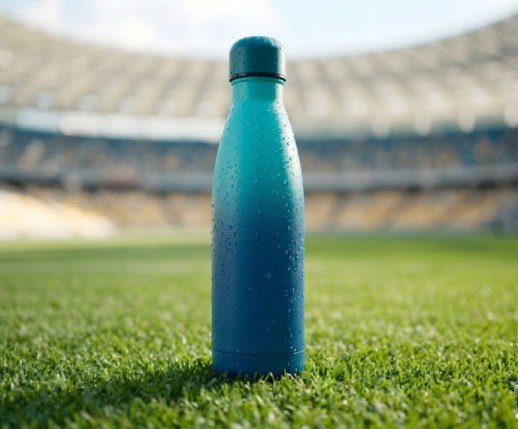
Anyone who has watched cricket on South Asian television over the past two decades knows the advertisement. A famous liquor label fills the screen, then gives way to a glass of club soda, a bottle of mineral water, or a box of music CDs. The product is lawful. The name belongs to a whisky. Viewers read the message at once, and so, of course, did the people who made it.
This is surrogate marketing in its plainest form: the promotion of a restricted product, carried out through a second product that shares its name, colors, or look. The second product, the surrogate, often exists in some small way. It may sit on a few shelves and earn modest revenue. Its real task is to keep the parent brand in front of an audience that lawmakers have tried to shield from it.
“The product is lawful. The name belongs to a whisky.”
Sport has become the favorite home of the practice, and for good reason. No other medium offers live audiences in the hundreds of millions, cameras that return to the same boundary boards every few seconds, and heroes whom young fans copy in dress, speech, and taste. In the past two years, however, that home has grown less comfortable. India has passed a law that bans the promotion of real money games, England has cleared betting logos from the front of Premier League shirts, and in Pakistan, courts, the central bank, and law enforcement agencies have begun asking hard questions about the names on the boundary. The quiet workaround has become a boardroom risk.
A Question of Values, Not Only of Law

For a Pakistani audience, surrogate marketing is not a narrow regulatory puzzle. Two of the three product families it most often serves, intoxicants and gambling, are forbidden in Islam, and the Quran names them together in Surah Al-Ma’idah among the things believers are told to avoid. The Constitution of Pakistan carries the same conviction into public policy. Article 37 directs the state to prevent gambling, and to prevent the consumption of alcohol other than for medicinal purposes and, for non-Muslims, religious ones. Tobacco is not prohibited in the same way, but it is widely discouraged on grounds of harm, and Pakistani law places tight limits on its promotion.
The surrogate therefore does something more serious here than bend an advertising rule. It carries a message that our faith, our Constitution, and our laws have agreed to keep out of public life, and it carries that message through the pastime that unites the country most completely. Roughly two thirds of Pakistanis are under the age of thirty, so the audience most exposed is also the one whose habits are still forming.
There is an economic cost as well. The State Bank of Pakistan has warned that money staked on foreign betting platforms leaves the country as an outflow of scarce foreign exchange. Surrogate betting harms households and the national balance of payments at the same time.
None of this calls for a sermon from the press box. It calls for consistency. A board that asks its players to sign anti-corruption codes, and bans them for contact with bookmakers, cannot comfortably display the names of bookmakers’ proxies on its boundary boards.
“The standard the country sets for its players should apply equally to its sponsors.”
The standard the country sets for its players should apply equally to its sponsors. That principle guides the rest of this article.
Three Families of Stand-In
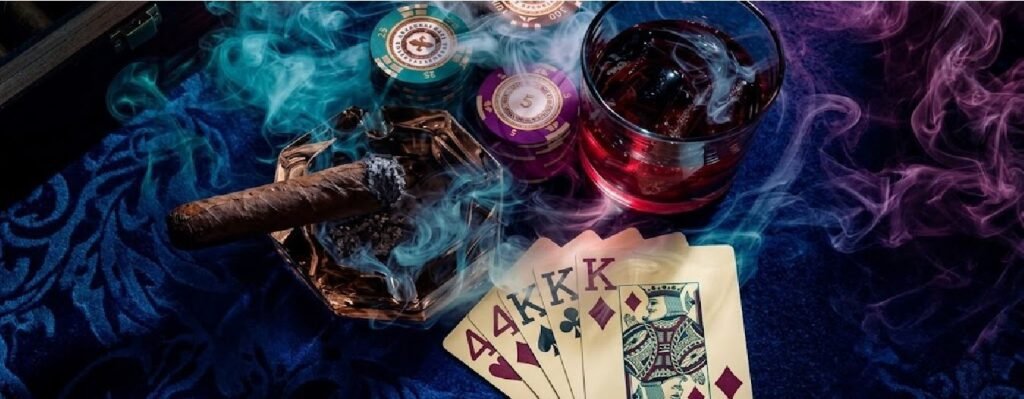
Surrogate marketing in sport gathers around three product families, and each has its own set of disguises.
Alcohol
Liquor and beer brands lean on extensions that share a label: soda, packaged water, glassware, playing cards, music collections, and, more recently, alcohol-free versions of the same beer. The extension is usually lawful to advertise. The parent is either banned from advertising outright or limited to certain hours, places, and media.
Tobacco and Nicotine
Cigarette makers have been shut out of most sponsorship worldwide since the World Health Organization Framework Convention on Tobacco Control, whose Article 13 calls on its parties to ban tobacco advertising, promotion, and sponsorship. The industry has answered with corporate “missions”, research programs, and newer nicotine products. In South Asia the pattern takes another form: mouth fresheners and cardamom sold under names that consumers link with pan masala and chewing tobacco.
Gambling
Betting firms, especially offshore operators that serve markets where betting is illegal, rely on near copies of their own names attached to “news” portals, “sports lines”, fantasy content, or training academies. Change one letter, add the word “News”, and a brand that cannot legally sponsor a team suddenly can, or at least appears to.
Where the Line Sits
The hard part, and the part most commentary skips, is telling a surrogate from a genuine brand extension. Companies do launch real soda lines and real alcohol-free drinks. Regulators therefore tend to ask practical questions. Does the extension sell in meaningful volumes through ordinary retail? Is the advertising spend in proportion to those sales? Does the creative work sell the extension, or does it borrow the look, music, and slogans of the restricted product? India’s Advertising Standards Council has long applied tests of this kind, including minimum thresholds for sales and distribution, and the country’s Central Consumer Protection Authority wrote an express ban on surrogate advertising into its 2022 guidelines on misleading advertisements. A brand that cannot answer these questions with evidence is not extending its range. It is hiding.
Why Sport Carries the Message So Well
Three features make sport an unusually good carrier. The first is attention. Live sport remains one of the few broadcasts that audiences still watch in real time, and perimeter boards, stumps, sight screens, and shirt fronts appear in almost every frame, then again in highlights and social clips. A thirty-second advertisement can be skipped; a logo behind the batter cannot.
The second is emotion. Sponsorship works by borrowing feeling: the pride of a winning side, the thrill of a last-over finish. That feeling attaches to whatever name sits nearby, and the surrogate is designed so that the name which gains is the restricted one.
The third is trust in athletes. India’s Health Ministry made this point directly in a March 2025 letter to the Indian Premier League, describing cricketers as role models for young people and asking that players and commentators be discouraged from endorsing products tied to alcohol or tobacco, whether directly or indirectly. The premise holds with even greater force in Pakistan, where a national cricketer is often the most recognized face in a family’s home. An athlete’s face lends a credibility that no copywriter can buy.
Formula One and the Art of the Missing Logo
No sport shows the growth of surrogate marketing more clearly than Formula One. In 1995, nine of the top ten drivers in the world championship raced with cigarette logos on their cars and overalls. European advertising law and the sport’s own governing body pushed tobacco branding off the grid by the end of the 2006 season, yet the money did not leave overnight.

Ferrari, backed by Philip Morris for decades, raced for several seasons with a barcode design that many observers read as an echo of the Marlboro pack, and the team removed it in 2010 after accusations of subliminal advertising. Then, at the 2018 Japanese Grand Prix, a new name appeared on the car: Mission Winnow, which Philip Morris described as a platform for its work on alternatives to cigarettes. Critics saw a shape that recalled the world’s best-known cigarette brand. Australian health authorities raised concerns before the 2019 season opener in Melbourne, and Ferrari raced there without the branding. From the 2021 French Grand Prix, the logo disappeared from the car at races in the European Union, and in 2023 Ferrari formally dropped the name.
British American Tobacco followed a similar path with McLaren under the banner “A Better Tomorrow” from 2019. The team removed that branding for the Australian race and later promoted the company’s e-cigarette and nicotine pouch brands where local law allowed. Researchers writing in the journal Nicotine & Tobacco Research estimated that Ferrari and McLaren together received about 95 million dollars from tobacco companies in the 2019 season alone, in a sport where tobacco sponsorship was supposed to be finished.
“Surrogate marketing does not need a product name at all. A color scheme, a shape, or even a conspicuous blank space can carry memory.”
The lesson from the paddock is subtle. Surrogate marketing does not need a product name at all. A color scheme, a shape, or even a conspicuous blank space can carry memory, and memory is exactly what the advertiser is buying.
Cricket’s Crowded Boundary
India: Laws on Paper, Logos on Screen
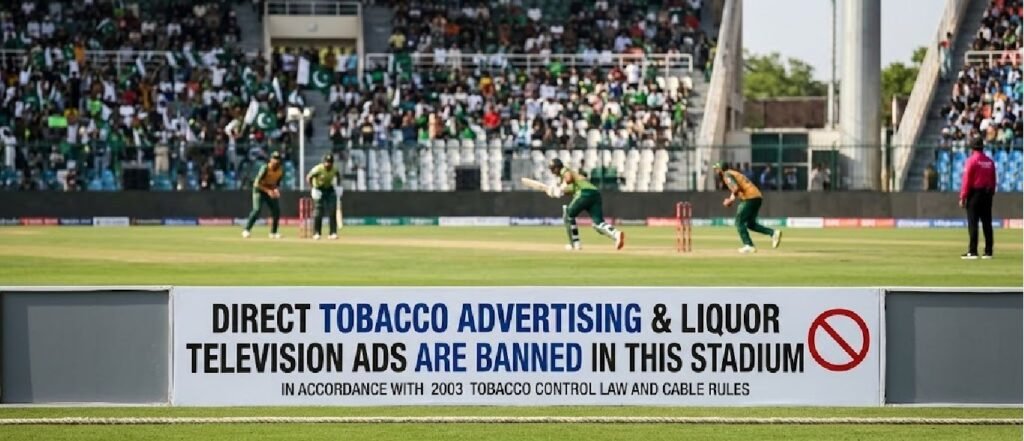
India bans direct tobacco advertising under its 2003 tobacco control law and bars liquor advertising on television through its cable broadcasting rules. For years the result was a thriving industry of stand-ins. One of the Indian Premier League’s founding franchises, now Royal Challengers Bengaluru, took its name from Royal Challenge, a whisky brand owned by the same group that owned the team at its launch. Critics have long cited that shared name as the most visible example of the pattern in the league.
Film stars and cricketers have also fronted campaigns for mouth fresheners and cardamom carrying names that consumers link with pan masala and chewing tobacco. Public opinion has turned against such work. In 2022, a known actor apologized to fans and stepped back from a pan masala linked campaign after a sharp backlash, a moment that showed how quickly a surrogate endorsement can turn from income into liability.
Government pressure has grown since. In August 2024, the Health Ministry wrote to the Board of Control for Cricket in India (BCCI), saying it was troubling to see well-known cricketers in surrogate advertisements and suggesting that players sign anti-tobacco declarations.
The Law That Emptied a Jersey
The sharpest change came from another direction. In August 2025, India’s Parliament passed the Promotion and Regulation of Online Gaming Act, which prohibits online money games and bans advertising that directly or indirectly promotes them. Dream11, the fantasy sports platform on the front of India’s shirts since 2023, withdrew, and the Indian team played the Asia Cup that September with no sponsor on its chest. When the BCCI invited bids for the vacant slot, it barred real money gaming, cryptocurrency, tobacco, and alcohol companies from the process.
Apollo Tyres won the rights in a deal running to March 2028, reportedly worth INR 579 crore against INR 358 crore for the Dream11 agreement. The two contracts cover different fixture lists, so the comparison is indicative rather than exact. Even so, the headline carries a message that rights holders in Pakistan and elsewhere should hear: a cleaner sponsor category did not mean a poorer one.
“A cleaner sponsor category did not mean a poorer one.”
The Betting Pivot
If alcohol and tobacco defined the first era of surrogate marketing in sport, betting defines the present one. Offshore operators, often licensed in small jurisdictions and serving customers in countries where betting is illegal, have found that a sports shirt is among the most efficient billboards in the world.
News Sites That Report Very Little News
Pakistan Super League offers a clear and uncomfortable case. During the 2022 edition, boundary branding for “Dafa News” and “Wolf777 News” drew attention because the names closely tracked those of betting sites. In 2023, Karachi Kings signed “1XBAT” as a sponsor and Lahore Qalandars partnered with “Melbat”; each name sat a single letter away from a well-known betting brand. That March, the State Bank of Pakistan wrote to the Pakistan Cricket Board (PCB), describing 1XBAT as apparently a surrogate for a betting website and warning of foreign exchange outflows, while also questioning a cryptocurrency sponsor of the league. The former captain Rashid Latif asked publicly why players face bans for corruption while franchises accept betting-linked money.
The matter reached the Peshawar High Court in 2024 through a citizen’s petition. The PCB told the court that it had informed franchises that no surrogate entities of gambling companies would be allowed to sponsor PSL teams or the national side, and that it had never itself signed a contract with such an entity. The court disposed of the petition in September 2024. The episode shows both the reach and the limit of self-regulation: a board can forbid an obvious name, but the next surrogate simply chooses another.
England Moves the Logo, Not the Money
In April 2023, Premier League clubs agreed to remove gambling sponsors from the front of matchday shirts. The 2026-27 season, now under way, is the first in which no club carries a betting brand on its chest. Finance companies and airlines have filled many of the gaps, while reports before the season put the lost income at around 80 million pounds a year. The ban is narrower than it looks, since gambling brands remain free to appear on sleeves, training kits, and stadium boards.
The deeper surrogate question in English football concerns white label deals, and it touches Pakistani viewers directly. Under this model, an offshore brand appears on a shirt through a partnership with a British licensed operator, even though most of the brand’s customers sit in Asian markets, Pakistan among them, where betting is illegal. The shirt, in effect, advertises to viewers who watch the broadcast from abroad. Britain’s Gambling Commission warned Everton and two other clubs about unlicensed sponsors in early 2025, the white label site for Stake in Great Britain closed that March, and in February 2026 the British government opened a consultation on banning sponsorship by unlicensed gambling operators altogether.
“When a brand pays to appear on a shirt in a country where most of its customers cannot use it, the audience it wants is watching from somewhere else.”
Toward a Cleaner Scoreboard
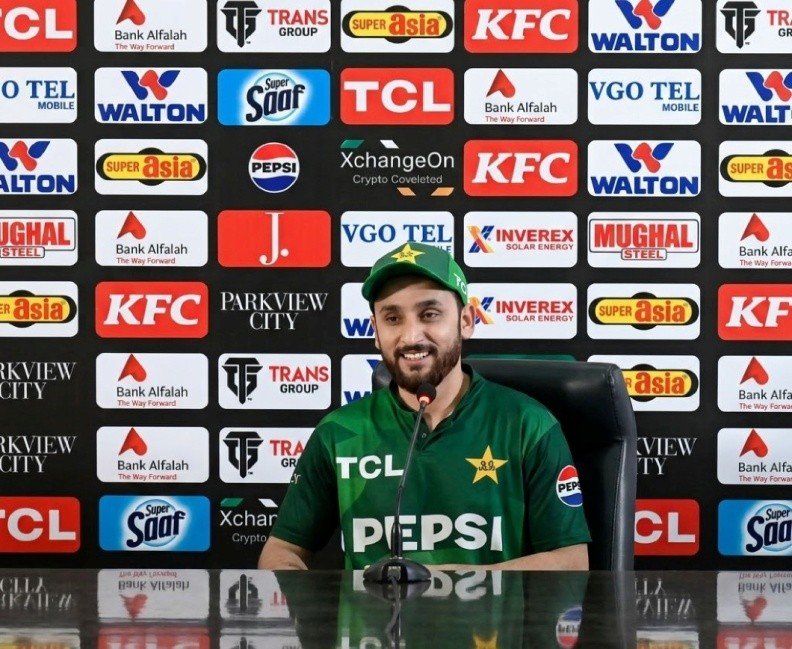
For the PCB, the PSL franchises, and Pakistan’s domestic sports bodies, the path forward begins with clarity. A published sponsor policy that names prohibited categories in line with the Constitution and the law, and that treats surrogates of those categories as the categories themselves, would remove guesswork for commercial teams and shield them from pressure by bidders. The list of excluded categories in the BCCI’s 2025 jersey tender offers a working model, and the PCB’s own assurance to the Peshawar High Court offers a starting commitment.
Checks must examine conduct as well as paperwork. The PCB has said it reviews incorporation records and shareholding to confirm that sponsors have no ownership link to betting concerns. That is a sound start, yet surrogate structures are built precisely to pass such checks. Rights holders should also test the sponsor’s product, its web traffic, its links, and its app listings, and they should write regulatory change and reputation clauses into every deal.
Broadcasters carry a share of the duty. A Pakistani channel that airs an overseas event also airs the boards around its boundary, and the digital streams that follow reach young viewers directly. Channels can ask international rights holders about sponsor inventory before a series, favor clean feeds where they exist, and refuse surrogate advertising in their own commercial breaks.
The commercial case is stronger than many executives assume. Where boards and leagues abroad have closed their doors to betting and other restricted categories, the vacant inventory has found new partners, in at least one case at a higher reported value than the deal it replaced. Replacement is not painless, especially for smaller franchises and domestic events, but it is possible. The aim is not to favor one industry or company over another. It is to ensure that every sponsor, whatever its business, is exactly what it appears to be.
Pakistan’s sport can welcome any sponsor that is proud to be seen for what it is. It owes its fans the courage to refuse those that are not.
Leave a Reply