
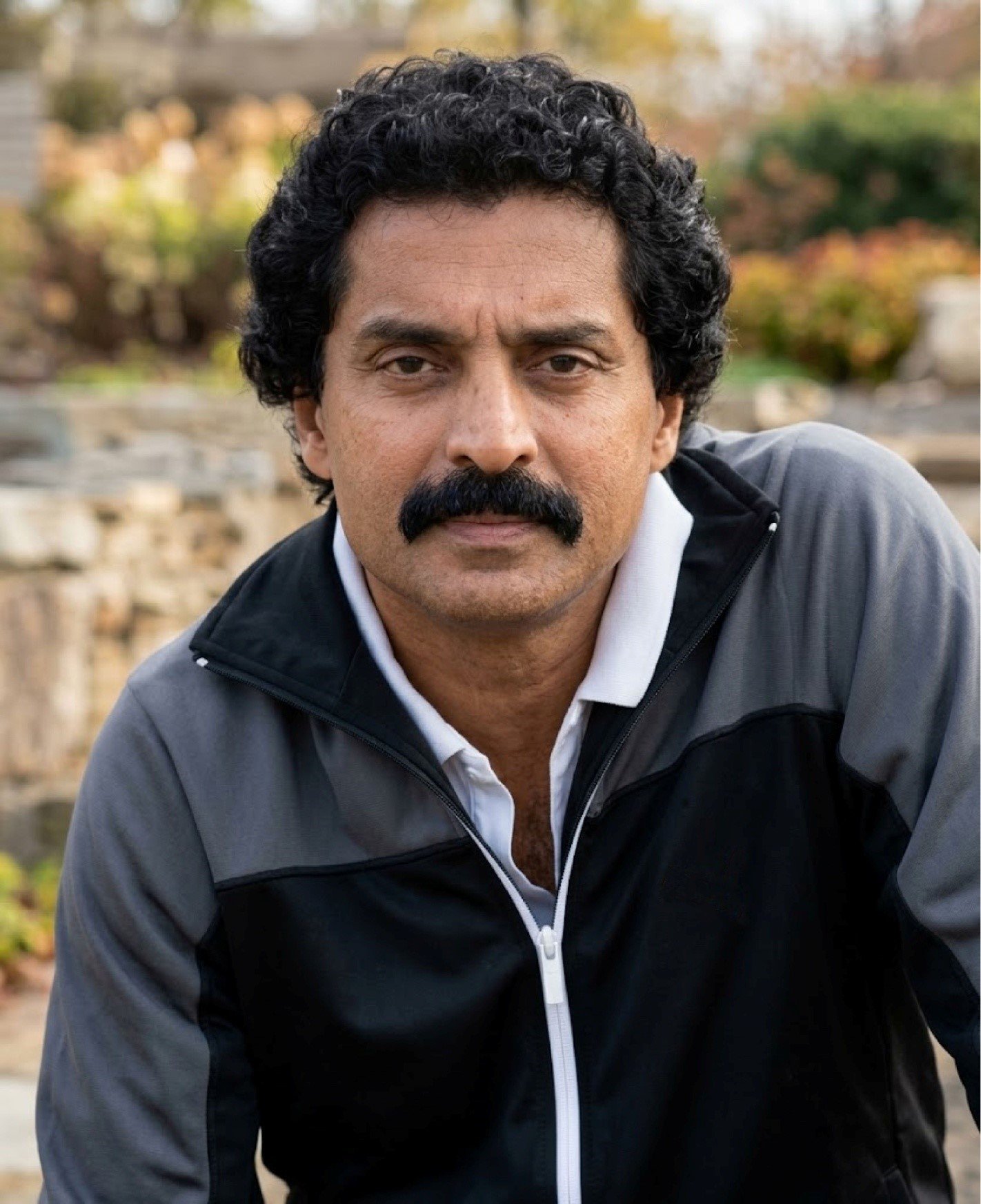
The Ace Centre Forward at the point of Pakistan’s golden attack
Between 1982 and 1984, Pakistan held the hockey World Cup, the Asian Games title, and Olympic gold at the same time. At the point of that attack stood a forward from Karachi whose balance, timing, and calm in front of goal placed him among the finest players the game has known.
A Karachi Beginning
Hassan Sardar was born in Karachi on 22 October 1957. He learned his hockey at Habib Public School, a school that had already sent players into the national side, and he earned his first Pakistan cap in 1980. He arrived at a fitting moment. Pakistan had won the World Cup in Buenos Aires in 1978, and the national game carried both prestige and expectation. The young forward did not have to build a winning culture; he had to prove that he belonged in one, and he did so quickly.
Bombay 1982: A World Cup Debut to Remember
His first World Cup, played in Bombay (now Mumbai) at the turn of 1982, made his name. Pakistan fielded a forward line that many still judge the finest in its history, with Samiullah Khan, Kalimullah Khan, and Hanif Khan around him. Sardar scored 11 goals, was named Man of the Tournament, and helped Pakistan win its third world title. For a player in his first major event, it was a rare arrival.
New Delhi: Composure Before a Rival Crowd
Later that year, at the Asian Games in New Delhi, Pakistan met the hosts in the final. Under Samiullah’s captaincy, Pakistan won 7-1, and Sardar scored a hat-trick. A final against the oldest rival, on its own ground, before its own crowd, is the hardest test of nerve in subcontinental hockey. The margin of that day is still recalled on both sides of the border, and it showed that Sardar’s gifts did not shrink under pressure.
Los Angeles 1984: The Hardest Gold
The Olympic gold of 1984 is often remembered as a march of triumph. It was not. Pakistan reached the semi-finals only on goal average, ahead of the Netherlands. From there, Sardar decided the tournament. He scored the only goal in the 1-0 semi-final win over Australia, then opened the scoring in the 2-1 final victory over West Germany, with Kalimullah adding the second. He finished as the top scorer of the Games with 10 goals. The title was Pakistan’s third Olympic hockey gold, after Rome in 1960 and Mexico City in 1968, and it completed a rare treble of world, Asian, and Olympic crowns held at once. It remains Pakistan’s most recent Olympic title in hockey.
The Craft Behind the Goals
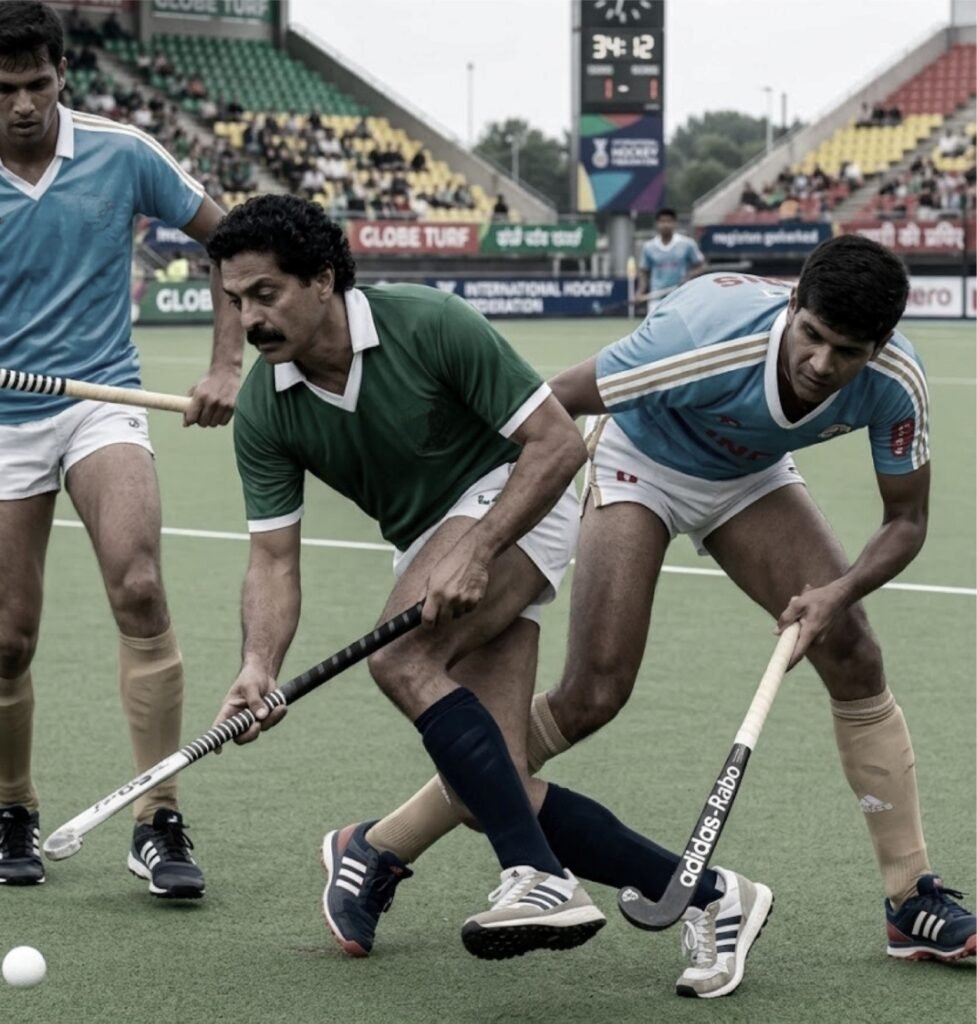
Those who played with and against him point to two weapons: close dribbling and the body dodge, a feint of the shoulders and hips that sent defenders the wrong way before the ball moved. Just as telling was his sense of position. He seemed to reach the right spot a moment before the ball did, which made his finishing look simple. The lesson for young forwards is that economy, not flourish, wins matches. Sardar also depended on the men around him, and he never pretended otherwise; great centre forwards are made by great service, and he had some of the best in the world.
Captaincy and Later Years on the Field
Sardar later captained Pakistan, and he stayed at the top of his form for some years after Los Angeles. At the 1987 Sultan Azlan Shah Cup in Ipoh, he was voted player of the tournament, though Pakistan lost the final to West Germany in extra time. His international career lasted a little over six years, short by today’s standards, yet it spanned the most decorated stretch in Pakistan hockey’s history.
Honours
The Government of Pakistan awarded him the Pride of Performance in 1984 and the Sitara-i-Imtiaz in 2014. Abroad, The Telegraph of London placed him among the ten greatest field hockey players of all time, a rare distinction for a player from any Asian nation.
Why He Still Matters
For a generation of Pakistanis, Hassan Sardar is the image of a time when the green shirt set the standard for the world. For today’s young players, his story holds practical lessons. He came through school sport, which Pakistan must revive if it hopes to find the next great forward. He mastered simple skills until they became weapons. He played for the team, and he performed best when the stakes were highest. Hockey has changed since 1984, with new surfaces, new rules, and new science, but those qualities have not aged. When Pakistan hockey rises again, it will need players who carry them, and Hassan Sardar’s career shows what they look like at their finest.
Leave a Reply