
How Pakistan’s Athletics Federation and Its Olympic Body Are Failing the Athletes Between Them
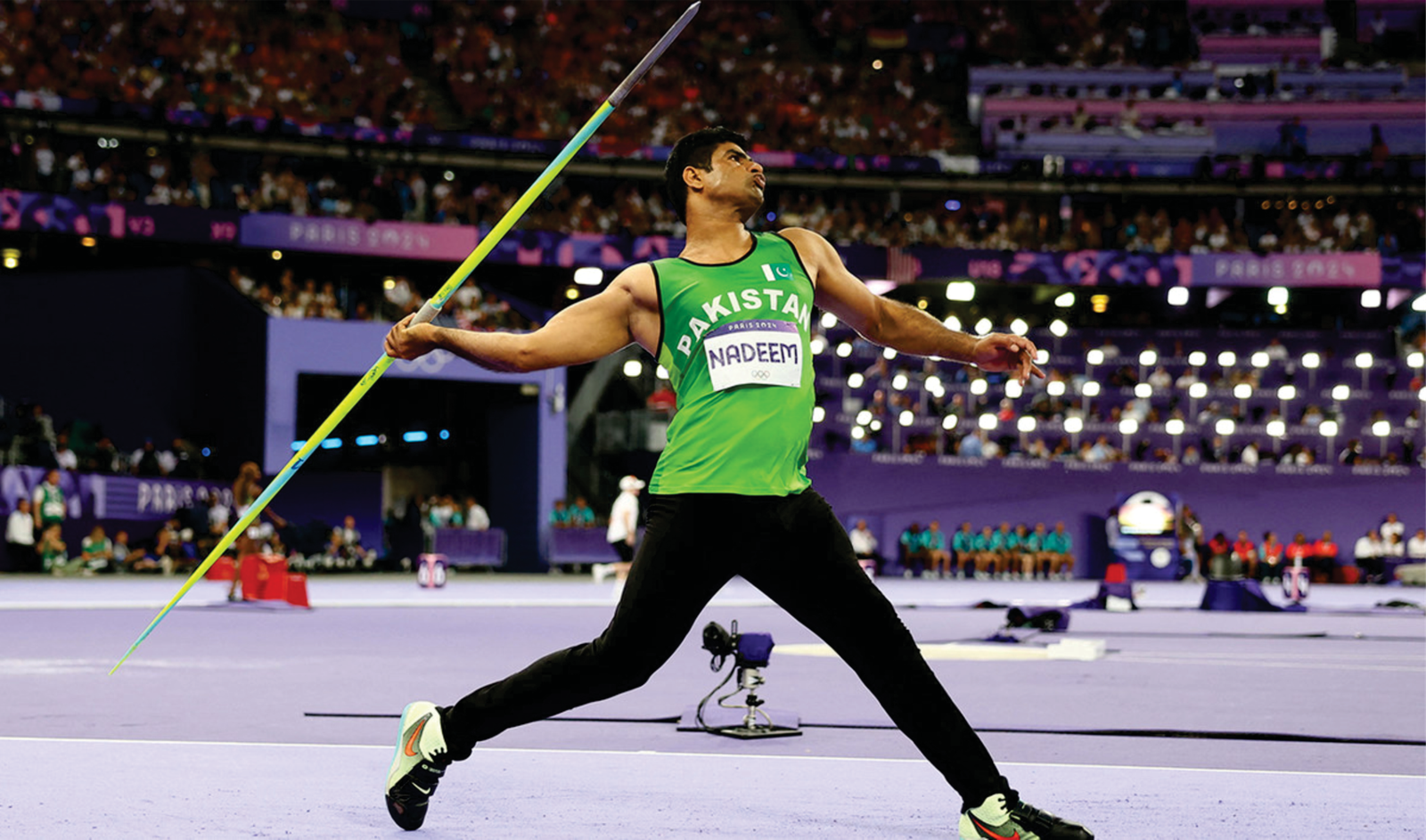
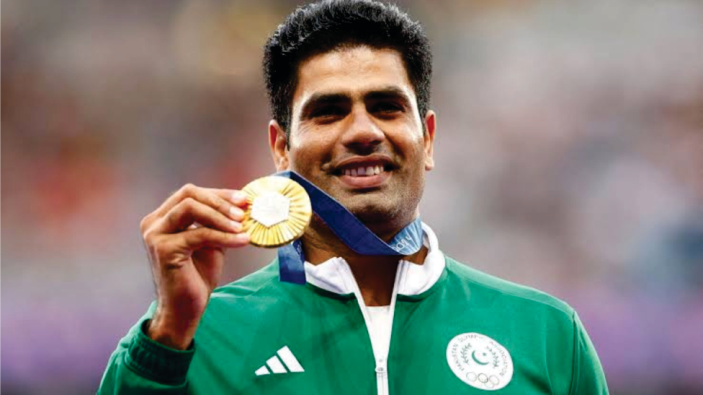
In August 2024, Arshad Nadeem stood on the infield in Paris and threw a javelin 92.97 metres, a distance that broke an Olympic record and gave Pakistan its first individual gold medal in the history of the Games. The country celebrated for weeks. Editorials called it proof that Pakistani athletes could still compete with the best in the world. What most of those editorials did not say, because it was not yet public, was that the coach who built that throw had spent much of the previous year funding Nadeem’s training out of his own pocket, because the federation that governs his sport had, in his words, disassociated itself from its own champion.
That detail, which surfaced more than a year later in a dispute over the coach’s ban, tells the real story of Pakistani athletics better than any medal count. Nadeem’s gold was not a sign that the system works. It was proof that a single athlete of rare talent can still win despite a system that has spent the better part of a decade fighting itself instead of building its athletes.
A Split That Never Healed
The current dysfunction has a clear starting point. In December 2020, the Pakistan Olympic Association (POA) suspended the Athletics Federation of Pakistan (AFP) membership after three athletes tested positive for banned substances at the 2019 South Asian Games in Nepal. The POA said the AFP had failed to build the antidoping safeguards required of a national federation and had refused to co-operate with the inquiry into the failed tests. The POA laid out conditions for reinstatement: a whistle-blower program, regular anti-doping education, co-operation with future probes, and the return of medals and prize money from the banned athletes.
The AFP did not meet those conditions. Instead, within weeks, AFP announced that the federation was cutting its ties with the POA altogether, calling it an organization that ran on mis-representation. The result was a split that has never been properly closed. Pakistan ended up with a national athletics federation that continued to run domestic competitions, select national teams, and receive government funding, while formally standing outside the Olympic body that is supposed to be the final word on which federations count as legitimate insofar as Olympic and connected meets are concerned. Five years on, that arrangement has curdled into something worse than an awkward truce. It has become a template. When a national governing body can simply walk away from its Olympic committee and keep functioning regardless, the incentive to resolve disputes through proper process disappears, and every subsequent argument gets settled the same way: by whichever side holds the office keys and the bank account.
Money That Cannot Be Accounted For
Governance disputes are one problem. What the money reveals is another. In May 2026, the Pakistan Sports Board (PSB) wrote to four national federations, including the AFP, over major gaps in how government grants had been spent between the 2022-23 and 2024-25 fiscal years. Of the Pak Rupees 107.5 Million released to the AFP in that period, Pak Rupees 61 Million remained unreconciled: some of it unadjusted or ruled inadmissible outright, some spent on activities that other agencies had already funded, and a further sum from the most recent year unsettled because the federation had not submitted the required records. The board said any future grant would first be set against these unpaid liabilities, meaning the federation now owes an accounting debt before it sees another rupee of public money. Athletes do not experience federation politics as an abstract governance argument. They experience it as a plane ticket that never gets booked and a training camp that gets cancelled at the eleventh hour.
The Coach, the Champion, and the Fallout
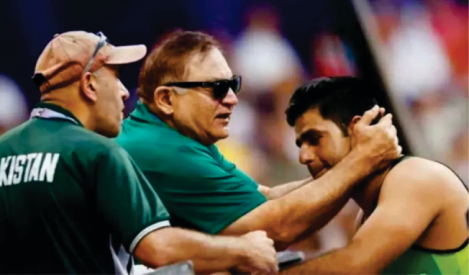
The clearest illustration of the cost came in October 2025, when the AFP handed a lifetime ban to Salman Iqbal, the coach who had guided Nadeem for years and who also served as president of the Punjab Athletics Association. The federation said Iqbal had violated its constitution by holding Punjab body elections outside its rules. Iqbal’s response, submitted to the Pakistan Sports Board (PSB), was more damaging to the AFP than anything the board had asked him to explain. He said the federation had, for roughly a year, effectively cut Nadeem loose, and that he had borrowed money from a friend to send the country’s biggest athlete to South Africa for training and to help him recover from a calf injury, because no federation support was coming.
The Pakistan Sports Board (PSB) reinstated Iqbal a month later. The adjudicator’s written decision was blunt: the AFP’s actions had disrupted high performance preparation, created uncertainty for a leading Olympic athlete, and put Pakistan’s medal chances at risk. Nadeem himself submitted a statement backing his coach. The case folded directly into a separate argument over the Punjab Athletics Association’s own leadership, which the AFP had tried to declare void. That same Punjab dispute resurfaced again in 2026, when the AFP refused to recognize Salman Iqbal Butt, the man the Pakistan Sports Board (PSB) had backed as president of the provincial body, and announced it would run its own parallel trials to pick the Punjab squad for the National Athletics Championship in Karachi. Two governing structures, each claiming legitimate authority over the same province, each preparing to select a different team for the same event. An athlete training for that championship had no way of knowing which trial actually decided their place on the national side.
What Reform Would Actually Require

Policy documents and committees are not the same as results, and Pakistan’s sporting bodies have a long record of announcing reform without following through. But the shape of what is needed is not complicated. It requires the AFP and the POA to resolve, once and for all, whether the federation is a recognized member of the Olympic movement or is not, rather than leaving that question open for five years and counting. It requires federation elections that follow the federation’s own constitution, so that a Punjab presidency or a national leadership post cannot be filled by two rival claimants at once. It requires grant money to be tracked from disbursement to receipt, not just announced. None of this demands new money so much as it demands that the people running the sport stop treating it as property to be fought over.
A Pattern, Not an Exception
None of this is unique to athletics. Pakistan’s hockey team, once an Olympic power, has failed to qualify for the Games for years and still owes players unpaid dues. Football has cycled through suspensions and reinstatements. Squash, boxing, and wrestling face similar strains. A February 2026 assessment in The Express Tribune put it plainly: without real reform, transparent governance, and steady investment, the country’s sporting future will keep declining, and Nadeem’s gold should be read as the product of one man’s persistence rather than proof that any system supported him.
That framing matters because it cuts against the instinct to treat a single gold medal as evidence that things are fine. They are not. The AFP and the POA have spent years contesting who has the right to run the sport, while the Pakistan Sports Board (PSB) has tried, with mixed success, to referee a fight it did not start and cannot fully end, since it controls the money but not the federation’s internal elections or its relationship with the Olympic body. Meanwhile a parallel structure at the provincial level, in Punjab, replicates the same fight one tier down, so that even a domestic trial can turn into a jurisdictional dispute.
The Cost Nobody Announces
The damage done by this fight rarely shows up in a headline. It shows up in a javelin thrower who has to ask a friend for a loan to keep training. It shows up in a young sprinter in Lahore who trains for a provincial trial without knowing which of two rival committees will actually pick the team. Pakistan has proven, through Nadeem, that it can still produce a world class athlete. What it has not proven, for six years and counting, is that it can build an institution capable of supporting the next one before the moment of triumph, rather than scrambling to take credit after it.
Until the Athletics Federation of Pakistan and the Pakistan Olympic Association settle their standing with each other in a way that a court, a ministry, or an athlete can actually rely on, every young runner and thrower training in this country is doing so inside a system built to fail them quietly, one grant, one election, and one cancelled trial at a time.
Leave a Reply