
Pakistan once ruled world hockey outright. This year, the sport it invented for itself is fighting simply to stay in the room.
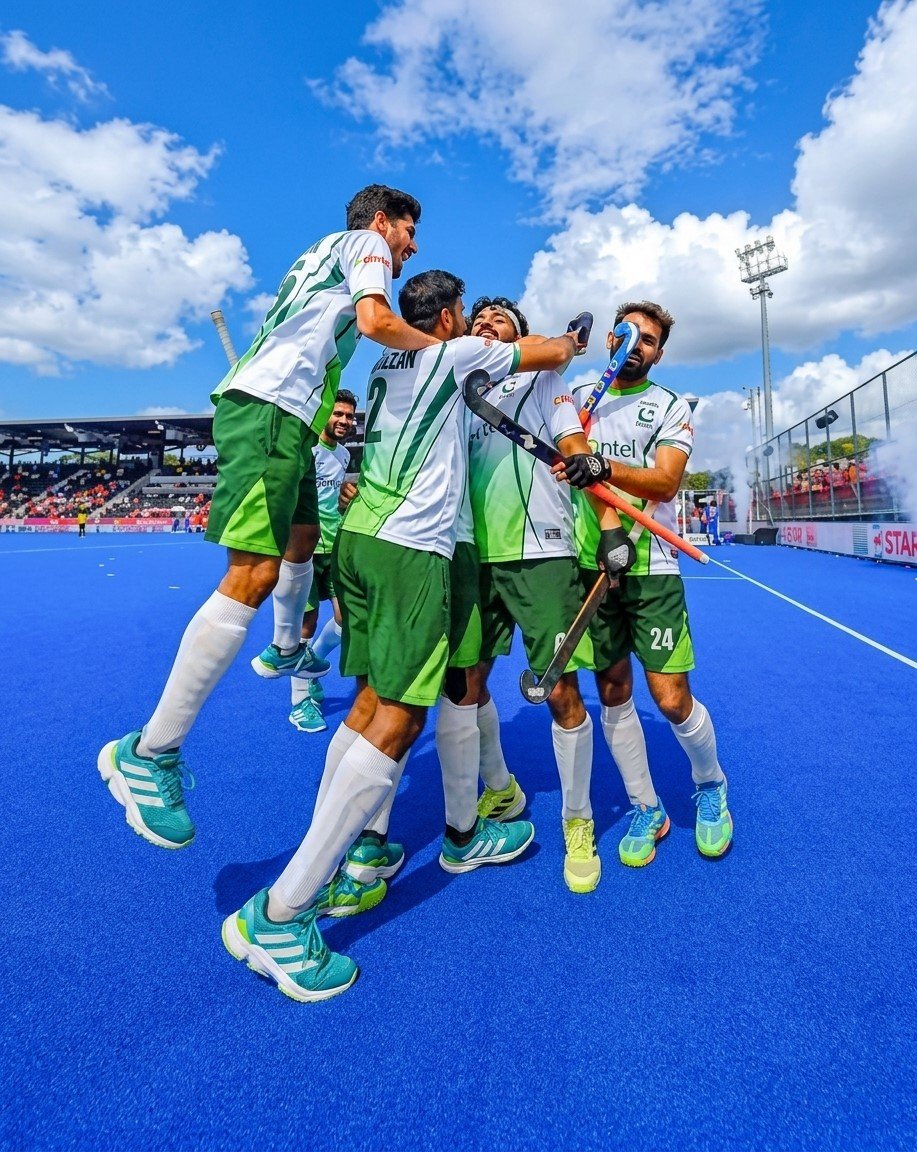
On a humid evening in Egypt during March 2026, a Pakistan side that had not seen a World Cup pitch in eight years scored its way into one. The team fell short of the final, losing to England, but the runner up finish was enough to qualify for the 2026 Men’s FIH Hockey World Cup Qualifier. Pakistan hockey, four time world champion and three time Olympic gold medallist, a name that once needed no introduction anywhere the game was played, had qualified for the sport’s biggest stage on merit rather than mercy. It should have been the headline of the year.
Instead, it arrived as a rare bright spot in a year otherwise defined by resignations, a funding dispute conducted partly through leaked screenshots, a captain suspended and then reinstated within days, and a federation still governed by an appointee rather than an elected board. Pakistan hockey has learned to hold both truths at once for some time now, capable of a result that turns heads and an administrative episode that turns stomachs, often within the same season. That contradiction, more than any single scoreline, is the real story of where the game stands today.
A Nation That Once Owned the Game
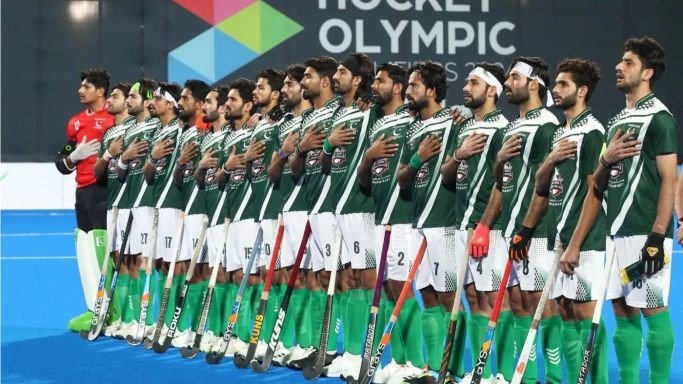
The record itself still reads like fiction. Pakistan won the Men’s Hockey World Cup four times between 1971 and 1994, a tally no other nation has matched, not Australia, not Germany, not the Netherlands. Three Olympic golds sit alongside it, from 1960, 1968, and 1984, plus three Olympic silvers, two bronzes, three Champions Trophy titles, and eight Asian Games golds. Sohail Abbas remains the most prolific scorer in the sport’s international history, with three hundred and forty eight goals. Waseem Ahmed, with four hundred and ten caps, remains its most capped player. Between them and a roll call of other legends, Pakistan did not simply play this game well. For a generation, it set the terms by which everyone else played it.
It’s painful to see the current hockey situation. But this has not happened all of a sudden. It’s a gradual decline. (Hanif Khan, national team forward, 1976 to 1985)
None of that is decoration, and none of it is nostalgia for its own sake. It is the yardstick against which every Pakistani side since has been measured, often unkindly, and it explains why a world ranking that would flatter most nations reads, in Pakistan, as a wound. The last Olympic medal came in Barcelona in 1992, a bronze. There has been no World Cup final, no Asian Games gold match, no Olympic semi-final since 1994. An entire generation of Pakistani hockey followers has grown up knowing the trophy cabinet far better than they know the feeling of watching their team compete for a place in one.
The Surface That Changed Underneath Them
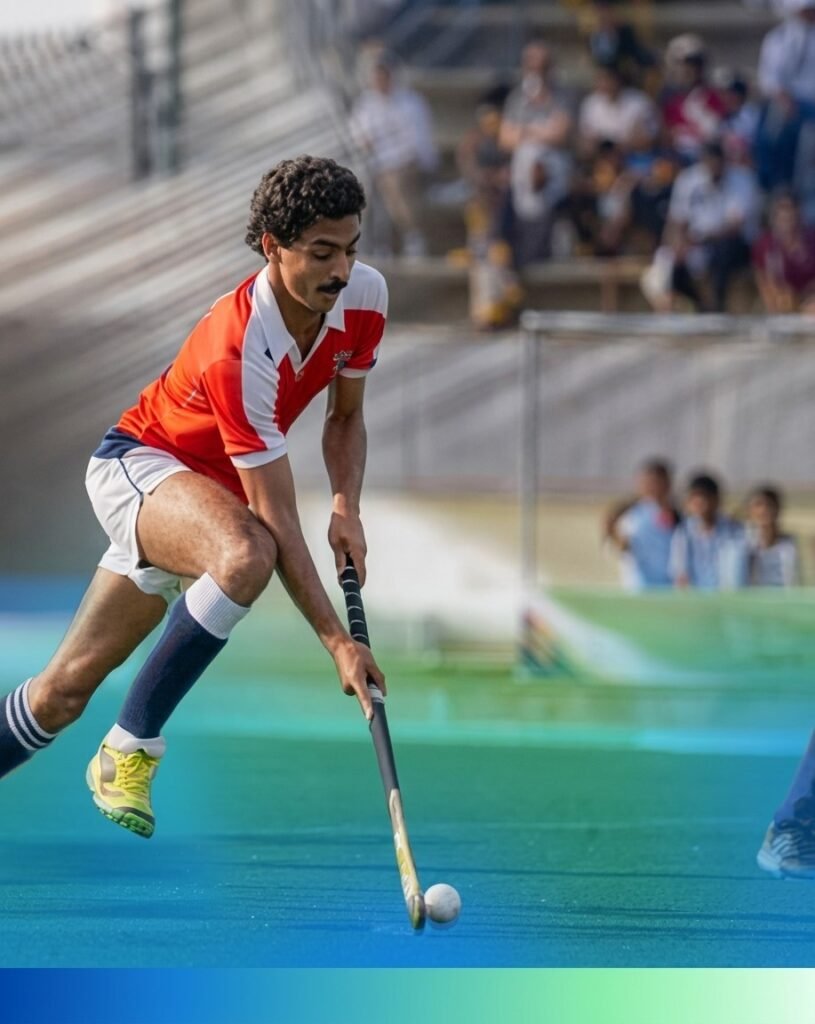
Ask the men who played in that golden era where it all began to slip, and the answer comes back with surprising unanimity: the turf. When the sport adopted artificial pitches as its standard surface through the 1970s, it rewrote hockey’s grammar overnight, rewarding flat passing and relentless running over the close, improvisational stick work in which Pakistani players had been raised. Nations with money moved fast. The Netherlands built pitches by the hundred. Pakistan, by 1990, had four.
Apart from political intervention, Pakistan could not meet the latest infrastructure standards, which ultimately affected the team’s performance but also reduced youths’ interest in the sport. (Samiullah, former national forward and 56 time international scorer)
The gap never closed. It has arguably widened. Reporting on the state of the domestic game keeps landing on the same rough figure, somewhere between a dozen and twenty functioning artificial pitches nationwide, a number that has barely moved in two decades even as the population it must serve climbed past two hundred and forty million. Former federation officials have said publicly that the country needs several times that number just to run a credible pipeline from school hockey to the national squad. Without turf to train on, junior hockey increasingly happens on borrowed grounds, at borrowed hours, under coaches who are themselves underpaid and rarely exposed to the modern game. No amount of talent survives that for long.
A Ledger That Never Balances
Turf is only half the story. The other half is money, and where it does not go. Ask almost anyone who follows Pakistani sport and they will reach for the same comparison, a cricket board with an annual budget in the billions of rupees set against a sports board grant of just over one hundred million rupees spread across twenty three national federations combined. The exact figures move year to year, and ought to be read as illustrative rather than audited, but the imbalance behind them is not seriously disputed by anyone, including hockey’s own administrators. Cricket is run as an industry. Everything else, hockey very much included, is treated as a line item to be funded when convenient and postponed when not.
Corporate sponsors have noticed the same instability from the outside and largely stayed away, wary of a federation whose leadership seems to change before a sponsorship campaign could even launch. The cost of that absence shows up less in grand failures than in small, humiliating ones. At the FIH Hockey Nations Cup in 2025, players reportedly paid for their own meals after allowances were delayed. Earlier that year, the national team withdrew from the Sultan Azlan Shah Trophy, one of the sport’s oldest invitational events, simply because there was no money to send it. Delayed camps and unpaid match fees, described in reports through 2022 and 2023, read less like isolated incidents than like the ordinary weather of the sport. None of this is unique to hockey in Pakistan. For a sport that once ruled the world, it simply lands harder.
A Federation That Cannot Sit Still
Turf explains the slow decline. Money explains why it never got fixed. Governance explains why every attempt at recovery keeps stalling before it starts. The Pakistan Hockey Federation has changed hands repeatedly over the past decade, rarely through the elections its own constitution promises. The pattern held again this year. A dispute over hotel and logistics funding followed the national team’s tour of Australia, with the federation claiming it had gone unpaid and the Pakistan Sports Board disputing that account and publishing records of payments it said had already been made. In the fallout, the federation’s president resigned, the team captain was briefly suspended after speaking publicly about conditions on tour, and Prime Minister Shehbaz Sharif approved the appointment of Mohyuddin Ahmad Wani, a career civil servant then serving as Federal Secretary for Inter Provincial Coordination, as the federation’s ad hoc president.
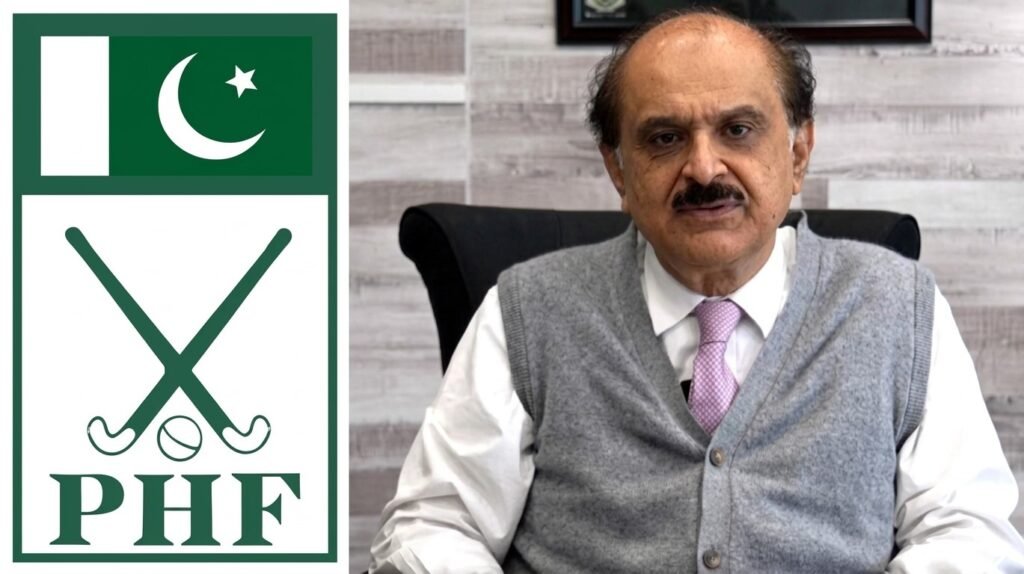
Wani lifted the captain’s suspension within days and laid out a reform program built around a ninety day audit to verify hockey clubs nationwide, to be followed by elections within six to nine months under independent oversight. Those elections have yet to happen. Wani has told a parliamentary committee that the federation is working with the sport’s international governing body to make sure they are credible when they finally arrive. Whether that promise holds will matter more than any single tournament result, because Pakistan hockey’s recurring failures trace less to a shortage of talent than to a federation that is perpetually mid reorganization, never quite able to plan further ahead than its next crisis.
As the newly appointed ad hoc president of PHF, I assure stakeholders of our commitment to revive and strengthen hockey in Pakistan. (Mohyuddin Ahmad Wani, ad hoc president, Pakistan Hockey Federation)
What the Scoreboard Actually Says
Strip away the noise and the results tell a plainer story: a team good enough to compete, not yet good enough to contend. Pakistan missed the 2014 and 2023 World Cups outright and finished twelfth of sixteen the last time it did qualify, in 2018. It has missed three consecutive Olympic Games. At the 2023 Asian Games, India beat Pakistan by ten goals to two, the heaviest defeat in the team’s history, on the way to a fifth place finish. The men’s world ranking, which sank as low as twentieth in 2022, its lowest point on record against a career best of fourth in the year 2000, has settled at twelfth, a position held through a Pro League campaign in which the team did not win a single match. The women’s team, working with a far smaller domestic base, sits fifty seventh in the world.
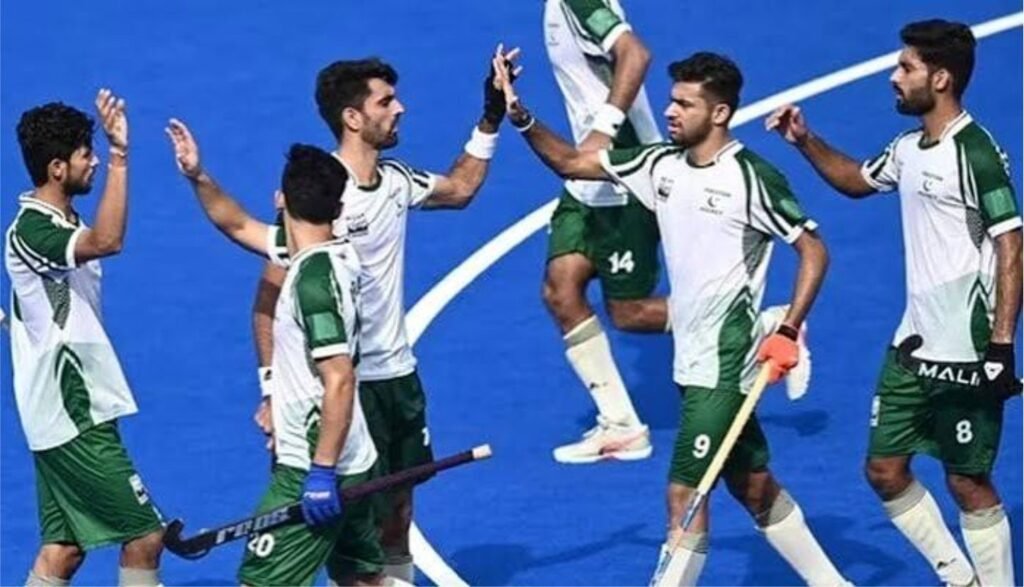
And yet the same stretch produced Pakistan’s return to the World Cup itself. Barred from the 2025 Asia Cup by security concerns entirely beyond the federation’s control, and handed a lifeline into contention by the sport’s governing body, the team won a playoff series against Bangladesh by an aggregate score of sixteen goals to two, then went all the way to the final of the qualifying tournament in Egypt before England denied them direct passage. It did not matter. Pakistan had already done enough to book its place at the World Cup in Belgium and the Netherlands, its first appearance at the tournament in eight years, earned rather than gifted. Decline, it turns out, is not the same condition as extinction.
Sparks Amid the Wreckage
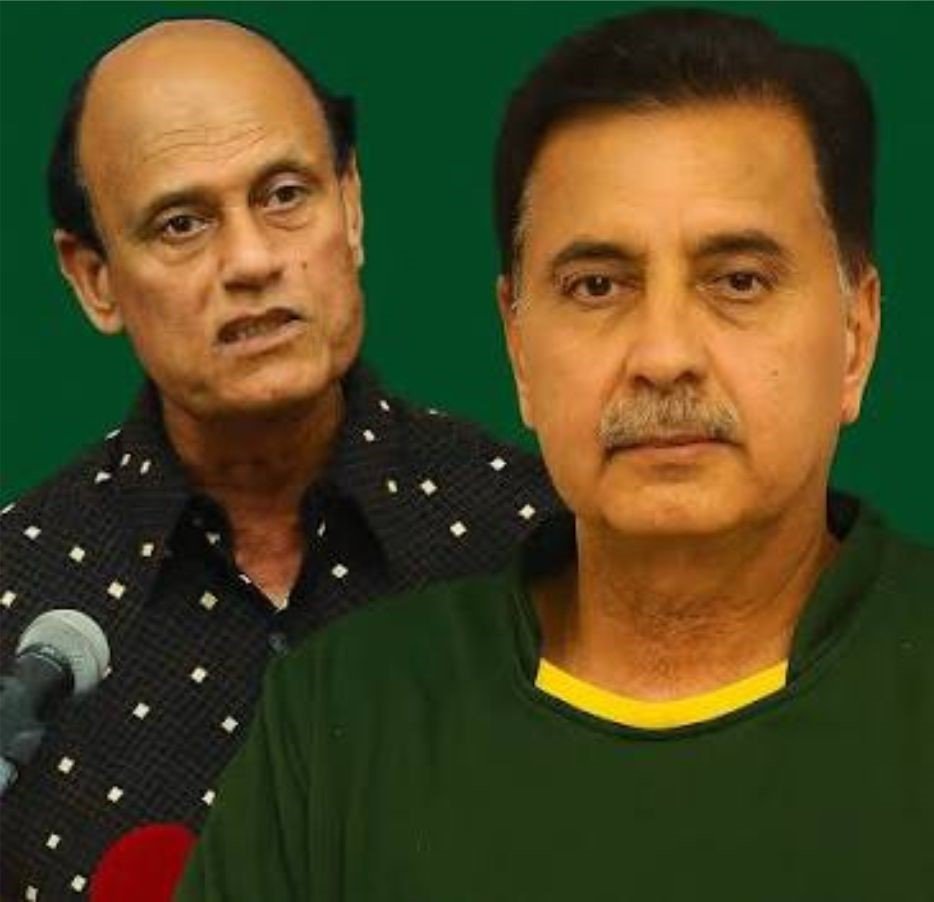
Beyond that qualification, smaller signs have pointed the same way. The federation handed technical oversight of the national program to two of the country’s most respected former Olympians, Islahuddin Siddiqui and Hasan Sardar, an attempt to shield team management from the bureaucratic churn above it. A month long Under 21 camp opened in Islamabad, built to grow a bench the senior side has lacked for years. The junior program reached the final of its Asia Cup. The senior team’s Nations Cup campaign delivered a silver medal, its best finish in a multi nation event in years.
Taken individually, none of this amounts to much. A silver medal is not a world title. A training camp is not a pipeline. But set against a decade in which nearly every headline out of Pakistan hockey concerned a resignation, a boycott, or a missed payment, a run of small, functional decisions starts to carry a weight of its own.
The Road Back, If It Exists
Whether Pakistan turns these fragments into something lasting comes down to a short list of things the federation has talked about for years and rarely finished. Elections held on schedule, under genuinely independent supervision, would matter more than any single appointment, because they would finally test whether the sport can produce leadership that survives longer than one funding crisis. Turf remains the hardest constraint of all. Without a sustained, years’ long program to build and maintain pitches well beyond a handful of major cities, no administrative reform, however sincere, will produce enough trained players to fill a squad, let alone to replace one.
None of this calls for a new idea. Every piece of a credible revival plan already exists somewhere in Pakistan’s own recent proposals: audited elections, a real domestic game schedule, more turf, contracts that pay players on time, and technical leadership that survives a change of federation president. What has been missing is not the plan. It is the discipline to carry one version of it past a single administration.
What the Green Shirts Still Have
Two assets remain that no funding shortfall has managed to destroy. The first is a playing tradition still capable of producing real talent, visible in the poise this year’s squad showed in reaching a World Cup that plenty of observers outside the country had quietly written off. The second is a public that has not stopped caring, a memory long enough and pride deep enough to keep demanding better than it has been given. Every federation crisis still leads the back pages. Every qualifying win still brings people into the streets. That kind of attention is not guaranteed for a struggling sport anywhere in the world, and for now it remains hockey’s clearest asset in Pakistan.
A nation that once ruled this game will not win it back through memory, and certainly not through one qualifying campaign, however well earned. It will win it back, if it wins it back at all, through turf that gets built and maintained, salaries paid on time without a public dispute first, elections held on the date promised rather than the date convenient, and a domestic season played every year rather than promised every few. Pakistan hockey has just shown that it can still meet a deadline on the field. The federation that runs it has yet to prove it can meet one anywhere else.
Leave a Reply