
For more than a century, some athletes have looked to the pill, the syringe, and the blood bag for an edge that training alone could not give. The methods have grown smarter, the stakes higher, and the damage wider. This is the story of that shadow race: what it costs, why it persists, and what it will take to win it.
Nine Seconds in Seoul
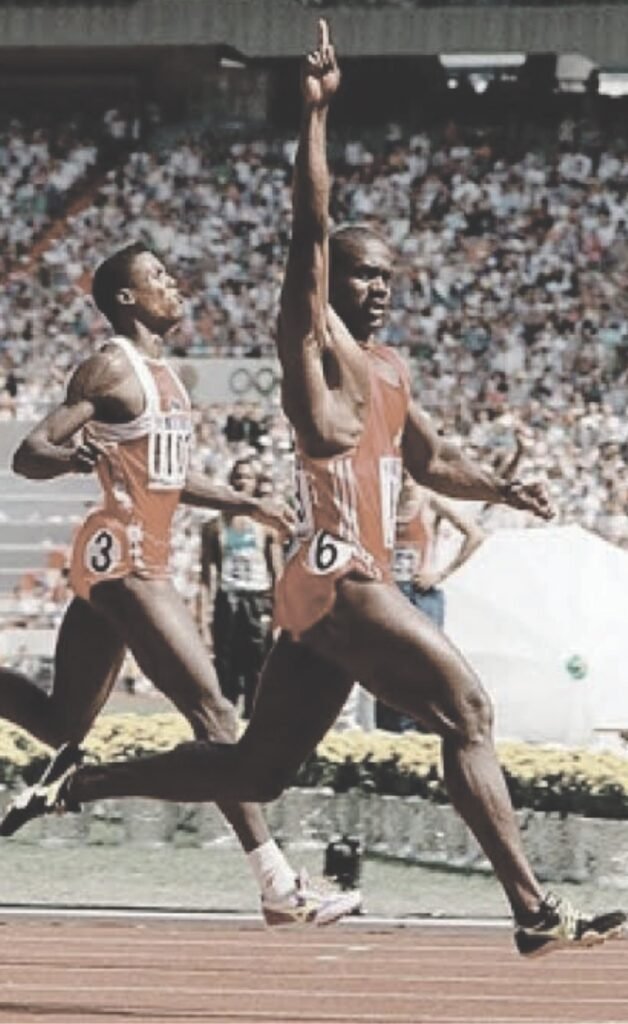
On 24 September 1988,
Ben Johnson crossed the line in the Olympic 100 metres final in Seoul in 9.79 seconds, a world record, with his right arm raised to the sky. For three days he was the fastest man who had ever lived. Then the laboratory reported stanozolol, an anabolic steroid, in his urine, and the gold medal passed to Carl Lewis. A race the world had watched as a triumph became, within a week, the most famous scandal in Olympic history.
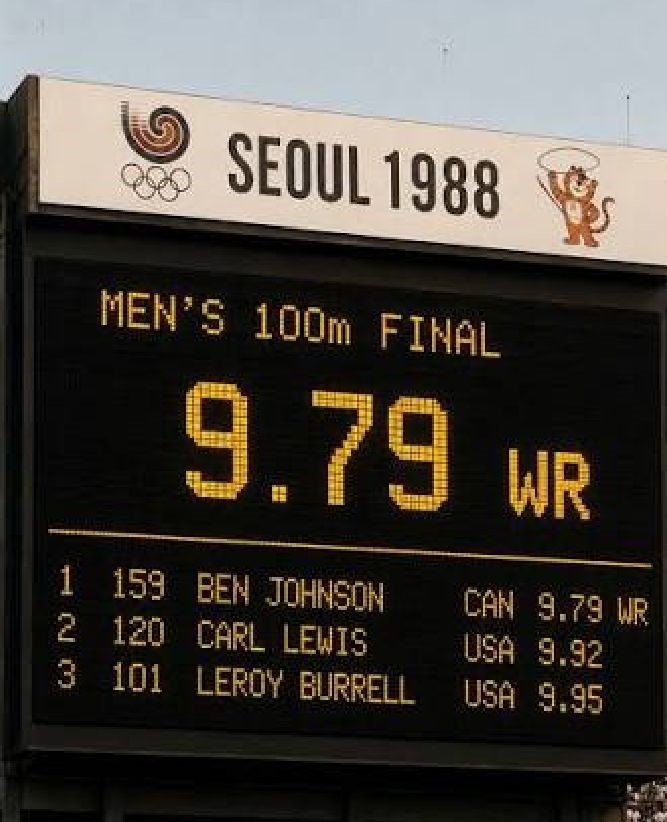
What followed was stranger still. Over the years, several other finalists from that race were also linked to doping, through failed tests, later admissions, or investigations. The Seoul final did not reveal one cheat among honest rivals. It revealed a culture. More than three decades on, that culture has not gone away; it has only learned to hide better.
The Seoul final did not reveal one cheat among honest rivals. It revealed a culture.
Doping is often described as a failure of individual character, a single athlete who chose the wrong path. That view is comforting, and it is incomplete. Doping thrives where money, national pride, careers, and fame meet a body that honest work can push only so far. To understand why it persists, we have to look at the whole chain: the athlete, the coach, the doctor, the federation, the state, and, in the end, the spectator who demands that every season be faster than the last.
An Old Temptation
THE OLD TRICK
The urge to enhance is as old as competition. Ancient writers describe athletes eating special diets and herbal potions in the hope of gaining strength. At the 1904 Olympic marathon in St Louis, the American Thomas Hicks was given doses of strychnine mixed with brandy by his handlers during the race; he won, and then he collapsed. No rule forbade it. The line between care and cheating had not yet been drawn.
That line began to form in the 1960s, after a series of shocks. On 13 July 1967, the British cyclist Tom Simpson collapsed and died on the slopes of Mont Ventoux during the Tour de France, and amphetamines were found in his body. That same year, the International Olympic Committee set up a Medical Commission and drew up a list of banned substances. The first Olympic disqualification for doping came at the 1968 Games in Mexico City, when a Swedish pentathlete tested positive for alcohol and his team lost its bronze medal.
The Age of the State Program
In the 1970s and 1980s, doping moved from the locker room to the ministry. East Germany ran a secret program, known as State Plan 14.25, which gave anabolic steroids and other drugs to thousands of athletes, many of them teenagers who were told they were taking vitamins. Estimates of the number involved run as high as 10,000. The medals were remarkable. The cost to the athletes emerged only after the fall of the Berlin Wall, when files from the Stasi laid bare the scale of the scheme.
In 1998, the Festina affair showed that the problem had outlived the Cold War. A staff member of the Festina cycling team was stopped near the French border with a car full of performance-enhancing drugs, including EPO. The scandal nearly brought down the Tour de France. It also led, the following year, to the founding of the World Anti-Doping Agency, known as WADA. For the first time, sport and governments agreed to share one set of rules. The World Anti-Doping Code followed in 2003, and a UNESCO convention in 2005 gave it the backing of international law among the states that signed it.
Milestones on a Long Road
| 1904 | Marathon winner Thomas Hicks is given strychnine and brandy during the Olympic race in St Louis. |
| 1967 | Tom Simpson dies on Mont Ventoux during the Tour de France. The IOC forms its Medical Commission. |
| 1968 | The first Olympic disqualification for doping, in Mexico City. |
| 1970s | East Germany launches State Plan 14.25, a secret state doping program. |
| 1988 | Ben Johnson loses his Seoul 100 metres gold after testing positive for stanozolol. |
| 1998 | The Festina affair throws the Tour de France into crisis. |
| 1999 | The World Anti-Doping Agency is founded. |
| 2003 | The first World Anti-Doping Code is adopted. The BALCO case breaks. |
| 2008 | Cycling introduces the Athlete Biological Passport. |
| 2012 | USADA’s report on Lance Armstrong leads to the loss of his seven Tour titles. |
| 2016 | The McLaren reports detail state-run doping in Russia. |
| 2019 | Operation Aderlass exposes a blood doping network at the Nordic World Ski Championships. |
| 2025 | A revised World Anti-Doping Code is adopted in Busan, to take effect in January 2027. |
| 2026 | The first Enhanced Games, with doping openly allowed, take place in Las Vegas. |
The Pharmacy of Advantage
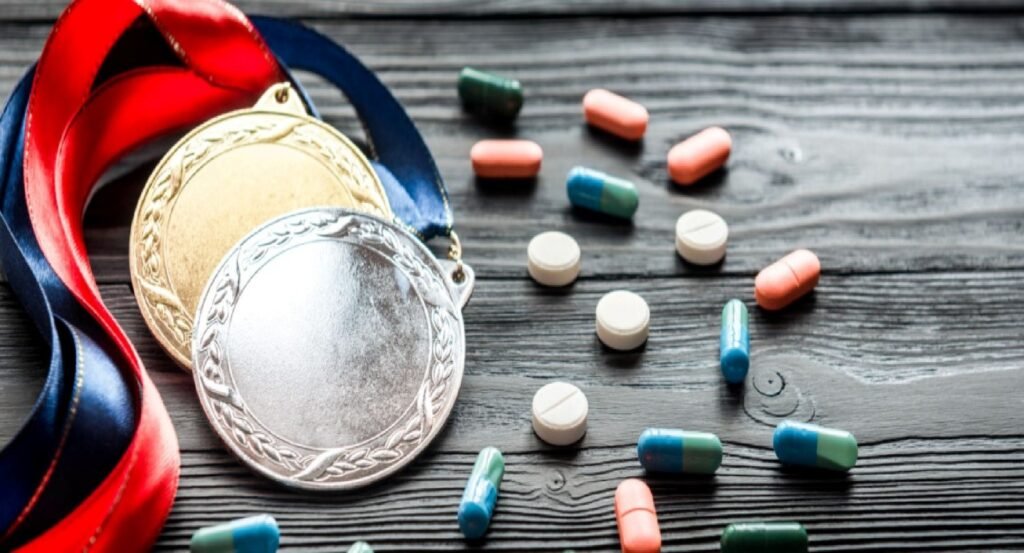
WADA publishes a Prohibited List every year. A substance or method lands on it when it meets two of three tests: it can enhance performance, it poses a risk to health, and it violates the spirit of sport. Behind that dry wording lies a vast and shifting pharmacy.
Building Muscle
Anabolic agents are, year after year, the class of drugs most often detected in testing. They help athletes build muscle and recover faster from hard training, which is why they turn up in sports as different as weightlifting, sprinting, and rugby. Human growth hormone and a growing family of peptides promise similar gains, and many are harder to detect.
Carrying More Oxygen
EPO, or erythropoietin, is a hormone that tells the body to make more red blood cells. It transformed endurance sport in the 1990s. More red cells mean more oxygen reaching the muscles, and more oxygen means an athlete can go harder for longer. Blood doping, the practice of drawing and storing an athlete’s own blood and putting it back before a race, does the same job without any foreign drug. Operation Aderlass, a police investigation that began with raids at the Nordic World Ski Championships in Seefeld, Austria, in 2019, exposed a network run by a German doctor that supplied transfusions to athletes in skiing, cycling, and other sports.
Stimulants, Masks, and Missed Tests
Stimulants sharpen focus and blunt fatigue. Diuretics and other masking agents flush out or hide the evidence. Not every violation involves a drug at all. Under the Code, an athlete can be banned for refusing a test, tampering with a sample, or recording three whereabouts failures within twelve months. The whereabouts system requires elite athletes to say where they will be for one hour every day, so that testers can arrive without warning.
The Rule of Strict Liability
At the centre of the system sits a hard principle known as strict liability. Athletes are responsible for any banned substance found in their bodies, whether or not they meant to take it. Intent matters for the length of a ban, but not for whether a violation has occurred. This rule makes the system enforceable; without it, every positive test would become a contest of excuses. It also means that honest athletes can be caught by a contaminated supplement, tainted meat, or a partner’s medication, which is why strict liability remains the most debated rule in anti-doping.
Intent matters for the length of a ban, but not for whether a violation has occurred.
When the State Is the Coach
The most damaging form of doping is not the athlete who cheats alone but the system that cheats on the athlete’s behalf. East Germany was the first great example. Russia became the most notorious modern one.
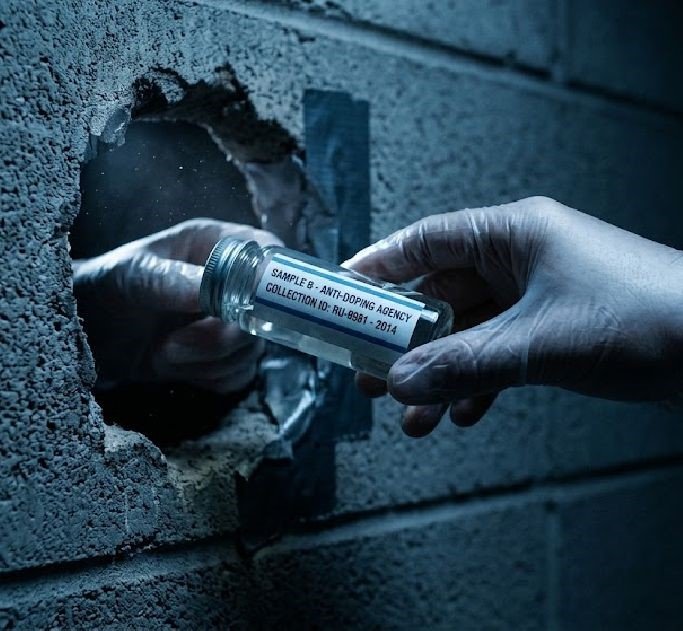
In December 2014, a German television documentary drew on the testimony of Yuliya Stepanova, a Russian middle-distance runner, and her husband Vitaly, a former doping control officer at Russia’s national anti-doping agency. In 2016, Grigory Rodchenkov, the former head of Moscow’s anti-doping laboratory, told his story to the New York Times. He described how, at the 2014 Winter Olympics in Sochi, urine samples from Russian athletes were passed at night through a hole in a laboratory wall and swapped for clean urine collected months earlier. Reports led by the Canadian lawyer Richard McLaren, commissioned by WADA, found that more than 1,000 Russian athletes in over 30 sports had been involved in, or had benefited from, the manipulation.
The most damaging form of doping is not the athlete who cheats alone but the system that cheats on the athlete’s behalf.
The consequences were real but, to many clean athletes, too mild. Russian competitors took part in later Games under neutral names and flags rather than being shut out entirely, and in 2020 the Court of Arbitration for Sport cut a four-year set of sanctions against Russia to two. For athletes who had lost medals, funding, and careers to Russian rivals, the lesson seemed to be that even proven state cheating could be negotiated down.
The Russian case also left a mark on the law. In 2020, the United States passed the Rodchenkov Anti-Doping Act, which makes it a crime to take part in doping schemes at major international events with American links, even when those schemes are run abroad. Critics called it an overreach. Supporters saw it as the first serious attempt to punish the people who run doping networks, and not only the athletes who use them.
The Fall of Heroes
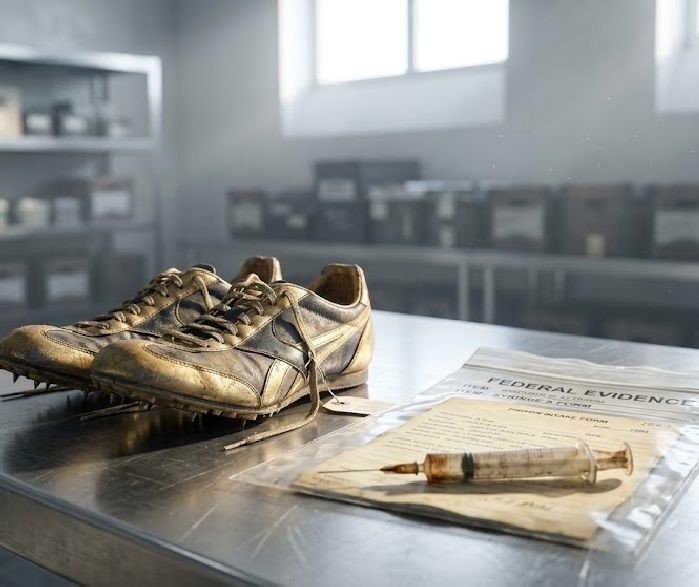
Some doping stories are about systems; others are about a single figure whose fall shook a whole sport. Lance Armstrong won the Tour de France seven times in a row, from 1999 to 2005, and built a cancer charity that inspired millions. In 2012, the United States Anti-Doping Agency published a detailed report describing his team’s program of EPO, transfusions, and testosterone as among the most sophisticated that sport had ever seen. Armstrong was banned for life and lost all seven titles. In January 2013, he admitted to doping in a televised interview.
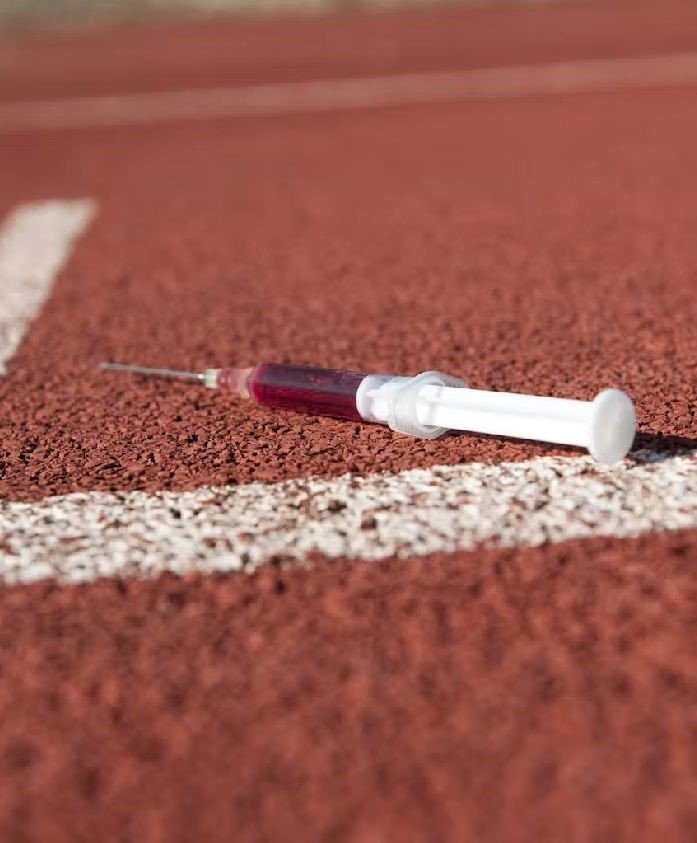
Marion Jones was the star of the 2000 Sydney Olympics, where she won five medals, three of them gold. In 2007 she admitted to using drugs linked to BALCO, a California laboratory that had supplied a designer steroid made to escape detection. She returned her medals and served six months in prison, in part for lying to federal investigators. The BALCO case came to light only because a coach sent a used syringe to American anti-doping officials, a reminder that many of the biggest cases have been cracked by informants rather than by tests.Cricket, often thought too dependent on skill for drugs to matter, has had its own moments. In 2006, the Pakistan fast bowlers Shoaib Akhtar and Mohammad Asif tested positive for nandrolone before the Champions Trophy. An appeals panel overturned their bans within weeks, and WADA challenged that outcome without success. The episode showed that no sport is immune, and that a verdict is only as strong as the body that delivers it.
The damage from these falls reaches far beyond the athletes themselves. Every record from an era of hidden doping carries an asterisk in the public mind. Sponsors retreat, young fans lose their heroes, and clean athletes from the same generation carry a suspicion they did nothing to earn.
The Grey Zones

Contamination and Doubt
Not every case is a morality tale. Some of the hardest questions in modern anti-doping involve tiny amounts of a banned substance and a plausible story of accident. In 2024, Jannik Sinner, who soon became the world number one in tennis, was found to have traces of the steroid clostebol in two samples. An independent tribunal accepted that it had entered his body through a physiotherapist who had used a clostebol spray on a cut on his own finger, and found no fault. WADA appealed, and in February 2025 Sinner accepted a three-month suspension. Late in 2024, Iga Świątek served a one-month suspension after a trace of trimetazidine was linked to a contaminated melatonin product.
The case of 23 Chinese swimmers who tested positive for trimetazidine at a domestic meet in early 2021 proved far more divisive. China’s anti-doping agency concluded that the swimmers had eaten contaminated food at their hotel, and WADA accepted that finding without appeal. When the case became public in 2024, the United States Anti-Doping Agency accused WADA of covering it up. An independent review by a Swiss prosecutor found no evidence of favouritism, though it made recommendations on how such cases should be handled. Several of those swimmers went on to win medals in Paris, and the argument over the case has not gone away.
Then there is Kamila Valieva, the Russian figure skater who was 15 when she tested positive for trimetazidine in December 2021. The result emerged in the middle of the 2022 Beijing Winter Olympics, after her team had won gold. In January 2024, the Court of Arbitration for Sport banned her for four years. Whatever one believes about her own role, a child had been placed at the centre of a doping case, and that raised hard questions about the adults around her.
Why the Grey Zones Matter
These cases share a common thread: the science of detection has outrun the science of explanation. Modern laboratories can find a banned substance in quantities measured in billionths of a gram, amounts that may have no effect on performance at all. That sensitivity catches cheats who microdose. It also creates cases where the truth is hard to establish, and where public trust depends on whether the rules are applied the same way to a global star, a powerful national team, and an unknown athlete from a small federation. Consistency, more than severity, is what the system most needs to protect.
The science of detection has outrun the science of explanation.
Permission and Suspicion
Therapeutic Use Exemptions allow athletes with genuine medical conditions to use otherwise banned medicines. They exist for good reason; an athlete with asthma or diabetes should not be forced out of sport. But in 2016, hackers leaked the confidential exemption records of well-known athletes, and the public saw how often powerful drugs had been approved for elite competitors. No rules had been broken in those cases, yet the leaks fed a lasting suspicion that some teams use the system to gain an edge within the letter of the law.
Meldonium, a heart drug widely used in Eastern Europe, showed the same pattern from another angle. After it was added to the Prohibited List in 2016, dozens of athletes tested positive, among them Maria Sharapova, whose ban was later reduced to fifteen months. The wave of cases revealed how common its use had been among healthy athletes while it was still allowed.
The Body Pays the Bill
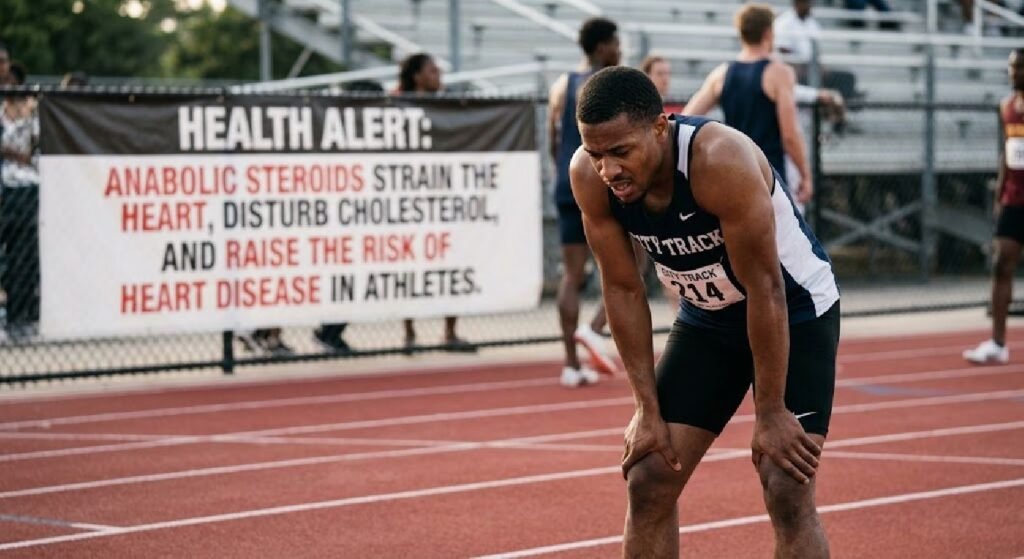
For readers who care about wellness, the most urgent truth about doping is simple: it harms the people who do it. Anabolic steroids strain the heart, disturb cholesterol, and raise the risk of heart disease. They suppress the body’s own hormone production, which can lead to infertility, and some oral forms damage the liver. Many users report mood swings, aggression, and depression, and stopping can bring a dangerous low. EPO and blood doping thicken the blood, raising the risk of clots, heart attacks, and strokes, especially when an athlete is dehydrated after a long effort. In the late 1980s and early 1990s, a series of sudden deaths among young European cyclists was widely suspected, though never proven, to be linked to EPO.
The East German athletes offer the longest record of harm. Many have reported liver damage, heart disease, cancers, gynaecological problems, and lasting psychological scars. The German government acknowledged this debt through compensation schemes set up in 2002 and again in 2016. Many of these athletes never chose to dope. They were children who trusted their coaches.
Beyond the Stadium
The harm does not stay among the elite. When champions dope, the message travels downward to amateur gyms, school teams, and online fitness culture. Research consistently finds that most people who use anabolic steroids are not competitive athletes at all but recreational lifters chasing a look. Many buy from unregulated online sellers with no idea what a vial really contains. The drugs, the dosing myths, and the belief that the body can be built faster than nature allows all flow from the top of sport to the bottom.
When champions dope, the message travels downward to amateur gyms, school teams, and online fitness culture.
The Science of Catching Up

The Biological Passport
For much of its history, testing meant looking for a drug in a sample. Cheats answered by timing their use so that the drug had cleared before the tester arrived. The Athlete Biological Passport changed the question. Rather than looking only for the drug, it tracks markers in an athlete’s blood and urine over months and years, building a personal profile. When the values move in ways that nature cannot explain, experts can bring a case without ever finding the substance itself. Cycling introduced the passport in 2008, and WADA issued guidelines for its wider use the following year.
Ten Years of Jeopardy
Samples can now be stored for up to ten years and tested again as science improves. The results have been striking. Reanalysis of samples from the 2008 Beijing and 2012 London Olympics produced well over 100 positive findings, and many medals were reallocated, sometimes nearly a decade late, to athletes who had long since retired. A delayed medal is a poor substitute for the podium itself, but the message to cheats is plain: passing a test today does not mean escaping tomorrow.
Passing a test today does not mean escaping tomorrow.
Intelligence Over Chemistry
The biggest cases of recent decades, from BALCO to Russia to Aderlass, were broken mainly by whistleblowers, police, and investigators, not by laboratories alone. The anti-doping world has taken this lesson to heart. The revised World Anti-Doping Code, adopted in Busan in December 2025 and due to take effect on 1 January 2027, adds a new International Standard for Intelligence and Investigations and places more responsibility on coaches, doctors, and others in an athlete’s entourage. Protecting and rewarding those who speak up may do more for clean sport than any new machine.
The Gap Between Tests and Truth
Every year, anti-doping bodies around the world collect hundreds of thousands of samples, and only a small fraction, around one percent, return adverse findings. That figure is often quoted as proof that sport is mostly clean. The evidence calls for caution. A study published in 2018 used anonymous survey methods at two major athletics events in 2011 and estimated that 43.6 percent of athletes at the World Championships in Daegu, and 57.1 percent at the Pan Arab Games, had doped within the previous year. The exact figures are debated, and they cannot be applied to every sport. Even so, the gap between what tests catch and what athletes admit in confidence is too wide to ignore.
What Clean Sport Asks of Everyone
Athletes and Their Circle
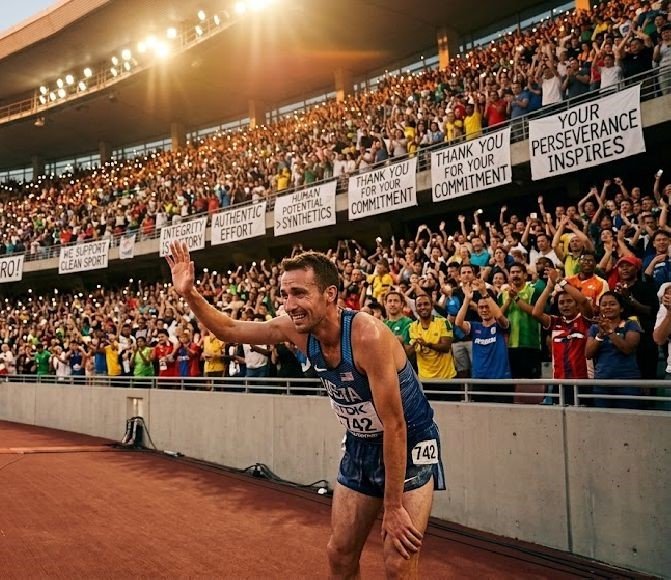
The first line of defence remains the athlete, and the second is the circle around them. Education works best early, long before a young athlete meets the coach who says that everyone else is doing it. Athletes need practical knowledge: how to check a medicine, why batch-tested supplements matter, how to keep a record of what they take, and where to turn for confidential advice. Coaches, doctors, and agents who supply or encourage doping should face penalties at least as severe as those given to the athletes they exploit.
Federations and Governments
Anti-doping costs money, and the burden falls unevenly. Wealthy nations run well-funded agencies and accredited laboratories. Many smaller and emerging sporting nations have neither, which leaves their athletes less protected and more exposed to suspicion. Sharing testing capacity, laboratory access, and expertise across regions would go a long way toward closing that gap. Governments also hold tools that sport lacks, such as the power to search, seize, and prosecute the networks that traffic in these drugs.
Sponsors, Media, and Fans
Those who pay for sport and those who watch it shape its incentives. Sponsors can write clean sport clauses into contracts and stand by athletes through the lean years that tempt some to cheat. The media can report cases with care, separating deliberate cheating from contamination and refusing to convict on rumour. Fans can learn to value an honest personal best as much as a headline world record. As long as the crowd demands that every season be faster than the last, someone will try to deliver it by any means.
The Race Worth Running
The shadow race that began long before Seoul will not end with a single rule or a single test. It will be won, if it is won, the way clean athletes win their own races: through patience, discipline, and a refusal to take the shortcut. Ben Johnson’s 9.79 seconds lasted three days. Public trust, once lost, takes far longer to rebuild. Sport is worth that effort, because at its best it shows what an ordinary human body and an extraordinary will can achieve together, and nothing in any syringe can counterfeit that.
Leave a Reply