
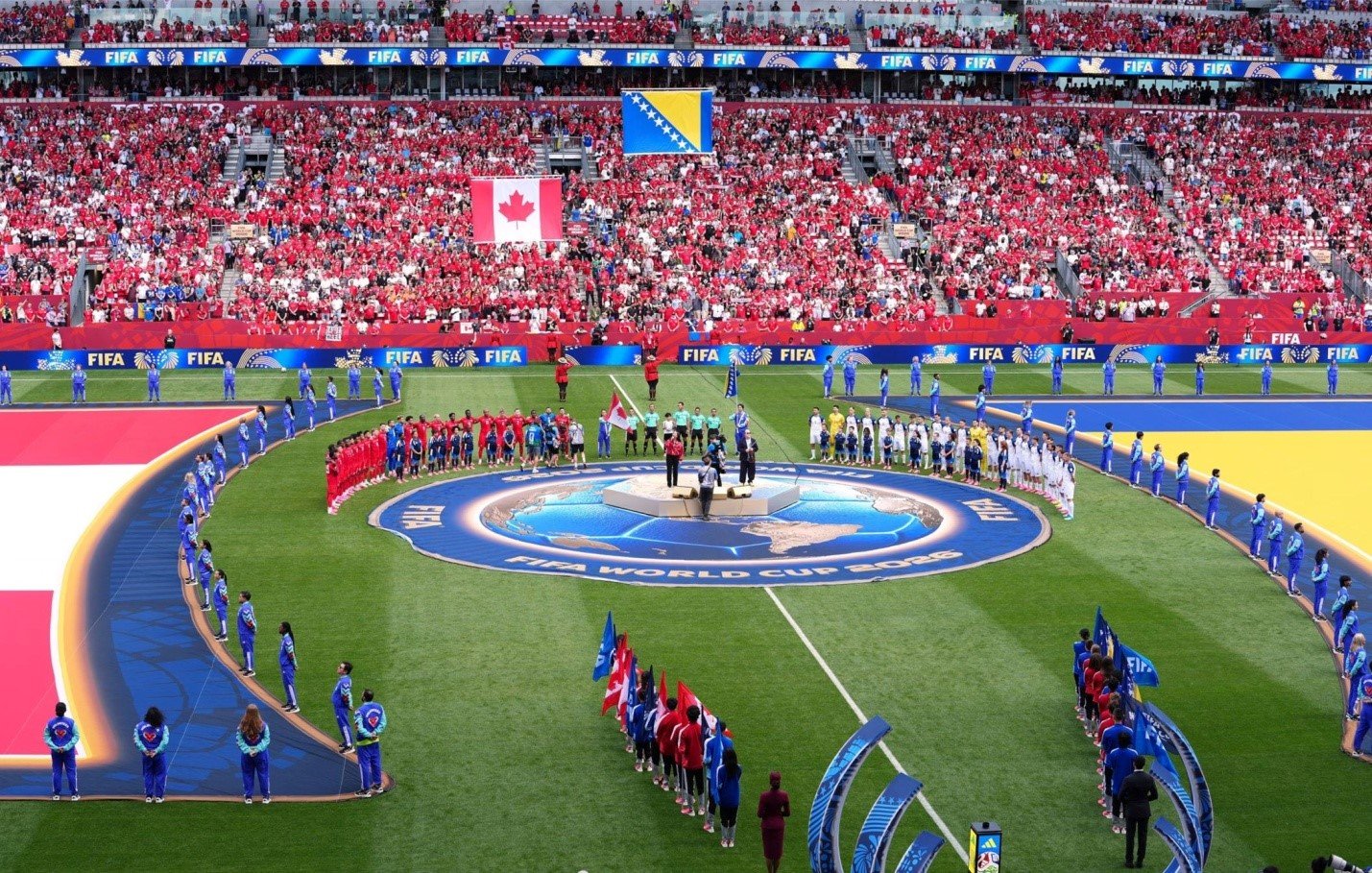
Football’s Biggest Gamble Pays Off, Mostly
For nearly a century, the World Cup held a simple shape. Thirty two teams, eight groups of four, a clean and familiar path to the knockout rounds. That shape ended this summer, when the tournament expanded to forty eight teams across three host nations and set out to answer a question the sport had argued over for a decade: could its oldest showcase grow larger without growing thinner.
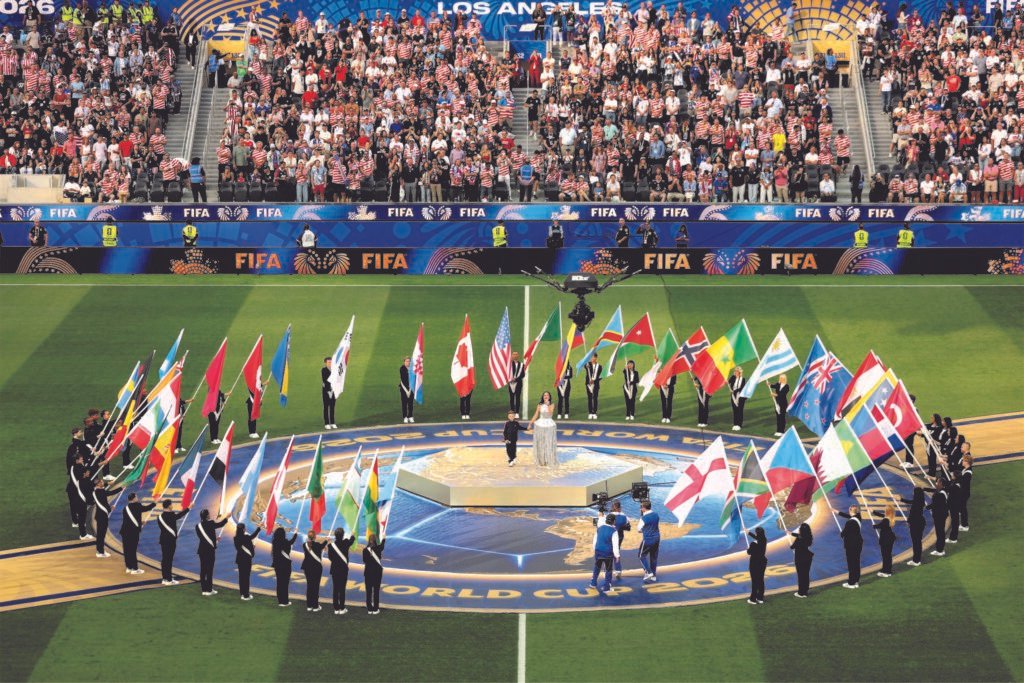
The tournament ran for thirty nine days, from June 11 to July 19, across sixteen cities in the United States, Mexico, and Canada, eleven of them American, three Mexican, and two Canadian. It was the longest World Cup ever staged and the first shared by three host countries. When Spain lifted the trophy at New York New Jersey Stadium in East Rutherford on the final night, FIFA had its answer, and it was, for the most part, a favourable one.
FIFA had its answer, and it was, for the most part, a favourable one.
The Case for Growing the Game
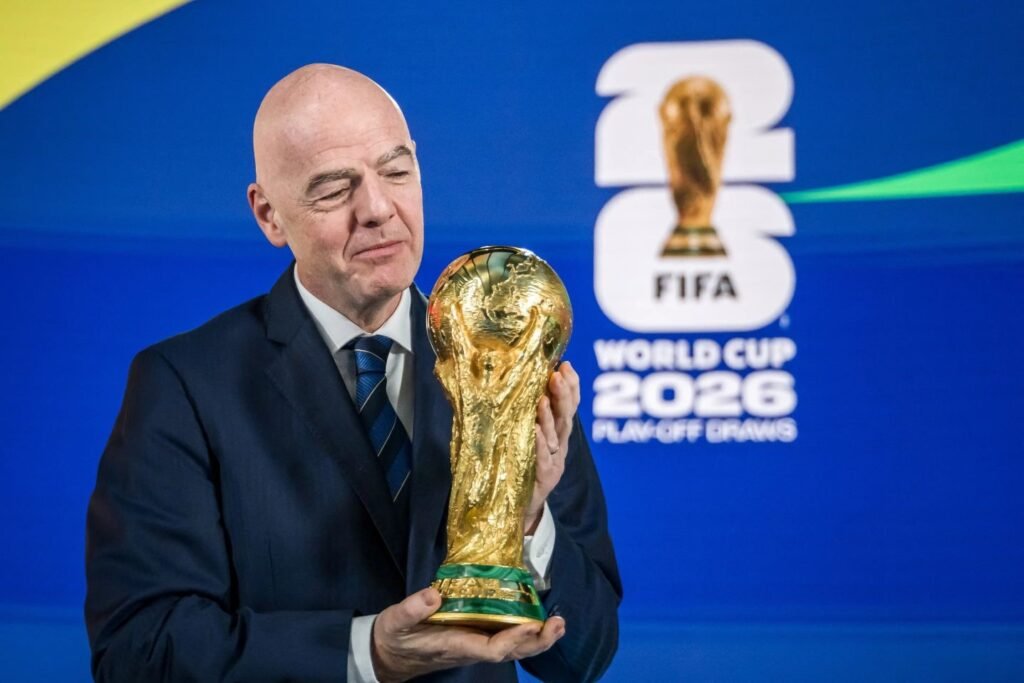
FIFA had wanted a bigger World Cup for years before it built one. The argument, made most forcefully by Arsene Wenger, FIFA’s chief of global football development, centred on access rather than spectacle. Wenger put the reasoning plainly earlier this year: FIFA, he said, had to open the tournament to the world. For decades, qualification places had clustered around Europe and South America, while improving footballing nations in Africa, Asia, the Caribbean, and the Middle East were shut out despite real progress on the pitch.
FIFA, Arsene Wenger said, had to open the tournament to the world.
The expansion gave those regions a wider door. Cape Verde, Curaçao, Jordan, and Uzbekistan all made their World Cup debuts this year, nations whose federations had spent years building programs with no guarantee a place at football’s largest stage would ever follow. FIFA’s own research pointed to prior tournaments as proof the wider net could work: Costa Rica, Wales, and Iceland had all overachieved when given a rare chance to compete, and the governing body bet that more debutants would produce more of the same.
The slot map made the shift concrete. Africa’s confederation held five places in the qualifying race for Qatar 2022; this cycle it held ten, counting its play-off route. Asia’s allocation grew from four and a half places to nine, and North and Central America’s, counting the three automatic places claimed by its host nations, grew from three and a half to seven. Europe still claimed the largest single bloc, at sixteen places, but a share of the field that had been just over forty percent of a thirty two team tournament fell to about a third of a forty eight team one, an unmistakable shift in football’s most contested currency: actual places at the tournament.
A share of the field once worth forty percent now amounts to about a third.
There was also a commercial case, and FIFA never pretended otherwise. The move from thirty two to forty eight teams took the match count from sixty four to one hundred and four, an increase of forty games and, with it, forty games’ worth of broadcast inventory and sponsorship space to sell. FIFA revised its own revenue target for the 2023 to 2026 commercial cycle to $13 billion, up from $7.5 billion in the cycle before it, built from roughly $3.9 billion in broadcasting rights, $3 billion in ticketing and hospitality, and $2.8 billion in sponsorship, money it says is redistributed across its two hundred and eleven member associations. Critics before a ball was kicked argued the growth served football’s bank balance more than its development. FIFA’s position was that the two goals were never in competition, and that a global game needed both a wider stage and a stronger treasury to keep expanding it.
A Century of Growing Larger
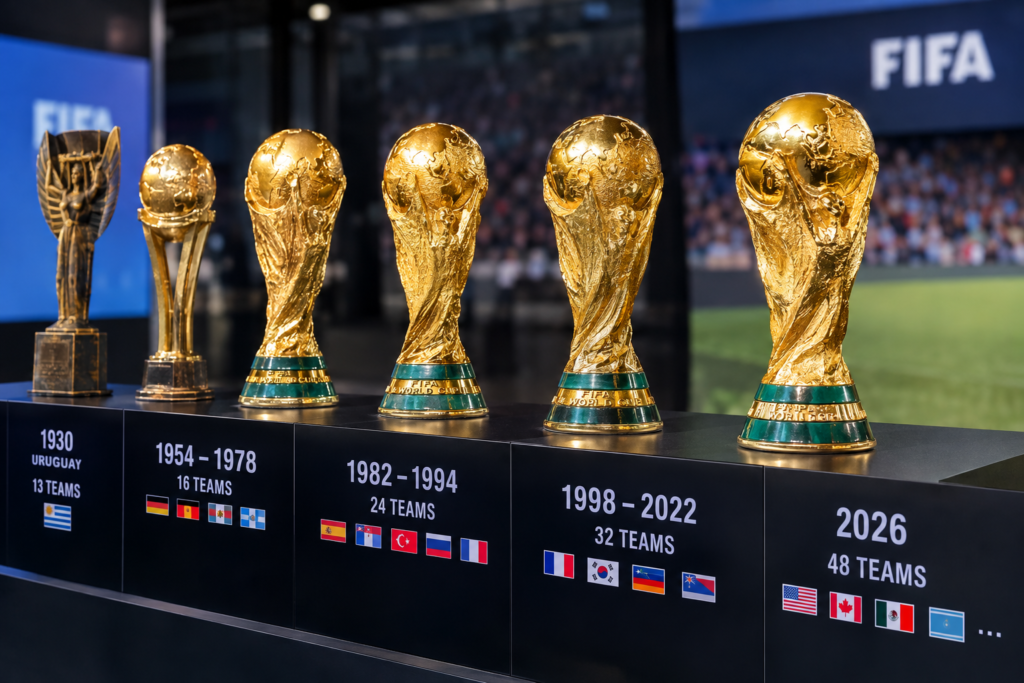
The World Cup has grown larger four times since its first edition drew thirteen teams to Uruguay in 1930. The tournament settled at sixteen teams for most of the twentieth century, holding that size across seven editions from 1954 to 1978, before FIFA made its first major expansion at Spain 1982, growing the field to twenty four teams in a decision the governing body openly linked to new revenue as much as new nations. That format proved awkward at first, splitting the field into an ungainly two-stage group format before Mexico 1986 introduced the round of sixteen that repaired it. Twenty four teams held for four tournaments until France 1998 pushed the field to thirty two, a format so well balanced between reach and quality that it lasted twenty four years and seven editions without a single change. Forty eight teams is the largest single expansion the World Cup has ever attempted, bigger than the jump from sixteen to twenty four and from twenty four to thirty two combined, which is part of why it arrived under more scrutiny than either of the format changes before it.
Forty eight teams is the largest single expansion the World Cup has ever attempted.
Old Stadiums Write New History
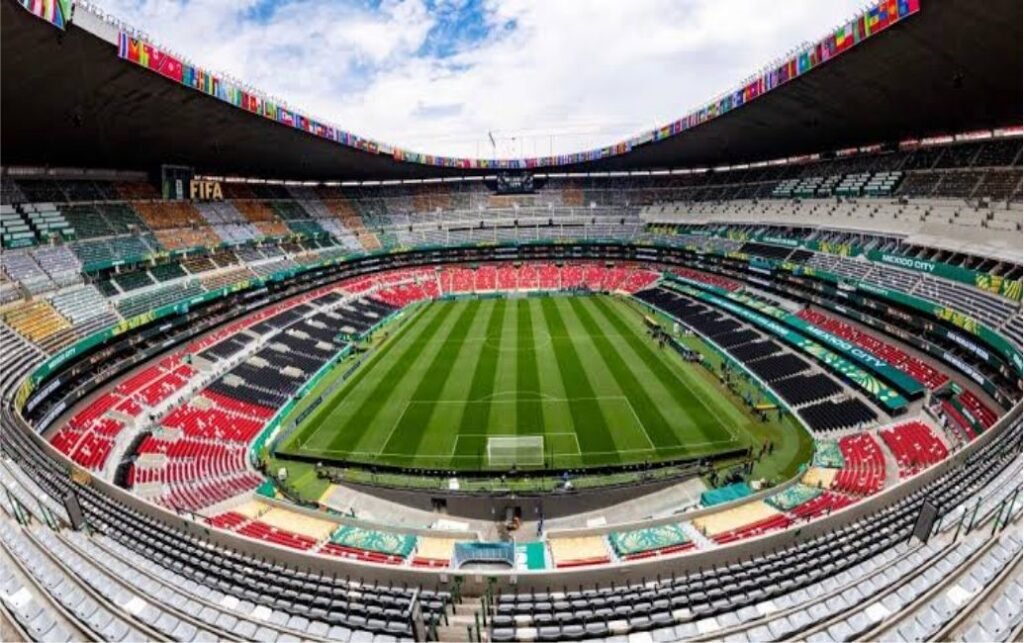
The expansion did not only add new teams. It added a new host nation and sent an old venue into the record books. Canada took part in a men’s World Cup as a host country for the first time, staging matches in Toronto and Vancouver after decades on the edges of the men’s game. Mexico, meanwhile, sent Estadio Azteca back into history a third time. The Mexico City stadium opened the tournament on June 11 with the hosts facing South Africa, becoming the first venue in the competition’s history to stage matches at three separate World Cups, following its turns in 1970 and 1986. Its five matches this summer each filled the stadium to its 80,824 seat capacity, producing five of the tournament’s best attended games and full occupancy every time the ball was kicked there. The reuse extended well beyond Mexico City. Most of the sixteen venues across the three host countries were existing NFL, MLS, or CFL stadiums adapted for football rather than newly built, a choice that spared the 2026 hosts the multi-billion dollar stadium construction programs that shaped tournaments in Brazil and Qatar, even as it meant the World Cup arrived in buildings the host cities already knew well.
Estadio Azteca became the first venue to stage matches at three separate World Cups.
Twelve Groups, Thirty Two Survivors
The format itself took years to settle. FIFA’s first proposal, floated not long after the 2018 tournament, split the forty eight teams into sixteen groups of three, with the top two from each advancing. Officials abandoned that plan once its flaws became obvious on paper: one team would sit idle during each group’s final round while the other two played a match that decided both their fates, an arrangement that invited exactly the kind of quiet cooperation nobody wanted to see at a World Cup.
FIFA settled instead on twelve groups of four, the structure used this summer. Every team still played three group matches, but the top two finishers in each group now advanced alongside the eight best third placed sides, sending thirty two of the forty eight teams into a newly created round of thirty two. It marked the return of a third place qualification table for the first time since 1994, and it fundamentally changed the arithmetic of survival. Where a team once needed to finish in the top half of an eight team group, it now needed only to avoid the bottom third of the entire field. Head to head results between tied teams, rather than goal difference, decided ties for the first time in the competition’s history, a change that occasionally settled a team’s fate before its final group match had even kicked off.
The new format fundamentally changed the arithmetic of survival.
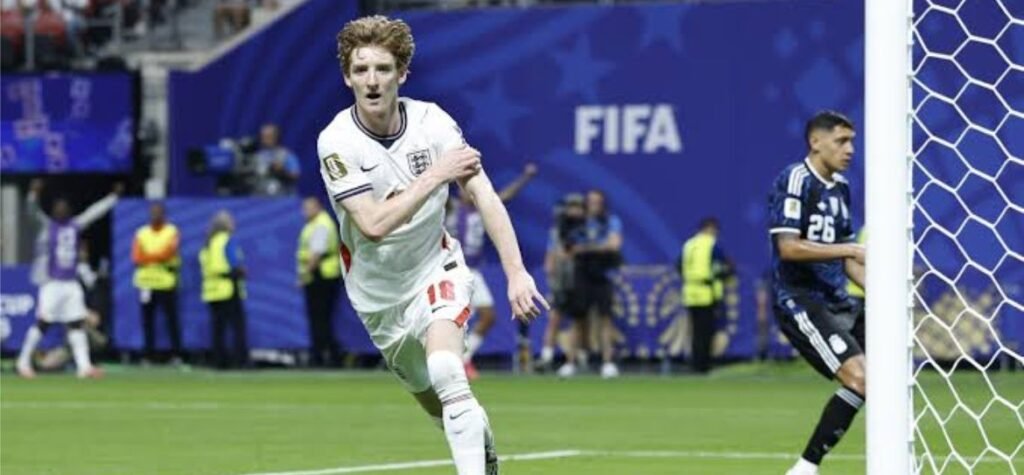
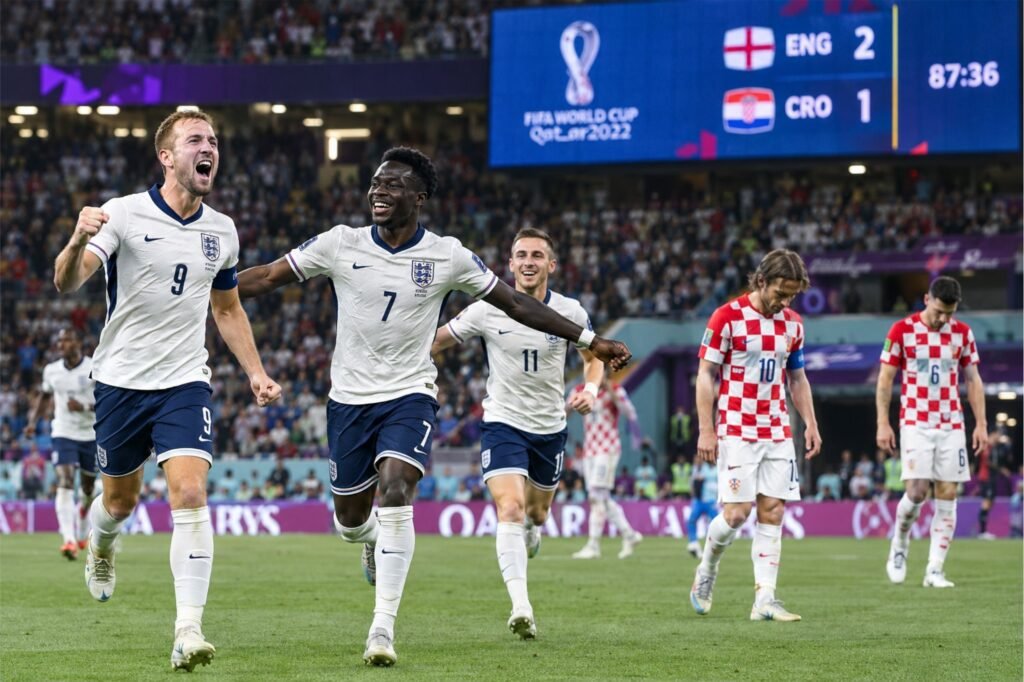
The format produced its share of theatre. Group L, pairing England, Croatia, Ghana, and Panama, earned an unofficial designation as the tournament’s group of death, a reminder that a bigger field did not mean an easier draw for everyone. Cape Verde, one of the tournament’s debutants, advanced from its group and carried its run deep enough into the knockout stage to push Argentina to the brink before falling, the kind of story FIFA had been hoping the expansion would write. It also produced its share of dead matches, as some pundits had warned it would. With two thirds of the field advancing, several third round group fixtures were played between a team already through and one already eliminated, most visibly when already eliminated Jordan closed its campaign against an Argentina side with nothing left to play for.
Heat as the Uninvited Opponent
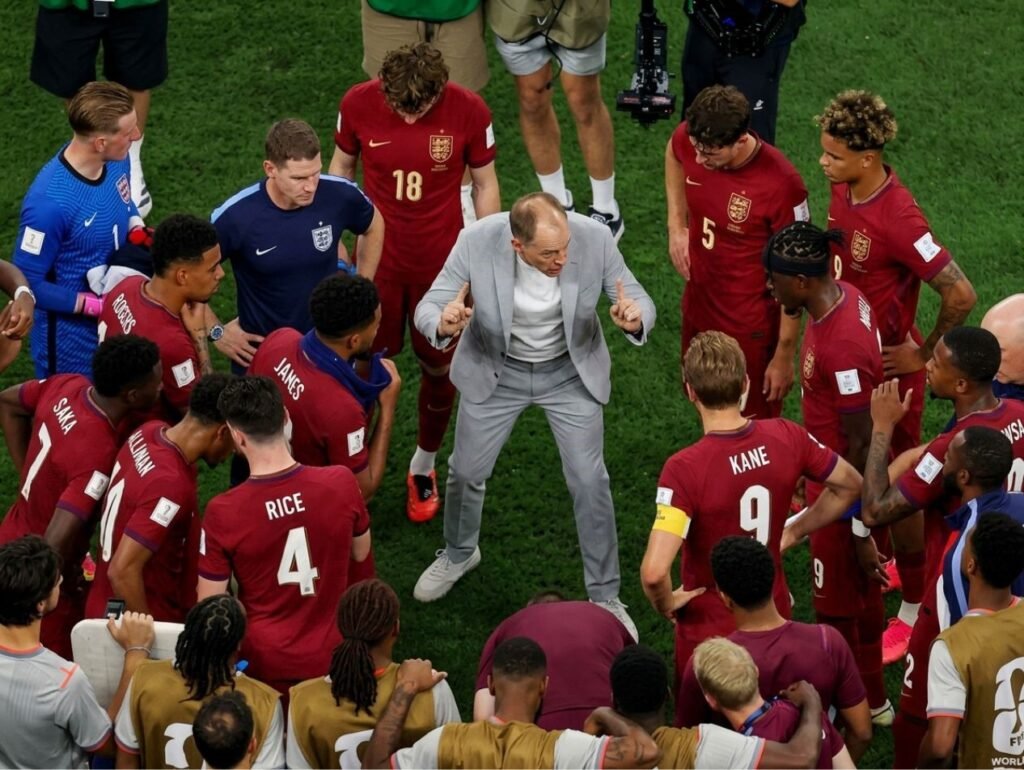
Football’s oldest tournament met one of the planet’s newest problems this summer. For the first time in World Cup history, FIFA built mandatory three minute hydration breaks into every match, arriving at the twenty second and sixty seventh minute of each half regardless of temperature, roof, or kick-off time. The rule followed months of warning from FIFPRO, the global players union, and from independent researchers who found that fourteen of the sixteen host cities routinely see punishing wet bulb readings through June and July. FIFA leaned on the five venues built with roofs, in Atlanta, Dallas, Houston, Los Angeles, and Vancouver, for its daytime fixtures, and pushed games in more exposed cities toward evening kickoffs wherever the schedule allowed. Matches in Miami and several other southern venues were still played under National Weather Service heat advisories, and images of players stretched out on the turf between water breaks became one of the tournament’s recurring pictures. No match was postponed or abandoned for heat, though the warnings came often enough to leave the players’ union unconvinced the problem had been solved rather than simply managed.
No match was postponed for heat, though the warnings came often enough to worry the players’ union.
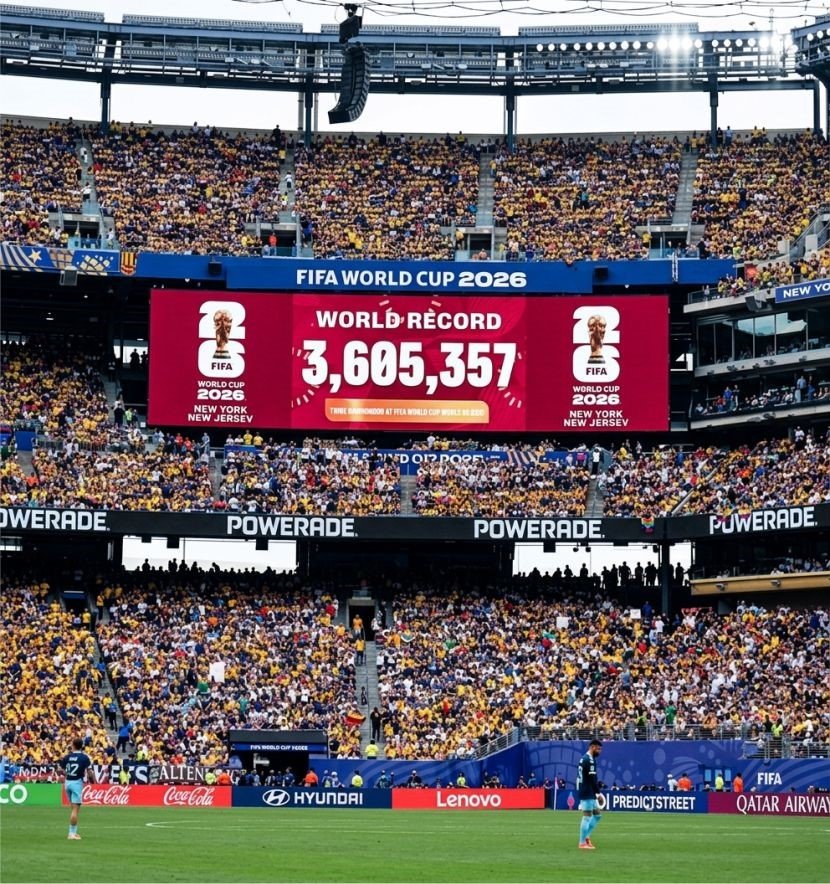
An all time record of 6,810,966 fans attended, more than 2018 and 2022 combined.
Whatever debate the format stirred, the response from fans required none. FIFA reported an all-time record of 6,810,966 fans across the one hundred and four matches, more than the 2018 and 2022 editions combined, filling stadiums to 99.7 percent of capacity and averaging 65,490 spectators per match. The football matched the turnout for scale. Teams combined for 308 goals, easily surpassing the previous tournament high of 172, for an average of 2.96 goals per game, the best scoring ratio the World Cup had produced in fifty six years.
Broadcasters recorded similar growth. Fox, which carried every match in English across its networks and streaming platform, averaged 7.737 million viewers per broadcast, more than double its 3.588 million average from 2022 and nearly triple its 2018 figure. The final itself drew 38.937 million viewers in the United States, with a peak audience of 51.685 million, making it the most watched non Super Bowl sporting event the country had seen since the 1984 Winter Olympics. The earlier round of sixteen defeat of the United States by Belgium had already set its own record as the most watched English language soccer broadcast in American history, evidence that a home nation’s early exit did not cool the country’s appetite for the tournament around it.
Individual Brilliance Amid the Bigger Stage
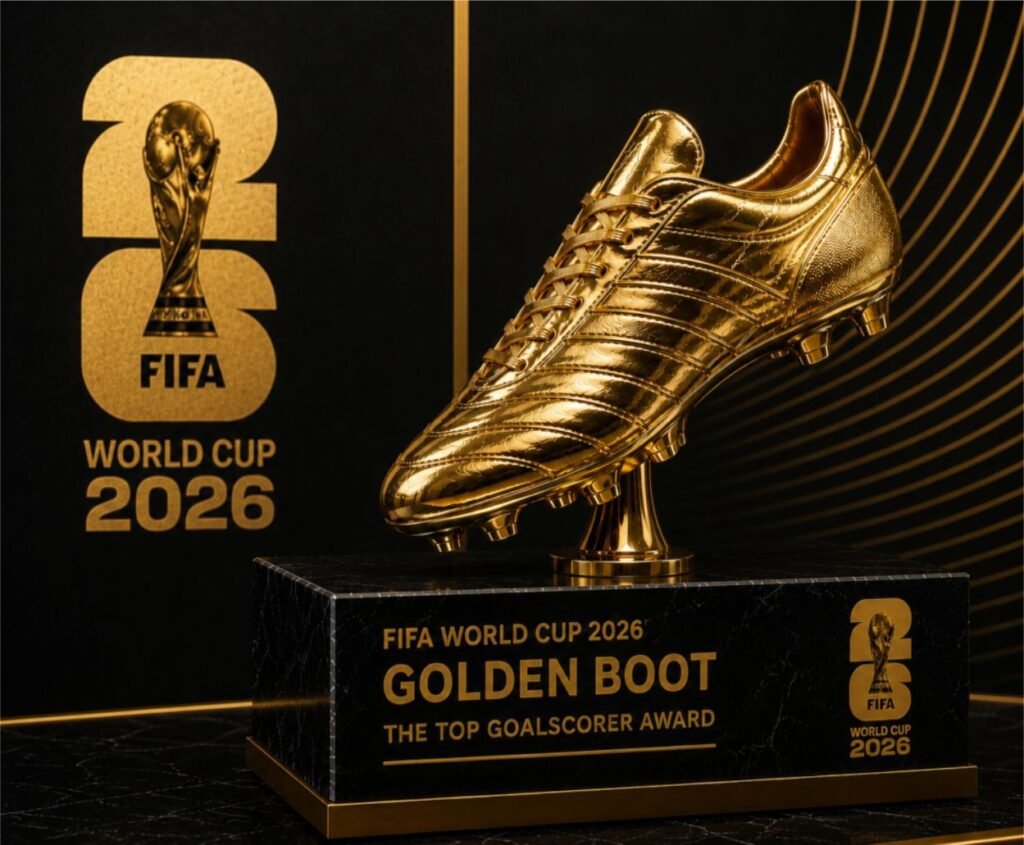
For Messi, likely his last World Cup ended just short of the ending Doha gave him.
The bigger stage did not dilute its biggest names. Kylian Mbappe won the Golden Boot for a second consecutive tournament, scoring ten goals and adding four assists across France’s eight matches, ahead of Lionel Messi, who finished with eight goals and four assists of his own while chasing a record third Golden Ball at thirty nine years old. That award went instead to Rodri, whose command of Spain’s midfield through all eight of the team’s matches earned him the tournament’s best player honour to go with the trophy he lifted as captain. His teammate Unai Simon collected the Golden Glove after keeping seven clean sheets and conceding only a single goal all summer, against Belgium, while nineteen year old Pau Cubarsi beat out his own Barcelona and Spain teammate Lamine Yamal for the Best Young Player award. Argentina reached a second consecutive final, with Messi playing what was, by his own account and by football’s, likely his last World Cup, a farewell that fell agonizingly short of the ending Doha had given him four years earlier.
Where the New Format Showed Its Seams
Success on this scale did not erase every complaint. The quality of the group stage drew the sharpest scrutiny. With thirty two of forty eight teams advancing, elimination became statistically harder than survival, and the tournament went without a genuine group of death outside Group L. Commentators noted that the format left little room for the kind of shock exits that had defined earlier tournaments, since even a stumble in two matches often still left a path to the knockout rounds through the third place table.

Elimination became statistically harder than survival for most of the field.
Logistics drew their own fair share of criticism. Spanning three countries and sixteen cities made for longer travel between fixtures than any previous edition, a burden players’ unions raised repeatedly given the tournament’s forty additional matches. Ticket prices were a recurring complaint throughout the tournament, particularly for marquee fixtures in the largest markets. Weather and playing surfaces added friction of their own, since eight of the sixteen venues, including those hosting the final, both semi-finals, and three of the four quarterfinals, used natural grass laid over an artificial base, a hybrid surface that drew mixed reviews from players used to more familiar pitches. Some national federations also raised concerns about visa and entry processing for players, staff, and officials arriving from smaller footballing nations.
None of these frictions threatened the tournament’s broader success, but they left FIFA with a clear list of problems to solve before the format runs again.
Counting the Receipts
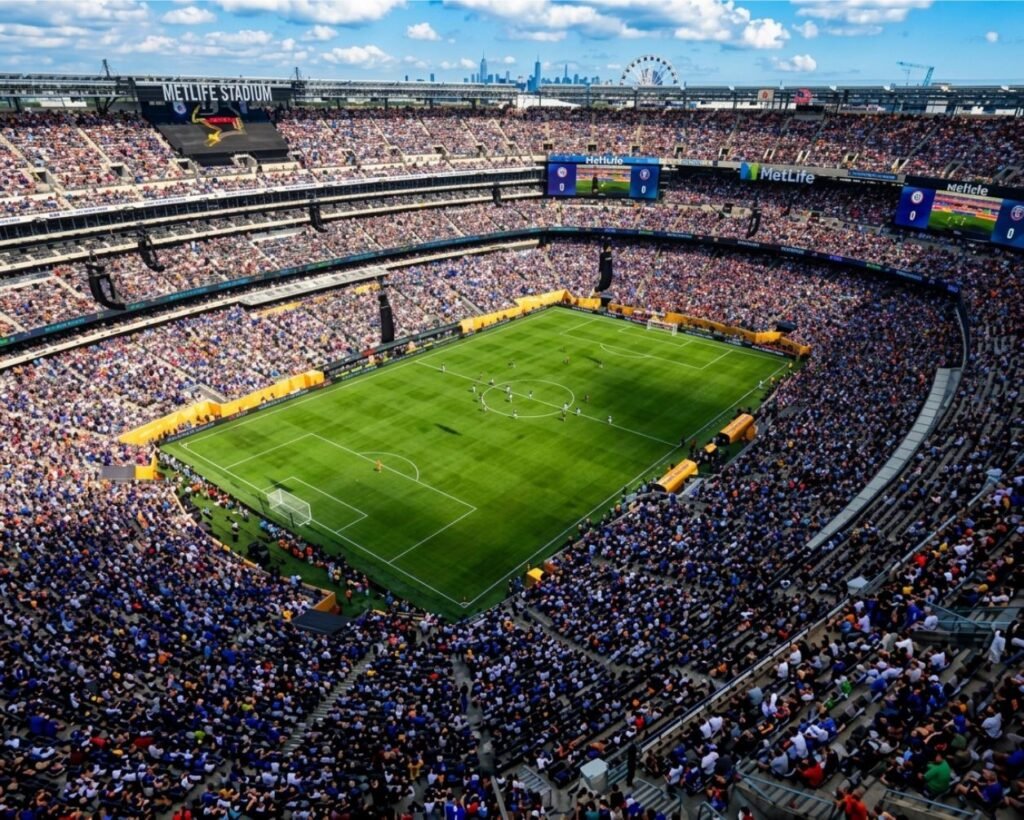
Whether the windfall matches the forecasts is a question a summer alone cannot answer.
FIFA and independent analysts entered the tournament with big numbers attached to it. Beyond FIFA’s own $13 billion commercial target, separate economic studies estimated the World Cup could add somewhere between $40 billion and $80 billion to global economic output once tourism, jobs, and tax revenue were counted, with one widely cited pre-tournament study projecting $30 billion in added economic output and $17.2 billion in GDP contribution for the United States alone. FIFA has said the bulk of its own revenue moves back out to football through its two hundred and eleven member associations rather than staying inside the organization, a claim consistent with its non-profit status under Swiss law. Whether the wider windfall for host cities matches those forecasts is a question that will take longer than a summer to answer. Economists who studied the 1994 World Cup, staged in the same three countries, found its actual economic benefit fell billions of dollars short of the projections that preceded it, and similar gaps followed Brazil’s tournament in 2014. What is already certain is that the conversation itself has grown larger, with more matches, more broadcast hours, and more sponsorship inventory sold than at any World Cup before it, whatever the fuller independent accounting eventually shows.
A Final Built for the Occasion
Spain closed out the tournament as it began it, among the favourites, defeating Argentina 1-0 after extra time in a final that stretched the full one hundred and twenty minutes before Ferran Torres broke the deadlock. Captain Rodri lifted the trophy for Spain’s second World Cup title, with Lamine Yamal among the young core that carried the team through the tournament’s newly lengthened path to the final, one knockout round longer than any previous World Cup required. For Argentina, the defeat ended a bid for a fourth star and a place alongside Brazil at the top of the World Cup’s roll of honour.
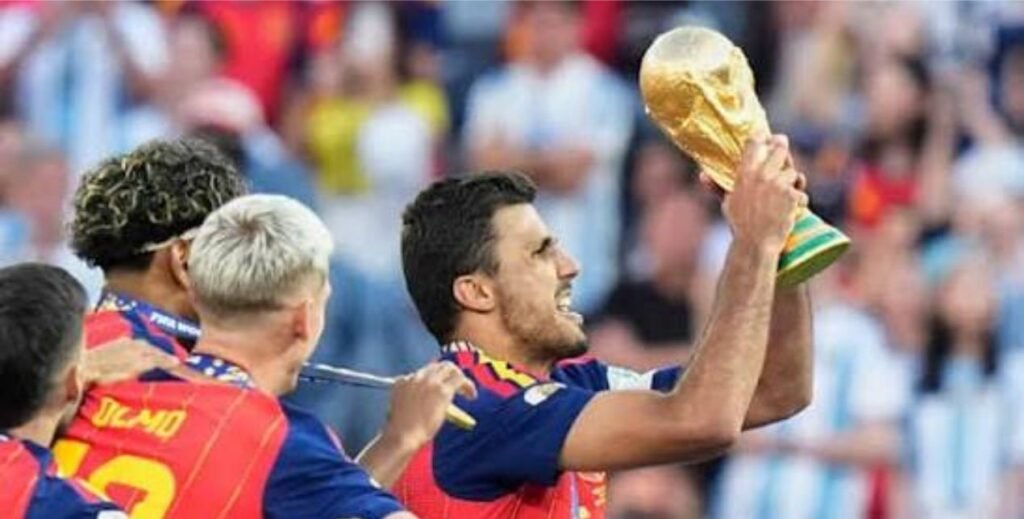
Captain Rodri lifted the trophy for Spain’s second World Cup title.
The occasion around the final matched its billing. New York New Jersey Stadium in East Rutherford hosted a ceremony attended by FIFA President Gianni Infantino and United States President Donald Trump, closing out a tournament that had, by its final whistle, drawn official attendance and viewership figures beyond any World Cup before it.

| This article has been published with the active support on the research, analysis aspects by Mr. Arhaam Azhar. Arhaam is an 11 years’ old sports enthusiast based out of Islamabad. He takes keen interest in football. |
What a Bigger World Cup Means for What Comes Next
FIFA wasted little time signalling that forty eight teams was a waypoint rather than a destination. Within days of the final, Infantino had raised the prospect of a sixty four team World Cup as early as 2030, a leap that would add another twelve groups’ worth of teams to a format still finding its footing. FIFA’s own pre-expansion research, conducted years before this tournament, had already found that competitive quality peaked at thirty two teams and declined as the field grew, a finding the governing body accepted even as it pursued expansion for reasons beyond quality alone.
Forty eight teams was always a waypoint for FIFA, not a destination.
What this summer demonstrated is that scale and spectacle can coexist with a diluted group stage, at least for one cycle. The record crowds, the record broadcasts, and the emergence of genuine debutant stories suggest FIFA achieved the global reach it set out to build. The logistical strain across three countries, and the quiet erosion of jeopardy in the group stage suggest the format still owes the game some refinement. For the nations that qualified for the first time this year, and the ones still hoping to follow them, the calculation is likely a simple one regardless of the format’s imperfections: a wider door to the World Cup is still a door, and for a growing number of footballing nations, that door had never opened before.
Leave a Reply