
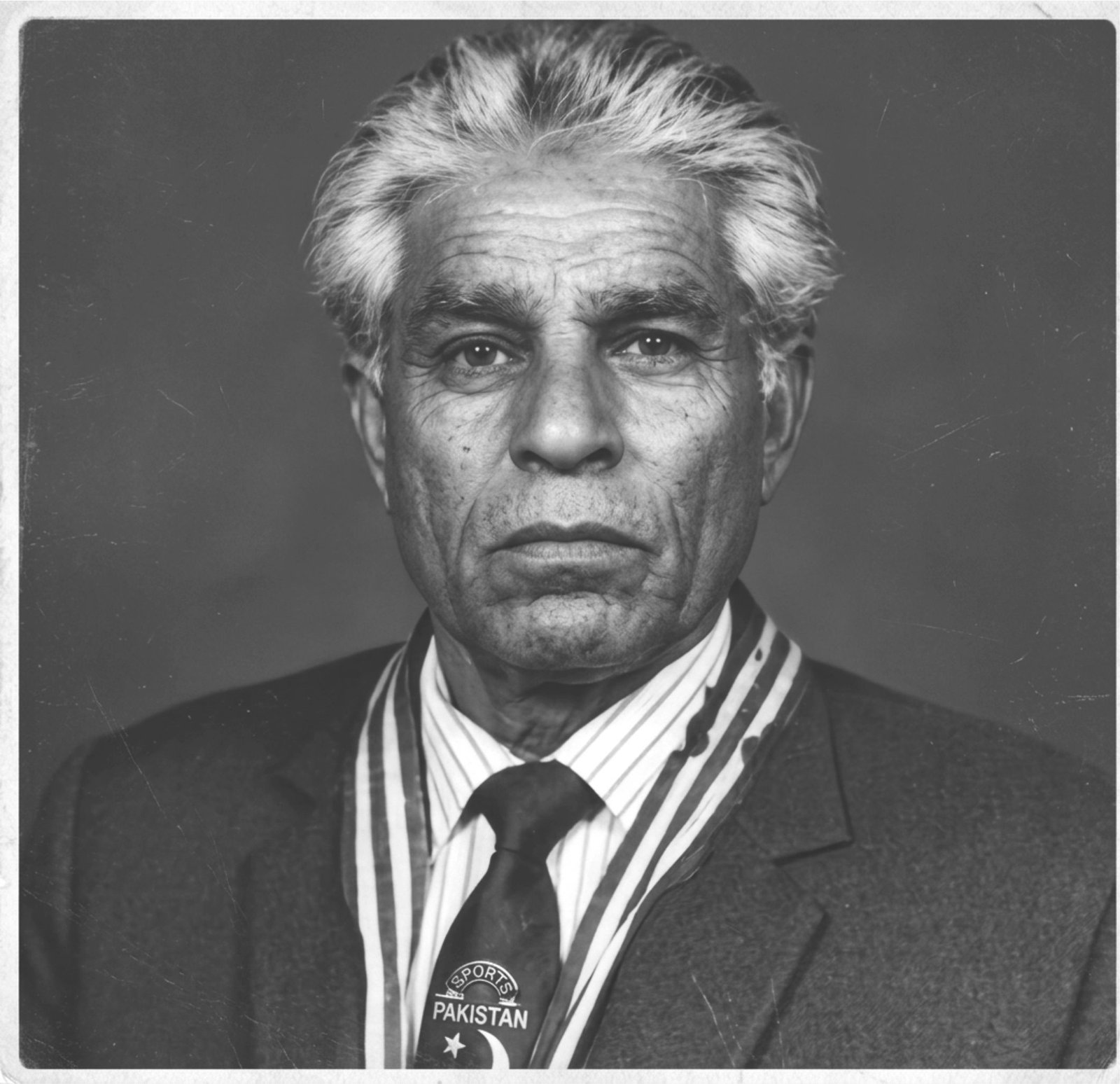
A soldier from a small Punjabi village turned distance running into a national triumph, and he did it twice at the same Asian Games.
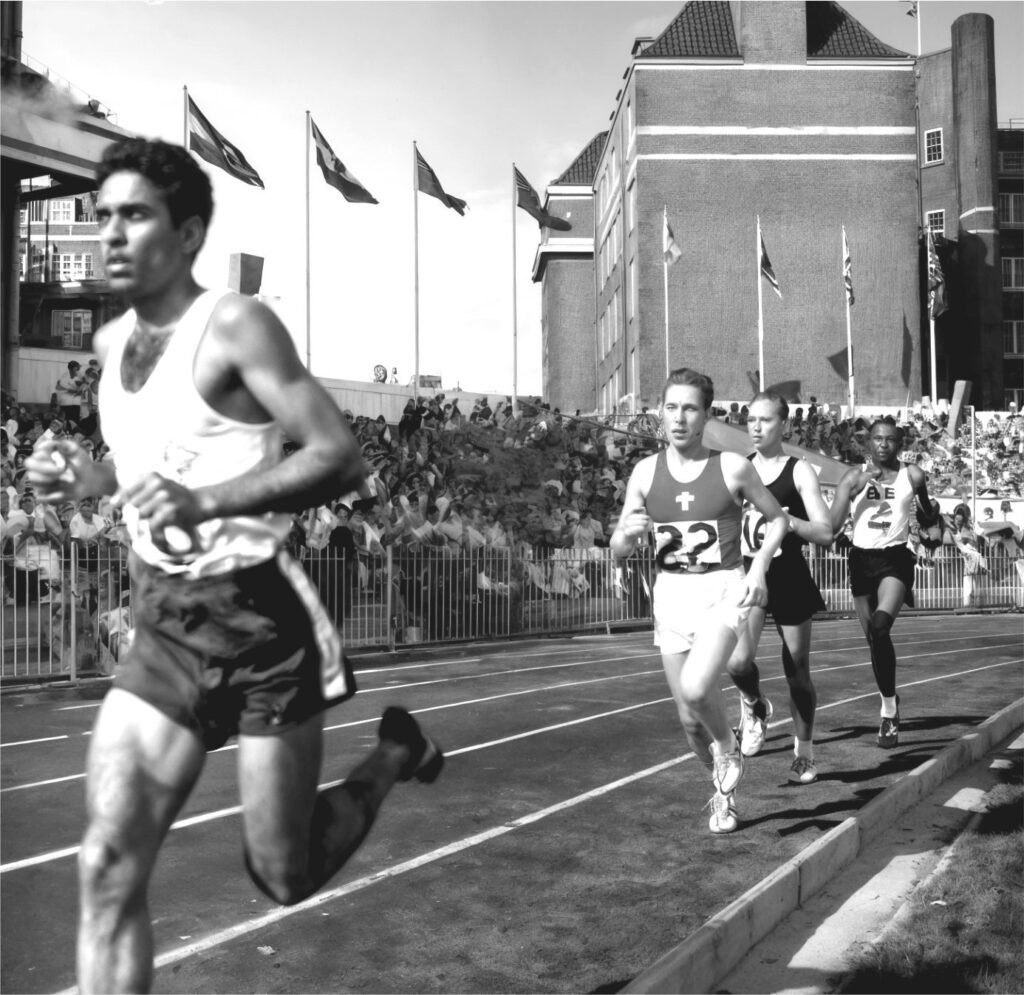
In August 1962, the newly built Gelora Bung Karno Stadium in Jakarta hosted the fourth Asian Games, a gathering meant to announce Indonesia’s arrival on the world stage. No one could predict that a Pakistani soldier turned distance runner would deliver one of the meet’s quiet marvels. Mubarak Shah won gold in the 3000 metre steeplechase, then, days later, won gold again in the 5000 metres. Both wins came with new Games records. Few Pakistani athletes, before or since, have matched that feat in a single edition of the Games.
A Runner from Dhok Badhal
Mubarak Shah was born on 24 June 1930 in Dhok Badhal, a village in the Rawalpindi district of Punjab, then still part of British India. Like many young men of his generation and region, he joined the Pakistan Army, an institution that in the 1950s and 1960s doubled as the country’s de facto athletics academy. Soldiers received time to train, access to grounds, and a chain of command that rewarded discipline. Mubarak Shah, alongside contemporaries such as Abdul Khaliq, Ghulam Raziq, and Mohammad Iqbal, built his career inside that system. He chose the long distances: the steeplechase, the 5000 metres, and the 10,000 metres, events that reward patience as much as speed.
Tokyo, 1958: The First Crown
Mubarak Shah’s international breakthrough came at the 1958 Asian Games in Tokyo. He won the 3000 metre steeplechase, his first continental title, and followed it with a silver medal in the 10,000 metres. By the close of 1958, Mubarak Shah stood among the most consistent distance runners in Asia.
Rome, 1960: A Step Onto the Larger Stage
Two years later, Mubarak Shah competed at the 1960 Summer Olympics in Rome, running in the heats of both the 5000 metres and the steeplechase. He did not advance past the first round in either event, finishing behind runners who would go on to become among the finest distance athletes of the era. The Olympics brought no medal, but they placed his name, and Pakistan’s, on a stage far larger than the region. He returned home tested against opposition he rarely met at Asian meets, and that experience shaped his approach to the Asian Games that followed.
Mubarak Shah stood on the top step of the podium twice within the same Games, a rare feat in a sport where the steeplechase and the 5000 metres demand different combinations of speed, strength, and technique.
Jakarta, 1962: Twice Over
At the 1962 Asian Games, Mubarak Shah defended his 3000 metre steeplechase title in a Games record time of eight minutes and 57.8 seconds. He then moved away from the 10,000 metres, the event in which he had won silver four years earlier, to the shorter 5000 metres, and won that too, setting a second Games record at 14 minutes and 27.2 seconds. The double meant Mubarak Shah reached the top step of the podium twice within the same Games, a rare accomplishment in distance running, where the steeplechase and the 5000 metres draw on different combinations of speed, strength, and technique. Pakistan’s contingent in Jakarta also brought home gold in field hockey and boxing, but Mubarak Shah’s double stood apart as an individual achievement inside a wider team triumph.
A Golden Generation
Mubarak Shah’s career unfolded inside what historians of Pakistani sport now call the golden age of the country’s athletics, a period running roughly from the mid 1950s through the mid 1960s. Sprinter Abdul Khaliq, hurdler Ghulam Raziq, hammer thrower Mohammad Iqbal, and javelin thrower Mohammad Nawaz all wore the Pakistan Army uniform and all won multiple Asian Games medals within that same window. Together they gave Pakistan a presence in track and field that the country has rarely matched since. Mubarak Shah’s two golds in Jakarta sit among the clearest individual peaks of that era, a reminder that Pakistan’s sporting story once ran well beyond cricket and field hockey.
Recognition and a Quiet Retirement
Mubarak Shah closed his Asian Games career in 1962 with four continental medals: three gold and one silver. In 1963, the Government of Pakistan awarded him the Pride of Performance in recognition of his record at Tokyo and Jakarta. He then stepped back from international competition and lived out his later years away from public attention. Mubarak Shah died on 19 January 2001 in Rawalpindi, the city near his birthplace, at the age of seventy.
Why He Still Matters
Pakistani athletics has declined sharply since the era in which Mubarak Shah competed, and many of the country’s outdoor track records still date from the 1960s and 1970s, unbroken for decades. Against that backdrop, his achievement reads less like a footnote and more like a benchmark. He proved that a runner from a small Punjabi village could stand at the top of Asian sport in two events on the same afternoon, without the funding or global exposure that athletes take for granted today. His name will continue to shine amongst the heroes of Pakistan who brought great honour and pride for the nation.
MUBARAK SHAH AT A GLANCE
| Born | 24 June 1930, Dhok Badhal, Punjab |
| Sport | Athletics, long distance running |
| Service | Pakistan Army |
| Died | 19 January 2001, Rawalpindi, aged 70 |
Asian Games record
1958 Tokyo: Gold, 3000 m steeplechase · Silver, 10,000 m
1962 Jakarta: Gold, 3000 m steeplechase, Games record, 8:57.8
1962 Jakarta: Gold, 3000 m steeplechase, Games record, 8:57.8
1962 Jakarta: Gold, 5000 m, Games record, 14:27.2
Honour: Pride of Performance, Government of Pakistan, 1963
Leave a Reply