
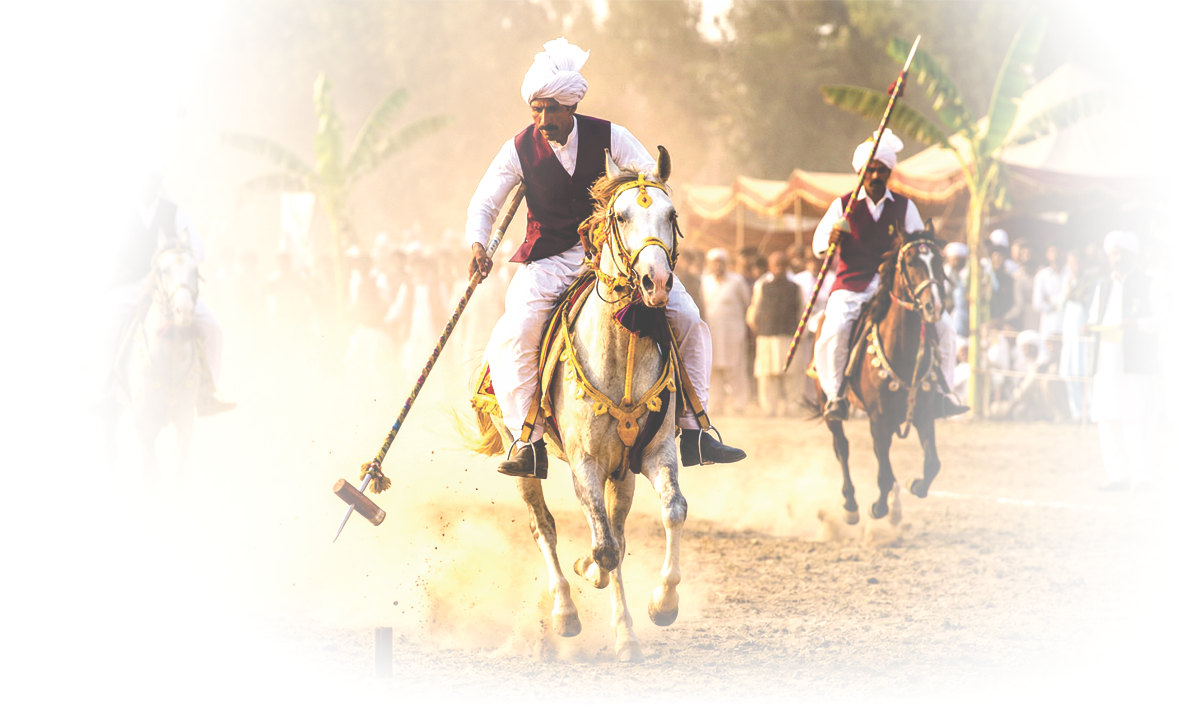
Where Heritage Converges with Destiny
The thunder of hooves on Pakistani soil tells an ancient story—one of cavalry charges, royal processions, and a deep-rooted connection between nation and horse. Yet today, as the world of equestrian sports evolves into a billion-dollar industry with Global prestige and global appeal, Pakistan stands at a crossroads. The question is no longer whether the country has the heritage for horse sports, but whether it has the vision to transform that heritage into a thriving competitive landscape.
The thunder of hooves on Pakistani soil tells an ancient story—one of cavalry charges, royal processions, and a deep-rooted connection between nation and horse. Yet today, as the world of equestrian sports evolves into a billion-dollar industry with Global prestige and global appeal, Pakistan stands at a crossroads. The question is no longer whether the country has the heritage for horse sports, but whether it has the vision to transform that heritage into a thriving competitive landscape.
A Legacy Forged in Nobility and Valour
The Foundation of Centuries
Pakistan’s relationship with horses runs deeper than sport—it flows through the very veins of its cultural identity. From the martial traditions of tent pegging—a sport born from medieval cavalry training—to the ceremonial pageantry of military units, horses have been companions in nation-building. The country boasts indigenous breeds like the sturdy Baluchi horse and the elegant Sindhi, animals bred for centuries to withstand the rigors of South Asian terrain.
It’s knowledge passed down through generations of breeders, trainers, and riders. It’s the foundation upon which a modern equestrian industry can be built.
The Contemporary Arena
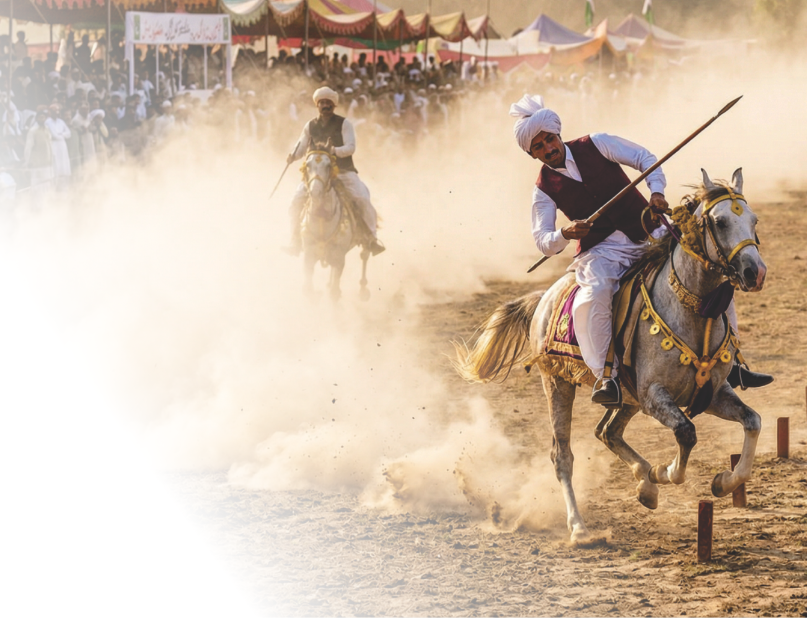
Today, equestrian sports in Pakistan exist in pockets of excellence scattered across the country. Private riding clubs, military equestrian centres, and individual breeding operations continue to nurture talent. Show jumping arenas are emerging in major cities, while tent pegging/ naiza baazi competitions draw passionate crowds in both urban and rural settings.
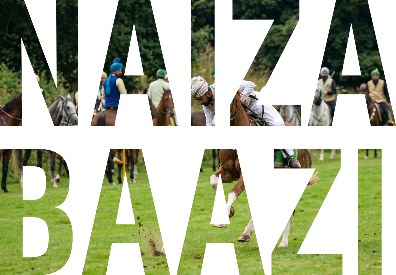
Naiza Baazi: The Crown Jewel of Pakistani Equestrian Tradition
The Poetry of Lance and Gallop
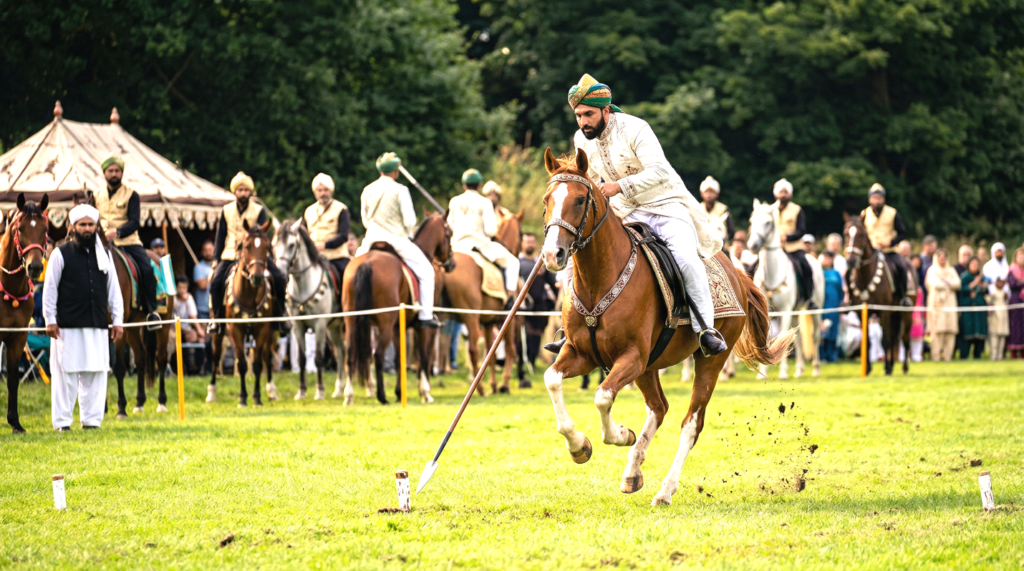
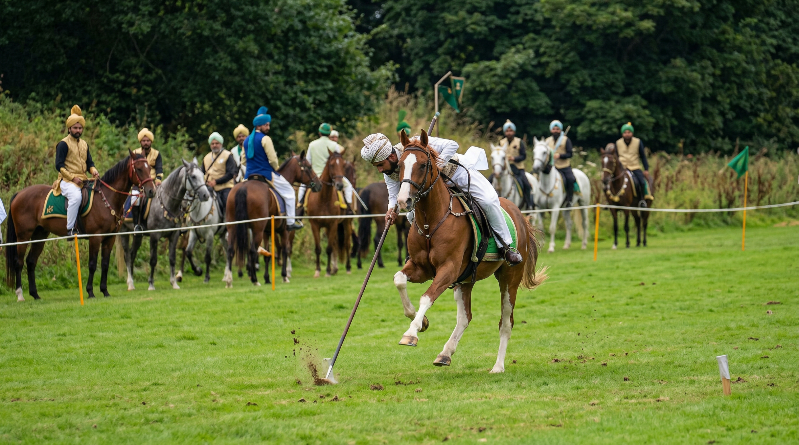
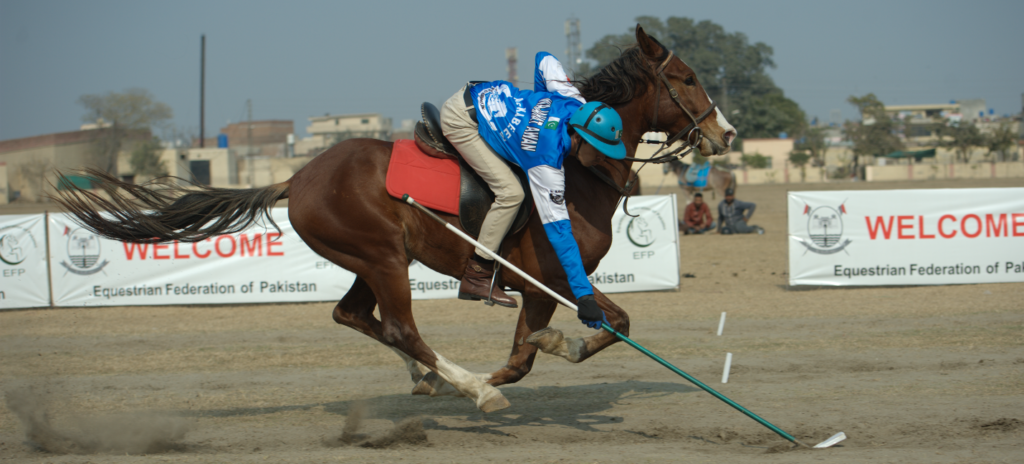
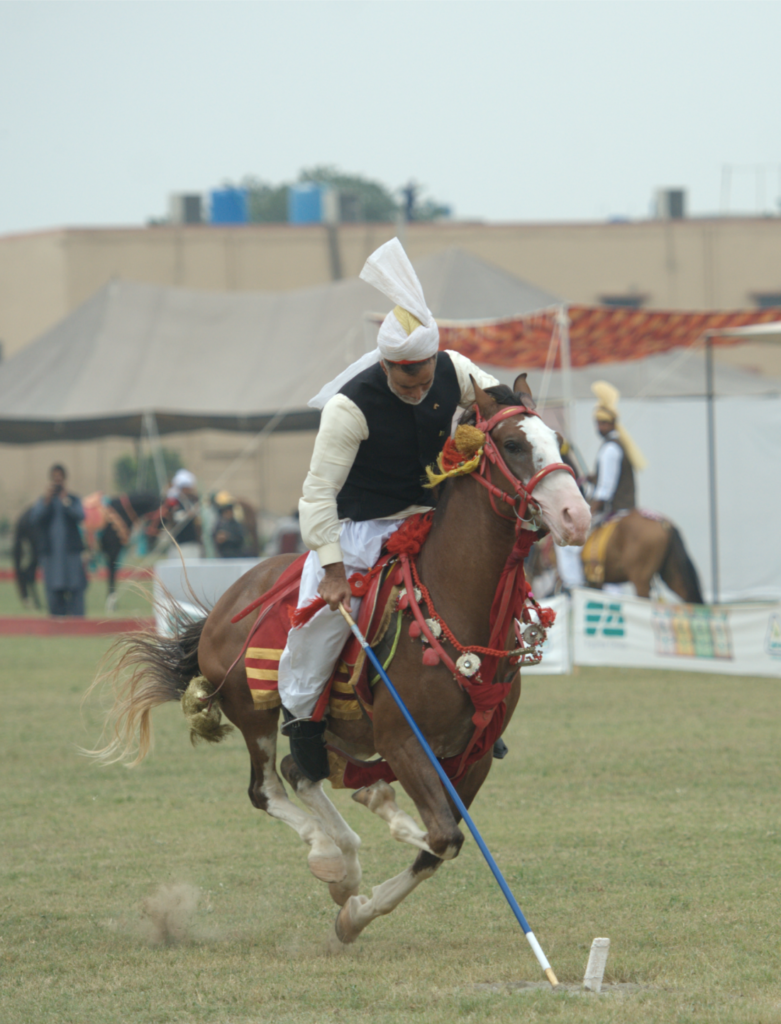
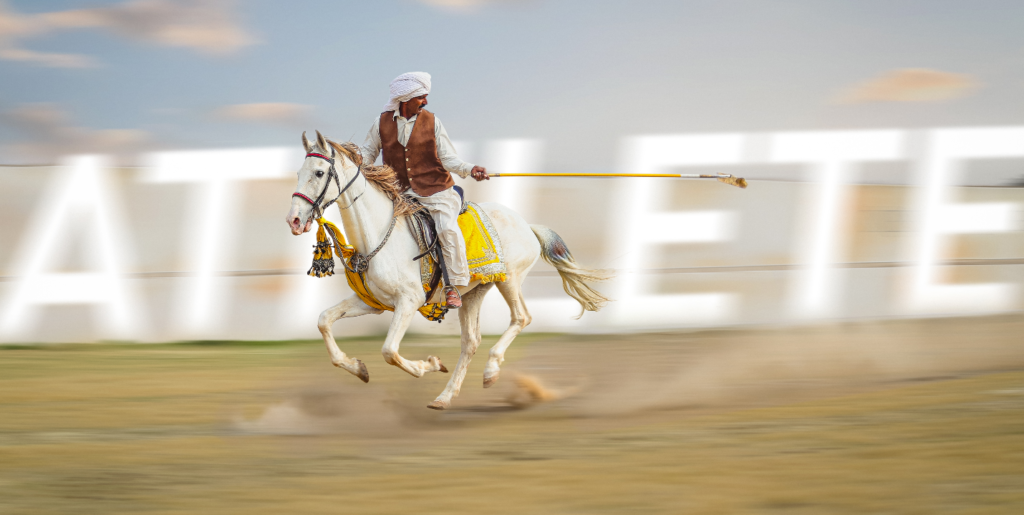
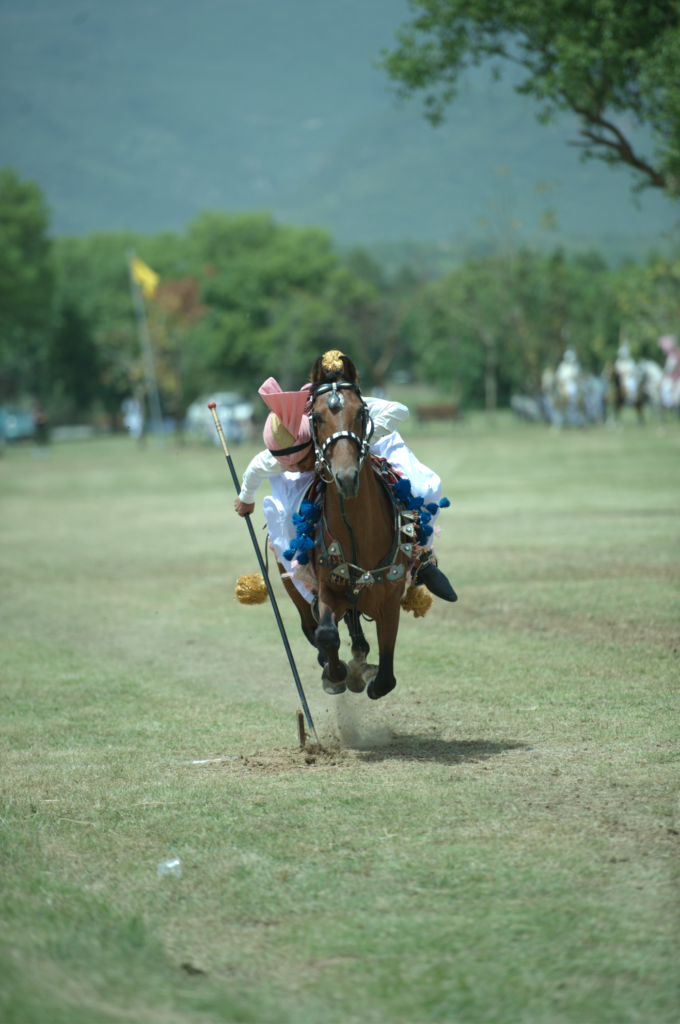
Tent pegging—or naiza baazi as it’s known in Urdu—represents Pakistan’s most authentic contribution to the global equestrian landscape. This thrilling sport, where riders gallop at full speed to spear wooden pegs from the ground with a lance, originated from cavalry training exercises designed to unseat enemy riders and target ground obstacles during battle.
What makes tent pegging extraordinary is its fusion of speed, precision, horsemanship, and courage. A rider must maintain perfect balance while controlling a horse at full gallop, judging distance with split-second accuracy, and striking a target barely four inches wide—all while wielding a nine-foot lance.
From Medieval Battlefields to Global Championships
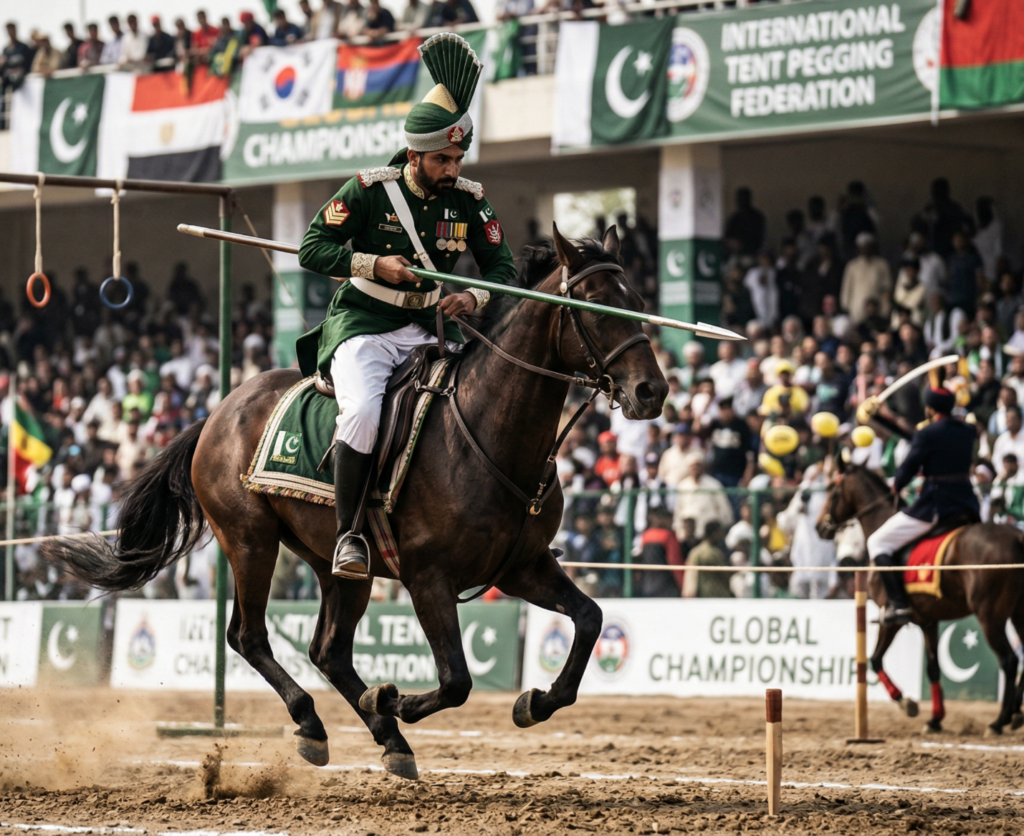
Pakistan has been instrumental in transforming tent pegging into a recognized international equestrian sport. The International Tent Pegging Federation, established with significant Pakistani involvement, now governs competitions across 19 countries. Pakistani teams have dominated world championships, demonstrating mastery of a sport that requires years of dedicated training and an almost telepathic connection between horse and rider
The sport comprises multiple events: the peg itself, the lemon cut, the ring, and the sword cut—each demanding different skills. Pakistani riders excel across all categories, with military teams often showcasing performances that leave international audiences spellbound.
The Custodians of Excellence
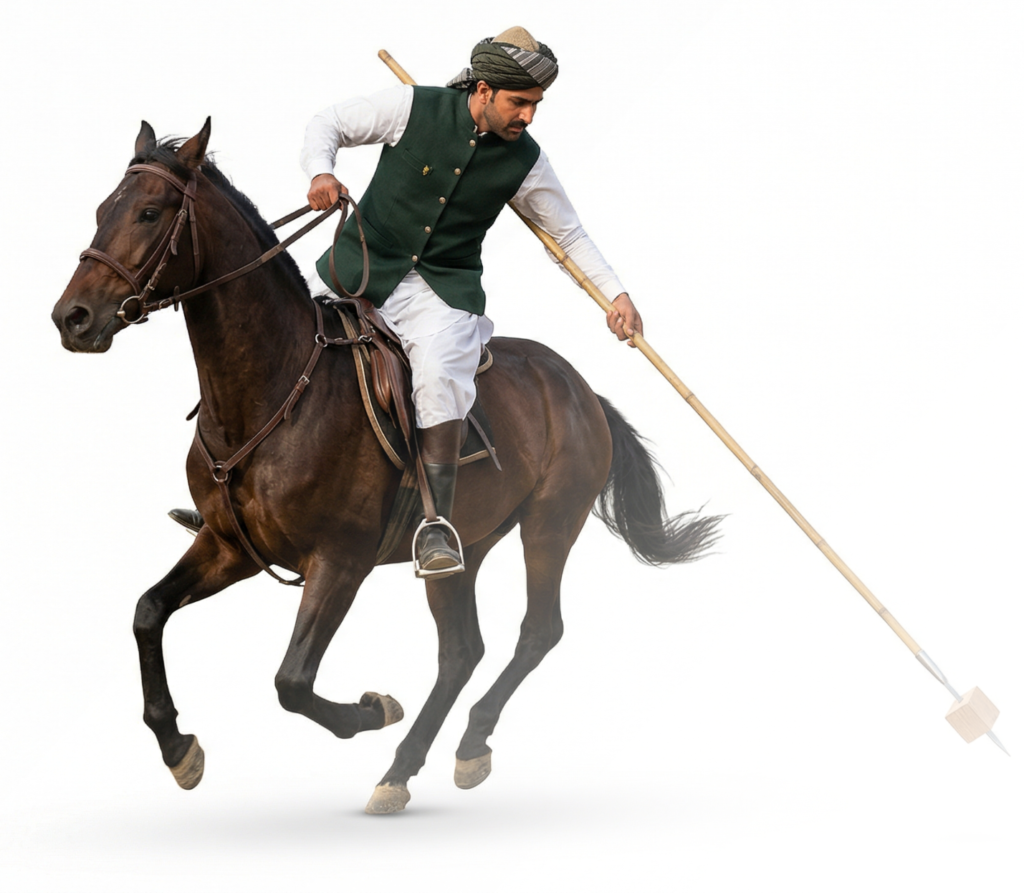
Individual enthusiasts have emerged as the backbone of tent pegging’s growth in Pakistan. Dedicated riders, often funding their own training and horse care, compete in regional and national championships that attract thousands of spectators. These grassroots champions organize local competitions, mentor young riders, and maintain the technical knowledge that makes Pakistan’s tent pegging tradition world-class.
Private organizers have stepped forward to host tent pegging festivals that combine sport with cultural celebration, drawing crowds from across regions. Some have established training centres specifically for this discipline, preserving traditional techniques while incorporating modern sports science. Their work ensures that villages and cities alike can participate in Pakistan’s most indigenous equestrian sport.
Agricultural families in Punjab and Sindh have maintained tent pegging traditions for generations, passing down riding techniques and horse training methods. These custodians of heritage deserve recognition as the foundation upon which competitive tent pegging now stands.
The Science and Mastery Behind the Sport
Modern tent pegging has evolved far beyond its battlefield origins into a rigorously codified sport governed by precise technical standards. The International Tent Pegging Federation prescribes exact peg dimensions—typically a four-inch square wooden target set flush with or just above ground level—and regulates lance specifications, course layouts, and scoring criteria. Riders are judged not only on whether they spear the peg, but on the clean extraction and carry distance, rewarding true mastery over brute force.
Training for elite tent pegging demands a multi-year program that addresses the rider, the horse, and the partnership between them. Riders develop core stability, balance in the two-point position at speed, and acute spatial awareness through progressive drills—beginning with stationary lance strikes before advancing to trotting, cantering, and finally full-gallop passes. Horses are conditioned to maintain a straight, forward line of travel without flinching at the lance’s movement, a quality achieved through systematic desensitisation and reward-based training.
Pakistan’s military equestrian units have long incorporated sports science into their tent pegging programs. Civilian clubs are increasingly adopting similar methodologies, partnering with biomechanics specialists and equine physiotherapists to optimise both rider posture and equine fitness. This marriage of tradition and technology is a principal reason Pakistani competitors maintain their edge on the world stage.
Regional Competitions and the Festival Circuit
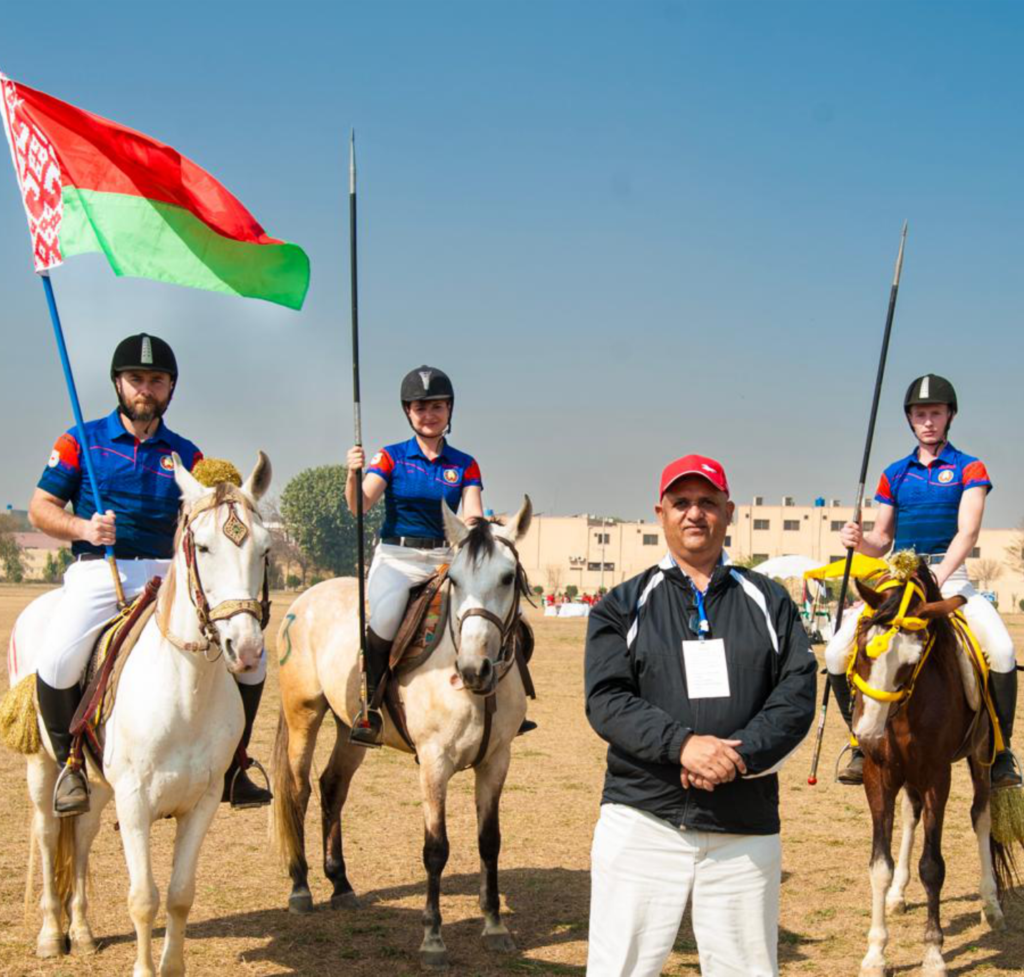
Across Pakistan, tent pegging’s competitive calendar pulses through an extensive network of district, provincial, and national tournaments. Punjab alone hosts dozens of annual events, from intimate village competitions drawing hundreds of local supporters to prestigious open championships that attract riders from across the country and neighbouring nations. The social character of these gatherings—where families travel hours to watch, vendors line the perimeters, and impromptu music underscores each galloping run—demonstrates that naiza baazi occupies a space in Pakistani culture that no imported sport can replicate.
The institutional acknowledgement by provincial governments—even if still modest—signals a growing understanding that naiza baazi is not a relic of the past but a living competitive discipline deserving of structured development.
Pakistan on the World Stage
Pakistan’s international tent pegging record is, by any measure, exceptional. National teams have claimed multiple World Tent Pegging Championship titles, defeating well-funded squads from the Gulf states, South Asia, and beyond. These victories are not incidental; they reflect decades of accumulated institutional knowledge within the Pakistan Army equestrian corps, the dedication of civilian federations, and the sheer depth of grassroots participation that continuously replenishes the talent pool.
Investment in international campaign preparation—including advance scouting of competition grounds, standardised lance and equipment protocols that match international specifications, and sports psychology support for riders—would sharpen a competitive edge that is already formidable. With targeted resources, Pakistan’s tent pegging teams could move from dominant to unassailable at the world level.
Beyond competition, Pakistan has an opportunity to position itself as the global capital of tent pegging knowledge. Hosting international training camps, certifying coaches from partner nations, and partnering with the International Tent Pegging Federation to develop coaching curricula would cement Pakistan’s authority in the sport it has done more than any other country to elevate. This soft-power dividend—of being recognised as the definitive home of naiza baazi—carries cultural and diplomatic value alongside sporting prestige.
Show Jumping: Elevating Pakistan to Global Heights
The Vertical Symphony
If tent pegging represents Pakistan’s equestrian soul, show jumping represents its global ambition. This Global discipline—where horse and rider navigate a course of obstacles reaching heights of 1.6 meters—has seen growing Pakistani participation over the past two decades.
Show jumping demands precision, trust, and technical mastery. The horse must possess courage and athleticism to clear spreads and verticals, while the rider must calculate approach angles, stride distances, and timing with mathematical accuracy. A single misjudgement results in rails knocked down and penalty points accumulated.
Architects of Competitive Distinction
Pakistani show jumpers have begun making their mark at regional competitions, with several riders qualifying for international events. Modern riding schools in Lahore, Karachi, and Islamabad now feature regulation jumping courses with properly designed fences—oxers, verticals, combinations, and water jumps that meet International Federation for Equestrian Sports (FEI) standards.
The sport requires significant investment: horses trained for jumping command premium prices, courses require regular maintenance, and riders need access to qualified coaches who understand the technical nuances of approach, release, and course strategy. Despite these challenges, a dedicated community of riders and trainers is building Pakistan’s show jumping capabilities from the ground up.
Horseback Archery: Reviving the Ancient Mounted Warrior Arts
The Warrior’s Heritage Reimagined
Horseback archery—the art of shooting arrows while riding at speed—represents one of humanity’s oldest mounted combat skills. Pakistan’s geographic and cultural position along ancient Silk Road trade routes means this martial tradition flows through the region’s historical DNA, and the discipline is experiencing a global renaissance as a governed competitive sport with world championships and standardised courses.
While still in its early stages domestically, horseback archery holds genuine promise for Pakistan. The galloping balance and horse control already mastered by tent pegging riders translate directly to mounted archery, meaning the country possesses a ready cross-training pool. With coaching certification and international federation affiliation, Pakistan could field competitive teams and develop the discipline as a complementary strand of its broader equestrian program.
Arabian Bloodlines: Pakistan’s Equine Renaissance
The Noble Desert Heritage
The Arabian horse—compact, intelligent, and possessing legendary endurance—represents equestrian nobility. Pakistan’s Arabian breeding industry, though modest compared to Gulf neighbours, shows remarkable promise and dedication.
Master Breeders and Their Visionary Pursuits
Individual breeders across Pakistan have invested in importing Arabian stock from renowned international bloodlines—Egyptian, Polish, Spanish genetics that represent centuries of selective breeding. These dedicated individuals maintain breeding records, study pedigrees, and apply scientific breeding principles to produce horses that can compete internationally.
Private studs in Punjab and Sindh have established Arabian breeding programs focused on temperament, conformation, and athletic ability. Some breeders have imported mares and stallions with the hope that Pakistan becomes a regional breeding hub over time.
Showcases of Equine Magnificence
Arabian horse shows in Pakistan draw impressive crowds, with breeders presenting their finest animals in halter classes judged on conformation, movement, and type. These events serve dual purposes: showcasing breeding quality and educating the public about equestrian excellence.
Competitions for Arabian horses under saddle demonstrate the breed’s versatility beyond beauty. Pakistani-bred Arabians are beginning to compete successfully in these events, proving that local breeding operations can produce competitive athletes.
Democratizing Excellence: Making Equestrian Sports Accessible to Pakistan’s Youth
all economic strata, and creating pathways for children and youth from diverse backgrounds isn’t merely charitable—it’s strategically essential for building a competitive national program.
Scholarship Programs and Shared Resources
Forward-thinking riding clubs should establish merit-based scholarship programs covering lesson fees, equipment costs, and competition expenses for talented young riders. Corporate sponsors could adopt promising youth athletes, providing multi-year support that allows development without financial pressure. The tent pegging community could establish sponsorship pools where local businesses collectively support young talent.
Community riding schools—modelled on public sports complexes—would provide affordable access through tiered pricing structures where higher-income families subsidize reduced fees for lower-income participants. Equipment sharing programs can dramatically reduce costs: riding clubs could maintain libraries of helmets, boots, and protective vests that young riders borrow rather than purchase. For tent pegging, community lances and training pegs eliminate individual equipment ownership requirements.
School Programs and Group Training
Pakistan’s educational institutions represent the most effective channel for youth engagement. Schools with available land could establish basic riding programs through partnerships with local stables. Interschool competitions in show jumping, tent pegging, and horseback archery would create structured pathways for talent identification while operating on minimal budgets through shared resources and volunteer human resource.
Group lessons can reduce per-student costs while maintaining quality instruction. For tent pegging, group training is already culturally embedded; expanding this through formalized group coaching at village and neighbourhood levels would provide free or minimal-cost training for committed youth. Multi-day riding camps during school holidays provide concentrated instruction at costs lower than equivalent weekly lessons, accelerating learning without year-round financial obligations.
Innovative Access Models
Horse lease programs—where riders pay monthly fees for shared access—eliminate the enormous costs of purchase, boarding, and care. Multiple riders can share a single horse through scheduled ride times, bringing costs to manageable levels for middle-class families. For tent pegging and horseback archery, community-owned horses maintained by clubs or village associations provide access for multiple young riders.
Youth passionate about horses but unable to afford lessons could work at stables in exchange for riding time. This apprenticeship model has produced many of the world’s top riders while teaching responsibility and horsemanship. Mobile training units—traveling instructors with horses—could bring instruction to underserved communities, conducting weekly sessions in neighbourhoods without local stables. For tent pegging and horseback archery, instructors could use local horses and open spaces, aligning with village heritage while identifying raw talent.
Government Support
Provincial governments should provide support in the form of investment, provision of infrastructure, scholarships, especially in underserved regions. National sports policies should recognize equestrian disciplines—especially tent pegging—with dedicated youth development budgets comparable to cricket or hockey funding.
Accessibility initiatives aren’t separate from competitive excellence—they’re the foundation of it. Pakistan’s next Global show jumper might currently be a village child watching tent pegging competitions, waiting for an opportunity to ride. Creating multiple entry points ensures talent is discovered regardless of economic background, then transitions into intensive training through scholarships and sponsorships. The goal is a comprehensive ecosystem where any passionate Pakistani child can realistically aspire to equestrian excellence.
The Evolution of Modern Equestrian Infrastructure
Centres of Excellence Rising
Pakistan’s equestrian infrastructure is experiencing a quiet revolution. New riding schools are emerging in major cities, catering to a growing middle and upper-middle class eager to engage with premium sports. Private stables are expanding beyond major cities into smaller urban centres, bringing equestrian opportunities to previously underserved regions.
The country hosts regular show jumping competitions, dressage events, and tent pegging tournaments that draw regional attention.
Innovation Meets Time-Honoured Tradition
Modern training facilities are beginning to incorporate international standards—proper jumping arenas, practice courses with quality footing, and veterinary facilities equipped for sports medicine.
Tent pegging has particularly benefited from technology, with organizers using timing systems, video replay, and standardized peg specifications that ensure fair competition and accurate scoring.
The Horizon of Extraordinary Possibilities
Cultivating the Next Generation of Champions
Pakistan’s demographic dividend—with over 60% of its population under 30—presents an extraordinary opportunity. Young Pakistanis are increasingly looking beyond cricket for sporting identity. Equestrian sports offer prestige, discipline, and international exposure that resonates with ambitious youth and their families. Elite boarding schools are adding equestrian programs to their curricula, understanding that horse sports teach leadership, responsibility, and strategic thinking that extend far beyond the arena.
Economic Transformation Through Equestrian Excellence
The equestrian industry encompasses breeding operations, veterinary services, equipment manufacturing, farrier services, feed production, tourism and hospitality. Pakistan’s diverse landscape offers unique opportunities—tent pegging festivals in Punjab’s heartland, show jumping competitions in scenic northern regions, and Arabian horse breeding operations that could attract international buyers. The economic multiplier effect could bring investment to rural areas that desperately need it.
Pakistan’s Distinguished Competitive Position
While Pakistan has lagged behind regional competitors in developing formal equestrian infrastructure, it possesses unique advantages: breeding heritage, tent pegging mastery, lower operational costs, and emerging talent pools. Pakistan’s tent pegging dominance already provides a competitive platform—building on this foundation while developing show jumping, horseback archery, and breeding excellence creates a comprehensive equestrian industry.
The Blueprint for Equestrian Ascendancy
Strategic Government Collaboration
Sports authorities must recognize equestrian disciplines not as elite hobbies but as legitimate competitive sports deserving development funding. Government recognition of tent pegging as a national sport—with corresponding funding for international competitions—would formalize Pakistan’s existing dominance while inspiring youth participation.
Corporate Partnerships and Prestige Alignment
Pakistan’s corporate sector should view equestrian sponsorship as brand elevation. The sport’s association with prestige, quality, and international standards aligns perfectly with premium brand positioning. Tent pegging competitions offer sponsorship opportunities reaching rural and urban audiences, while show jumping events attract affluent spectators representing valuable consumer segments.
Global Partnerships and Knowledge Exchange
Pakistan should formalize training exchange programs with established equestrian nations—Germany for dressage and show jumping, the UAE for Arabian breeding, Hungary and Korea for horseback archery, and international tent pegging partners for technique refinement. Bringing international judges and trainers to Pakistani competitions raises standards while exposing local talent to global best practices.
Tomorrow’s Champions Training Today
Pakistan has produced riders who have competed internationally, proving that with proper support, Pakistani equestrians can hold their own on global stages. The country’s tent pegging teams have dominated world championships. Pakistani show jumpers have competed at regional events. Arabian breeding operations are producing horses that turn heads at beauty shows. Horseback archery enthusiasts are laying foundations for future competition. These aren’t anomalies—they’re proof of concept.
The Moment to Seize Destiny
Pakistan stands at the starting point. The course ahead is challenging—requiring sustained investment, organizational reform, cultural shift, and genuine commitment to accessibility. But the prize is magnificent: a new dimension to Pakistan’s sporting identity, economic opportunity, transformed lives for disadvantaged youth discovering purpose through horses, and the pride of seeing Pakistani riders on global podiums, tent pegging world champions defending their titles, horseback archers competing internationally, and Arabian horses bred in Pakistan winning international shows.
It is time for institutions, corporations, and government to match their dedication with resources worthy of Pakistan’s equestrian potential.
The horses are ready. The heritage is rich. The champions are training. The potential is limitless. The pathway is clear.
All that’s needed is the courage to dig in heels and gallop toward that horizon—where tradition meets ambition, accessibility meets excellence, and Pakistani equestrian sports claim their rightful place on the world stage.
The starting gun has sounded. Pakistan, it’s time to ride!
#sport, #games, #athlete, #magazine, #youth, #action, #lifestyle, #speed, #energy, #talent, #Pakistan, #PakYouth, #PakSports, #wellness, #health, #wellbeing, #nutrition #life, #longevity, #enjoy, #joy, #passion, #positive, #pride, #niza, #nizabazi, #naizabaazi, #culture
Leave a Reply