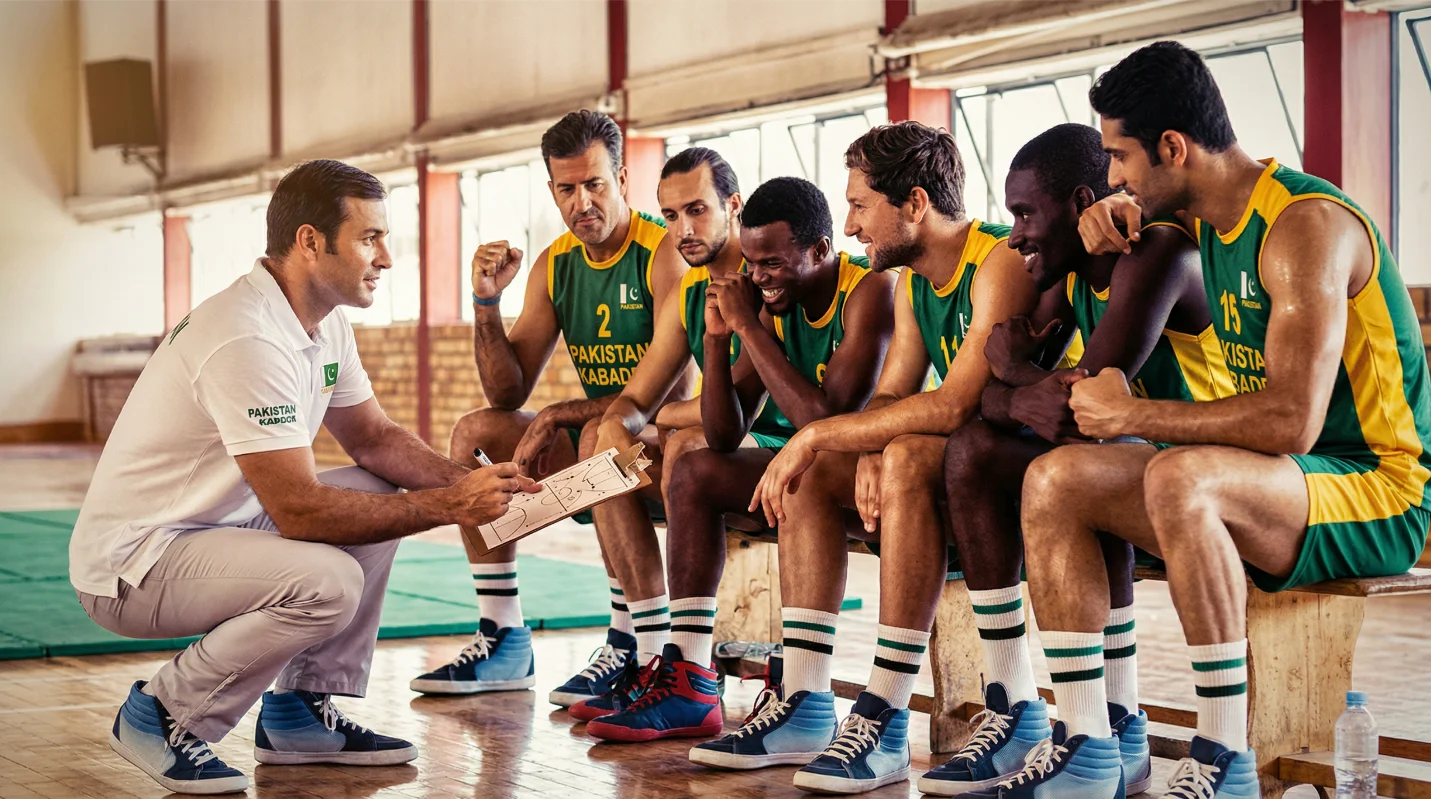
Every time a sprinter lines up at the blocks, a swimmer dives into the water, or a wrestler steps onto the mat, there is an invisible hand that has already shaped much of what is about to happen — not the coach, not the sponsor, not the broadcaster, but the national sports federation. These bodies are the often-overlooked architects of sporting life within a country, wielding authority over competition formats, athlete eligibility, coach certification, funding allocation, and the very rules of the game itself. Yet for all their power and public importance, they remain poorly understood by the fans who fill the stands and the athletes who give those stands a reason to exist.
Here we will attempt to demystify the national sports federation: what it is, how it is structured, why it matters, and why — in too many documented cases around the world — it has become not the engine of sport’s growth, but a brake on it.
What Is a National Sports Federation?
A National Sports Federation (NSF), sometimes called a national governing body, is a non-governmental organization designated within a specific country to oversee, administer, develop, and promote a single sport or a family of closely related sports. Every recognized sport in the Olympic program has a corresponding federation in virtually every participating nation.
The relationship between a national federation and its international counterpart is hierarchical. The international federation sets the global rules of the sport; the national federation is obligated to implement those rules domestically while also tailoring policy to local context — funding structures, grassroots development, domestic competition calendars, and national team selection
In most countries, NSFs also enjoy a unique relationship with the state. They may be partially funded by government grants, allocated through national Olympic committees or sport ministries, in exchange for meeting development targets, anti-doping obligations, and governance benchmarks. This blend of public funding and private, associative structure gives NSFs a hybrid character that is at the heart of many of the controversies we will examine.
“A federation is neither a regulator nor a business, but it increasingly behaves like both — and is accountable as neither.”
The Architecture of Power: How National Federations Are Governed
The General Assembly
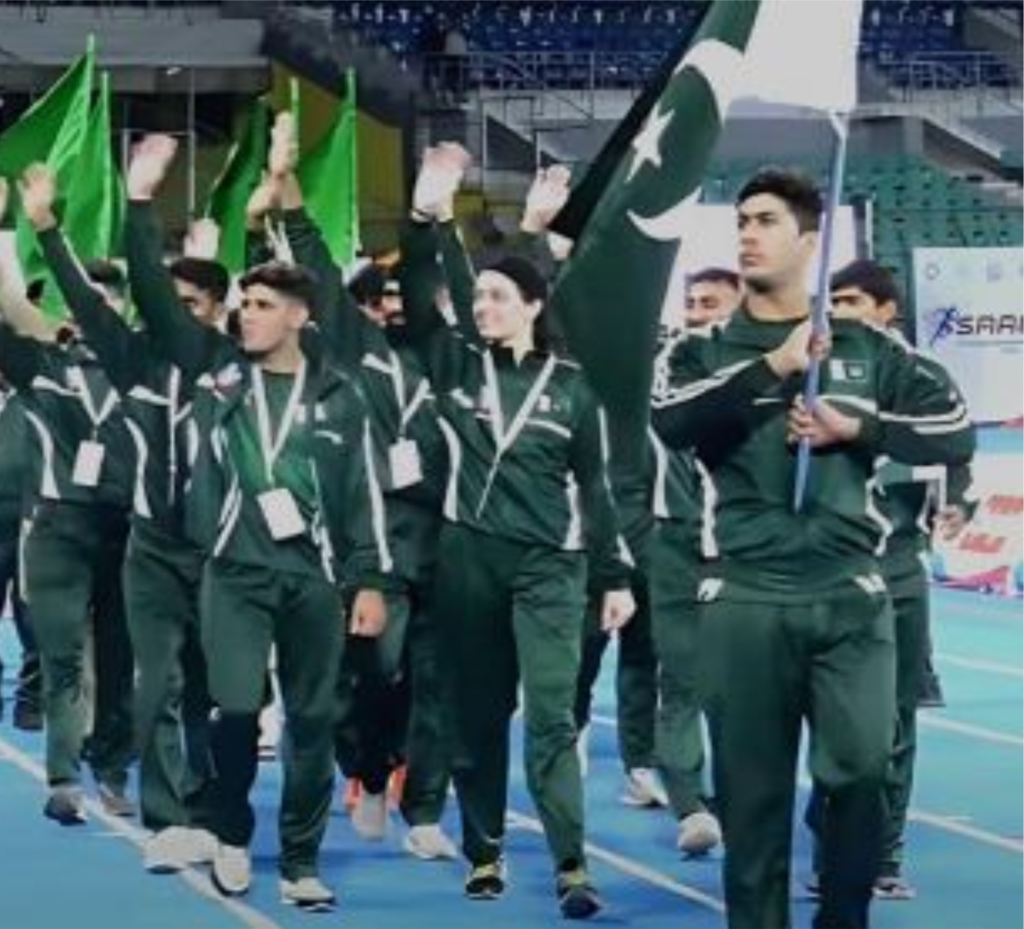
In theory, national sports federations are democratic institutions. At their apex sits a General Assembly (sometimes called a Congress or Annual General Meeting), made up of affiliated members, regional associations, etc. This assembly elects the federation’s leadership, approves the budget and major policy changes, and serves as the ultimate sovereign of the organisation.
In practice, the General Assembly frequently meets only once a year, delegates enormous powers to a smaller board between sessions. Voting structures that give one small rural club the same weight as a large metropolitan academy are common, and strategic bloc voting by aligned factions is well-documented across multiple federations globally.
The Board of Directors
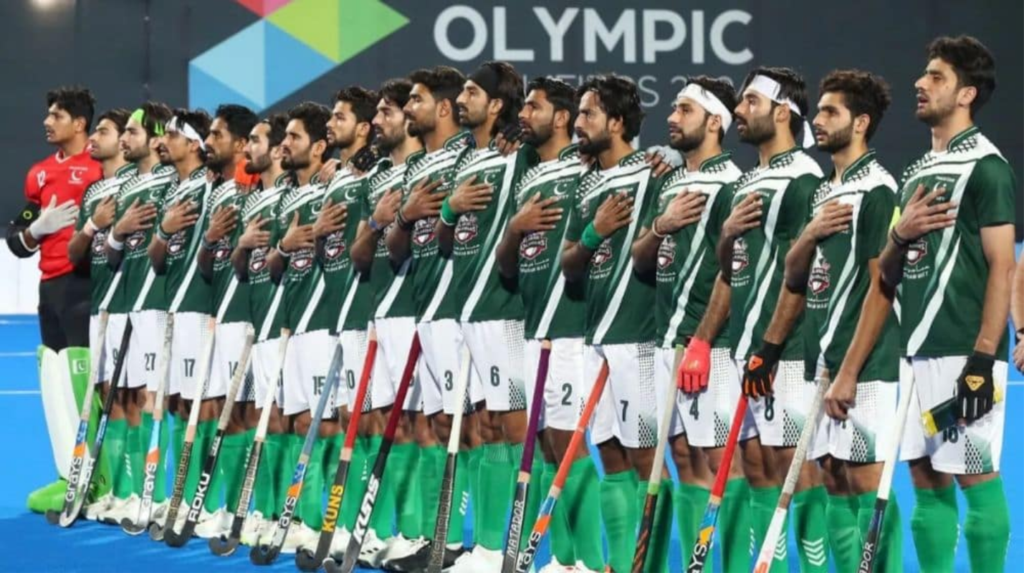
Day-to-day governance rests with an elected board or executive committee, typically led by a President, Secretary-General, and Treasurer. This group sets strategic direction, approves commercial deals, manages staff, and makes decisions that the General Assembly later ratifies — or, in cases of poor governance, never gets to scrutinise properly.
Board tenures can be long, re-election is common, and in some federations, governance reforms that would introduce term limits, independent directors, or athlete representation on boards have been fiercely resisted. The result can be entrenched leadership with limited accountability.
Funding Flows and Commercial Rights
NSFs derive revenue from several streams: government grants, affiliation fees from member bodies, clubs, commercial sponsorships, event hosting rights, and — for elite sports — a share of broadcast and media revenues flowing down from international federations. Control over these financial flows is a major source of the federation’s authority, and also a major source of its conflicts of interest. The federation simultaneously funds athlete pathways, awards coaching certifications, selects national teams, disciplines rule-breakers, and negotiates commercial contracts. These functions create structural tensions that well-designed governance should separate but frequently does not.
The Case Against: Anti-Competitive and Anti-Trust Criticisms
The power structures described above would be largely benign if consistently deployed in the interests of sport’s growth and athlete welfare. The evidence, however, points to a recurring pattern across many federations and many sports: the exercise of monopoly power to protect entrenched interests, restrict competition, suppress athletes, control commercial markets, and block innovation.
1. Monopoly Control Over Competition Formats
Perhaps the most structurally significant anti-competitive behaviour of national federations is the control they exercise over who can organise competitions within their jurisdiction. In most countries, only federation-sanctioned events are “official,” meaning results from unsanctioned events do not count for rankings, qualification, or records. Athletes who compete in unsanctioned events may face suspension.
This creates a textbook monopoly over sporting activity. Independent promoters who wish to organise events in a particular sport must either seek federation sanction — which may be granted on terms that disadvantage them commercially — or operate outside the system, at the cost of attracting top athletes who fear jeopardising their federation standing. The effect is to stifle competition in the market for event promotion, limit athlete earnings from independently organised events, and suppress the kind of commercial innovation that has grown sports in related markets.
“The federation holds the keys to the stadium, the rankings system, and the rulebook. When one body controls all three, the athlete has nowhere else to go.”
2. Restraint of Athlete Mobility and Employment
National federations, often acting in concert with their international counterparts, have historically imposed restrictions on athlete movement that would be unlawful if applied to ordinary workers. Transfer windows, loan restrictions, eligibility waiting periods for players who switch national associations, and complex regulations governing when a professional can represent a new country — all of these create friction in the labour market for athletes.
In 2023, the Court of Justice of the European Union revisited these issues in the Superleague and ISU cases, issuing landmark rulings that confirmed sports governing bodies cannot use their regulatory power to block competing structures or punish athletes who participate in rival events, where doing so amounts to an abuse of a dominant position under EU competition law. The ISU case — involving the International Skating Union’s lifetime ban threats against speed skaters who competed in unsanctioned events — was particularly striking. The court found that such restrictions were disproportionate and violated competition rules. National federations operating as agents of these international bodies carry the same legal exposure.
3. Commercial Rights Exploitation and Conflicts of Interest
In many sports, the national federation simultaneously acts as the regulator of the sport, the organiser of its premier domestic competition, and the commercial rights holder for major events. This triple role creates conflicts of interest that are frequently mismanaged in practice.
A federation that earns revenue from organising the national championship has a structural incentive to prevent independent promoters from hosting competing events. A federation that has negotiated a long-term broadcast deal with a particular television network has a disincentive to allow athlete image rights to be licensed to digital-first platforms that might cannibalise that deal. A federation whose leadership is elected by affiliated clubs has an incentive to prioritise club competition revenue over individual athlete earnings.
These are not hypothetical concerns. Investigations by competition authorities in the United Kingdom, Germany, Australia, and the United States have identified specific instances of national sports bodies using their regulatory authority to advantage their own commercial operations or those of preferred partners.
4. Anti-Doping Governance as a Tool of Suppression
The governance of anti-doping within sport represents one of its most contested areas, with legitimate athlete protection concerns intersecting with documented instances of process abuse. National federations are responsible for implementing WADA-compliant anti-doping programmes, but they also select national teams and have reputational incentives to protect marquee athletes.
Investigations over the past decade — including those triggered by the Russian doping scandal and subsequent WADA-commissioned Pound and McLaren reports — revealed how anti-doping enforcement within federations could be systematically corrupted when institutional interests aligned with concealment rather than detection. At the national level, several federations have been found to have tipped off athletes about imminent testing, failed to pursue adverse findings against high-profile competitors, or selectively enforced rules in ways that disadvantaged foreign or rival athletes.
Conversely, anti-doping proceedings have also been used as instruments of governance pressure — suspensions timed to coincide with athlete advocacy campaigns, procedural delays that effectively ban athletes during peak competitive years, and targeting of athletes who have spoken out about governance failures. Where the regulator is also the selector and the commercial rights holder, the potential for such abuse is structural, not incidental.
5. Blocking Innovation and New Formats
Sport has never been static. Every format that fans now take for granted — Twenty20 cricket, the NBA three-point line, beach volleyball as an Olympic discipline, mixed relay events in athletics — was once resisted by some portion of the governing establishment. But the pace and nature of resistance from national federations has, in many documented cases, crossed the line from conservative caution into active obstruction of innovations that could expand participation, increase athlete earnings, and grow the sport’s audience.
When a new competition format or league concept threatens the federation’s monopoly on sanctioned competition, the regulatory tools available to it — denial of sanctioning, restrictions on player participation, ranking consequences for athletes who compete — can effectively kill the innovation before it reaches fans. The history of breakaway leagues in rugby union, cricket, and tennis is in large part a history of federations using regulatory power to suppress competitive challenges, with the eventual market outcomes suggesting that many of those challenges, had they been permitted to operate, would have substantially grown the sport.
“The federation does not own the sport. The sport belongs to the athletes who play it and the fans who love it. The federation is a trustee — and trustees can breach their trust.”

Why Reform Is So Difficult
If the problems are well-documented, why do they persist? The answer lies in the specific political economy of sports federation governance
First, incumbency advantage is extreme. Federation presidents and board members are elected by the same affiliated members and regional bodies whose interests they have historically protected. Electoral reform — term limits, independent directors, weighted athlete votes — requires approval by the very majority whose power would be diminished. This is a structural barrier to change that parallels the difficulty of political reform in systems without independent judiciaries or oversight bodies.
Second, the funding relationship between federations and governments creates perverse incentives. Governments want medal success and headline events; they are less interested in the internal governance processes that produce them. Federations that deliver results can often maintain weak governance for years before the political cost of inaction exceeds the political cost of confrontation.
Third, athletes — the stakeholders with the most at stake in governance reform — are the least organised. Their competitive careers are short, their leverage diminishes rapidly after peak performance, and challenging federation authority carries real career risks during the years when they have the most to lose.
What Good Governance Looks Like
The path forward to good governance involves several interlocking reforms. Mandatory independent board directors with no affiliation to member bodies. Meaningful athlete representation with decisional, not merely advisory, status. Structural separation between regulatory functions and commercial operations. Transparent financial reporting, and clear legal frameworks — both competition law and sports-specific regulation — that define the limits of federation authority and provide athletes and promoters with enforceable remedies when those limits are crossed.

Conclusion: Trustees, Not Owners
National sports federations occupy a peculiar and powerful position in the architecture of sport. They are neither purely public nor purely private. They are monopolists granted their power by law, custom, and international affiliation, operating in markets where the usual mechanisms of competitive discipline do not apply. In that context, the standard of governance required of them should be higher, not lower, than that demanded of ordinary commercial organisations.
When federations act as genuine stewards of their sport — developing talent, growing participation, representing athletes fairly, opening the sport to innovation — they justify the extraordinary authority vested in them. When they act as closed, self-perpetuating institutions that suppress competition, exploit their regulatory power for commercial advantage, and prioritise their own interests over those of athletes and fans, they breach the trust on which their legitimacy depends.
Sport, ultimately, belongs to those who play it and those who watch it. The federation is a trustee of that inheritance. It is time that more trustees were held to account for how they have administered the estate.
#sport, #games, #athlete, #magazine, #youth, #action, #lifestyle, #speed, #energy, #talent, #Pakistan, #PakYouth, #PakSports, #wellness, #health, #wellbeing, #nutrition #life, #longevity, #enjoy, #joy, #passion, #positive, #pride, #sportfederation, #sportsfederation, #nationalgames, #culturalgames, #internationalgames
Leave a Reply