
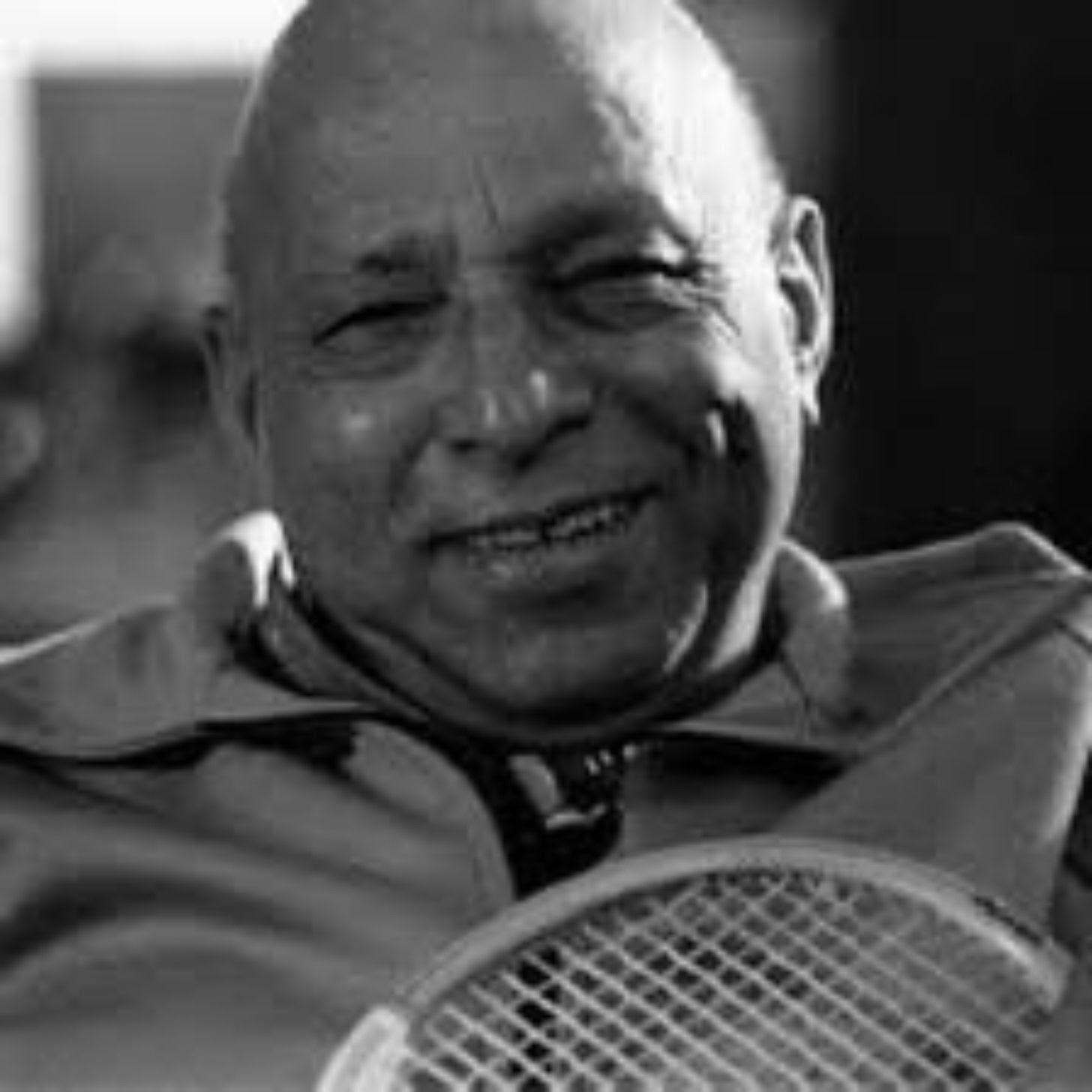
There is a kind of greatness that arrives not from privilege but from hunger. Hashim Khan, the Pakistani squash master who rose from a village near Peshawar to win seven British Open titles, embodies that kind of greatness in its purest form. His story is not merely one of athletic dominance. It is a testament to what a human being can achieve when will, discipline, and joy come together on a small, four-walled court.
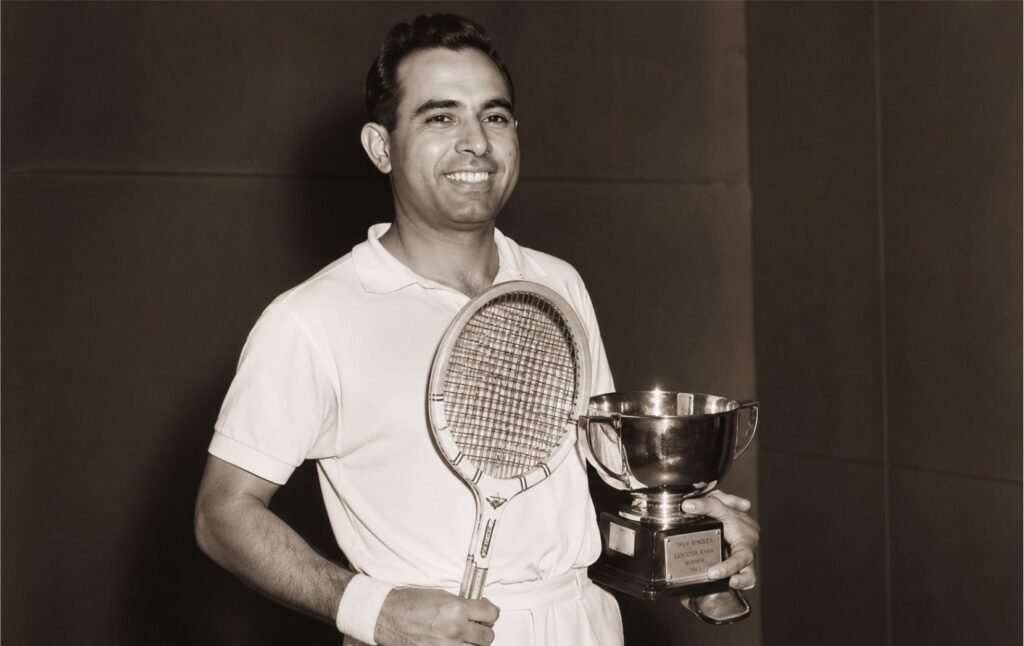
Origins: The Boy at the Court’s Edge
Hashim Khan was born around 1915 in Nawakille, a modest settlement near Peshawar in what was then the North-West Frontier Province of British India. His father, Mohammad Afzal Khan, worked as the caretaker of the squash courts at the Peshawar Club, an enclave where British officers and colonial administrators played their leisurely games. The young Hashim was not a member of that world. He swept the floors, fetched the balls, and watched.
That watching became his education. With no formal coaching, no racket of his own for years, and no one to teach him the mechanics of the game, he studied the strokes of the men who played above his station. He borrowed rackets when the courts stood empty and practiced with a ferocity that seemed, to those around him, almost inexplicable. What drove him was not resentment of those who played freely but a deep, consuming love of the game itself.
He began competing in regional tournaments during the 1940s, and local players soon learned that the caretaker’s son was no ordinary opponent. He read the ball early, retrieved the seemingly impossible, and wore opponents down with a stamina that appeared to have no ceiling. When he won the All-India Squash Championship in 1944, it served notice that something exceptional had arrived.
The British Open: Seven Times a Champion
In 1951, at approximately 35 years of age, an age at which most squash players have already begun their decline, Hashim Khan traveled to England and won the British Open. The British Open was, at the time, the closest thing squash had to a world championship, and the best players from Britain, Egypt, and the broader Commonwealth gathered each year to contest it. Hashim dismantled the field with a style so foreign and so effective that opponents and spectators alike struggled to understand what they were watching.
He won the British Open again in 1952, 1953, 1954, 1955, 1956, and 1958, claiming seven titles in total. The sequence stands as one of the most dominant stretches any athlete has produced in any individual sport. Opponents described the experience of playing him as something close to futility, as though the court itself conspired against them.
A Dynasty and a Legacy
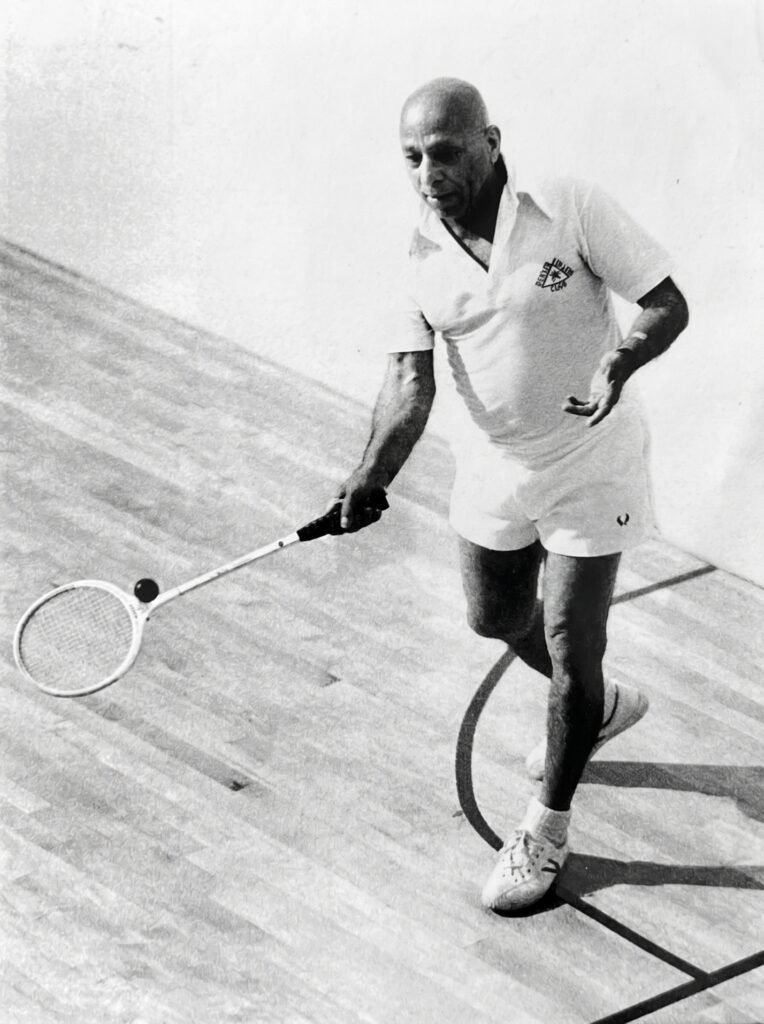
What Hashim built did not end with his own retirement from competition. He fathered a generation, both literally and figuratively, who carried the game forward. His cousin Roshan Khan won the British Open in 1957. Azam Khan, another member of the wider clan, claimed four consecutive British Open titles between 1959 and 1962. His broader family, the extended clan of Khans from Nawakille, produced a constellation of champions whose influence on the professional game lasted through the latter half of the twentieth century and beyond. After stepping back from elite competition, Hashim moved to the United States, where he spent decades as a teaching professional, introducing the game to a new continent and earning the affection of a second sporting public far from Peshawar. The phrase “Khan Dynasty” became a permanent part of squash’s vocabulary. Hashim Khan is its patriarch.
The Lesson the Legend Left Behind
Hashim Khan died on August 19, 2014, at an approximate age of 100 years. Tributes arrived from across the squash world and from heads of government. Pakistan mourned him as a national hero. The World Squash Federation and the Professional Squash Association honored him as one of the founding giants of the modern game.
The court at the Peshawar Club where a boy once swept floors and watched is long gone. The British Raj that built it is long gone. But the image of Hashim Khan moving in that famous crouch, racket low, eyes fixed, reading the game one step ahead of everyone else, is permanent. He showed that the distance between where a person begins and where a person can arrive is not fixed by birth or circumstance. It is fixed, above all, by will.
That is the lesson Hashim Khan left behind, and it belongs not just to squash, not just to Pakistan, but to anyone who has ever stood at the edge of a room where others played freely and decided, quietly, that they would find a way in.
Leave a Reply