

School sport is disappearing from timetables across the world. The cost to health, to character, and to an entire generation’s readiness for life is one we can no longer ignore
Every generation produces its share of young people who discover who they are not through a textbook, but through a first sprint, a team victory, or a defeat absorbed with grace. Sport does not merely occupy the body while the mind rests. It forms the whole person, and the world waiting for today’s students will need whole people far more than it needs those who can pass examinations.
The question is not whether schools can afford to prioritise sport. It is whether they can afford not to.
THE BODY AS FOUNDATION
A child’s physical development is not a background process. It is the foundation upon which everything else is built. Bone density, cardiovascular strength, and motor coordination develop within windows that close. A young person who passes through adolescence without sustained physical activity does not simply miss a few games. He enters adult life with a narrower range of what his body can do and be.
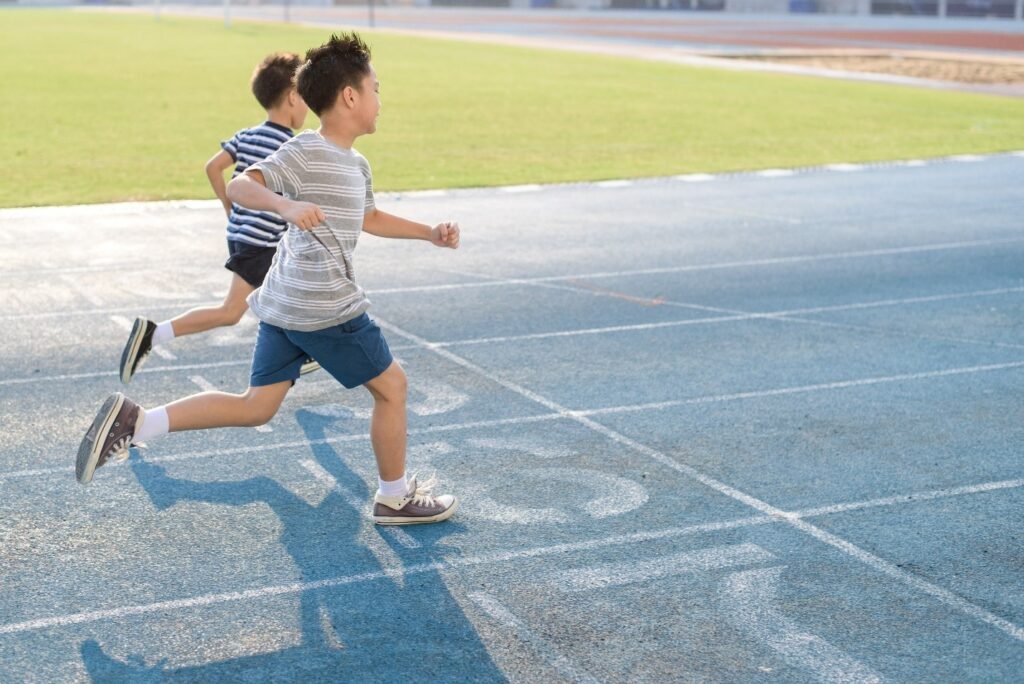
The best investment a school can make in a child's future health costs nothing more than a well-run games period and a coach who believes in what he is doing.
A MIND BUILT FOR PRESSURE
The twenty-first century will not reward those who simply know things. It will reward those who remain composed when the situation is difficult, who recover quickly from failure, and who find a way forward when no map exists. These qualities are not academic. They are forged on training grounds.
Sport confronts young people with controlled adversity: the lost match, the missed shot, the exhausted final lap. It gives them the experience of surviving it. Psychologists call this stress inoculation; sport delivers it at a scale and consistency that no classroom can match.
The young person who has learned to lose well, and to return to training the next morning, has already mastered one of the most valuable skills adult life demands.
THE TRAITS THAT LAST A LIFETIME
The sports field does not merely exercise the body. It builds the character traits that define a life well lived.
Resilience teaches the young person that setbacks are not endings but redirections.
Patience grows naturally from the experience of training for months toward a goal measured in seconds, rare and precious in a world of instant everything.
Perseverance is what remains when motivation fades. Sport builds it through repetition, discomfort, and the quiet satisfaction of showing up when it would be easier not to.
Teamwork is the discipline of placing collective purpose above personal ambition, a quality every workplace, every family, and every community needs.
Leadership develops not through appointment but through the daily choice to encourage rather than criticise, to hold a standard when no one is watching.
Time Management follows naturally. The student who trains four evenings a week learns quickly that preparation is not optional.
Self-Confidence, when it grows from sport, is earned through the particular assurance of someone who has tested herself and knows what she found.
Respect for opponents, officials, and the game itself is not merely endorsed by sport. It is made structurally necessary by it.
These are not soft skills. They are the architecture of a capable, principled adult, and the sports field builds them more reliably than almost anywhere else in a young person's life.
SPORT AND EXCELLENCE: NOT A TRADE-OFF
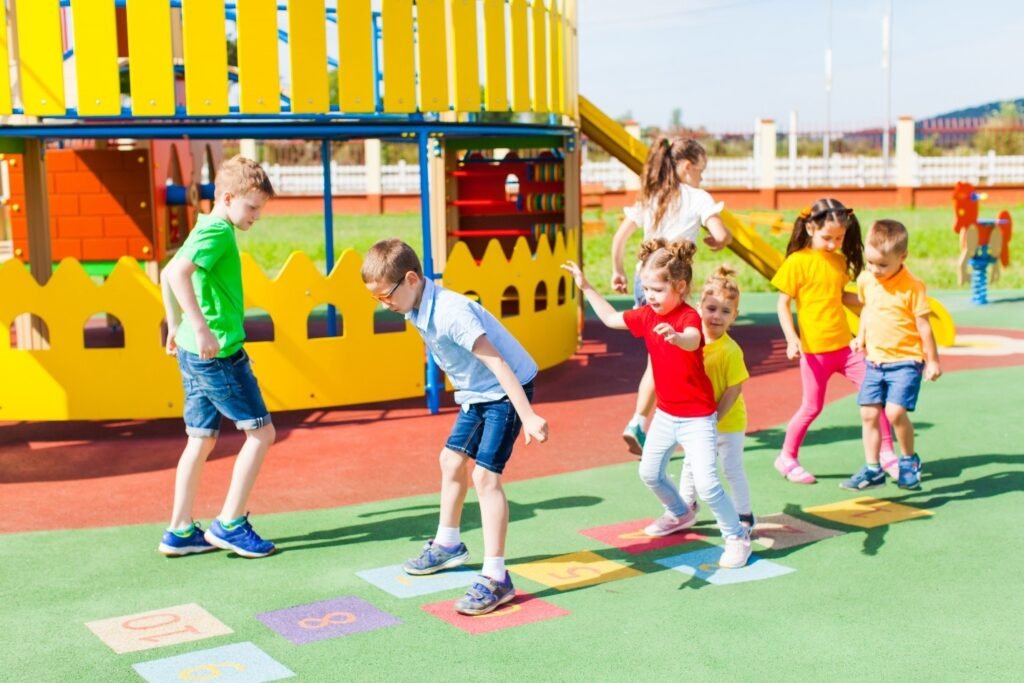
The idea that sport competes with academic achievement belongs to another era. Students who participate regularly in school sport concentrate better, manage their time more efficiently, and bring the same disciplined persistence to examinations that training has instilled in them. A student who understands how to break a complex skill into its parts and drill each one patiently has already learned how to master any subject.
The pitch and the classroom are not rivals. They are partners in the same education.
THE VISION: SCHOOLS THAT BUILD THE WHOLE PERSON
The schools that will deliver capable and responsible human beings are those that understand human development in its full dimension.
A student who graduates with strong examination results but no experience of pressure, no resilience, and no ability to lead, follow, or persist is only partly educated. The sports field completes what the classroom begins.
The pitch is not a luxury. It is a classroom without walls, and it is one that every child deserves to stand on.
WHAT IS BEING LOST: THE SPORTS THAT HAVE GONE QUIET
Across school systems worldwide, a quiet erosion is under way. It does not arrive with a formal notice. The result is a generation growing up with a narrower sporting experience than any before it, and most of them do not even know what they are missing.
When a school cuts sport, it rarely cuts everything at once. It trims at the edges, quietly, until the edges are all that remain.
Team sports are the first casualties. They demand the most coordination: fixtures, opponents, coaches, and logistics. When budgets tighten, that coordination is the first thing dropped. Yet team sports are precisely where the most critical character development occurs. The young person who has never played in a team has never had to subordinate her own instincts to a shared purpose under real pressure. That is not a minor gap. It is a foundational one.
Individual and endurance sports are disappearing from schools that lack the infrastructure or specialist staff to support them. Without proper access, teachers default to whatever fits the available space and time. The result is that millions of children move through school without ever discovering which physical discipline suits their temperament, their body, or their spirit. Entire sporting identities go undiscovered, not because the talent was absent, but because the opportunity never arrived.
Contact and discipline-based sports, which carry proven benefits for focus, self-regulation, and confidence, particularly among young people from difficult or unstable backgrounds, are almost entirely absent from mainstream school programmes. The schools that could benefit most from their inclusion are often the last to offer them.
Outdoor and adventure sport, which builds risk-assessment, environmental awareness, and a relationship with the natural world, exists only in the best-resourced schools. Artistic and movement-based disciplines, which develop coordination, spatial intelligence, and creative confidence, are frequently side-lined as insufficiently serious when compared with maths and science. Traditional and cultural sporting forms, which carry community identity and heritage, are being quietly replaced by the most administratively convenient options on a narrowing menu.
The cruelest part of this narrowing is not what the children lose. It is what they never find: the sport that might have been theirs, the identity that might have anchored them, the confidence that might have carried them forward.
HOW TO FIX IT: SOLUTIONS THAT WORK
The problem is real, and solutions exist. Schools, governments, sporting organizations, civil society, and communities each hold part of the solution. What is needed is not a single grand gesture but a set of deliberate, sustained commitments, each one modest on its own, transformative in combination.
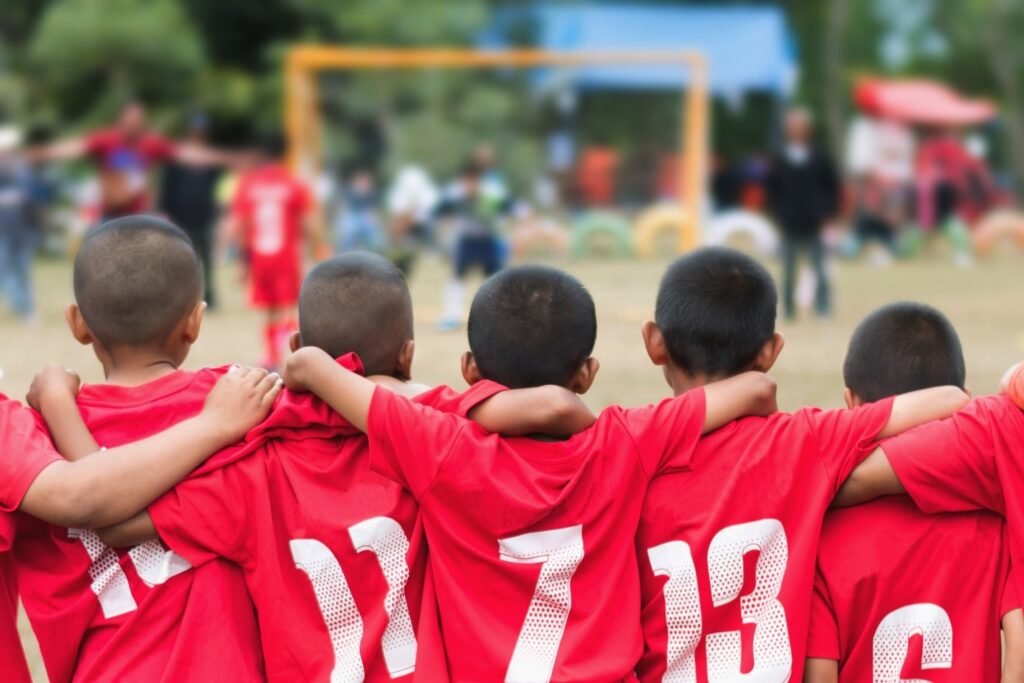
The schools that get sport right do not treat it as an add-on. They treat it as a structural commitment, as fundamental to the school's identity as its academic results.
Protect PE on the Timetable. Minimum standards for physical education must be legislated, not merely recommended. Three sessions per week of genuine physical activity, not study periods in trainers, should be the floor, not the ceiling. Governments that set targets without enforcement mechanisms are making promises they have no intention of keeping.
Expand the Menu of Sports. Every school should offer at least eight to ten distinct sporting disciplines across a student’s career. A young person who finds football dull may discover a passion for athletics, cricket, kabaddi, martial arts, or table tennis. The school’s job is to put the opportunity in front of the students, not to offer the three sports that are easiest to staff.
Train and Value Coaches. A well-trained PE teacher or sports coach is among the most influential adults in a young person’s life. Their professional development must be funded, their status must be elevated, and their contribution must be recognised as equal in importance to that of any subject teacher. Schools that treat coaches as lower-tier staff produce sub-par adults.
Partner with Professional Sports Management Outfits. Schools and parents should engage professional sports management organisations as active partners in a student’s development, not merely as providers of training sessions, but as architects of a broader sporting journey. These organisations can bring expertise in talent identification, performance coaching, wellbeing support, and long-term pathway planning that no single school can replicate internally. A formal partnership with the right sports management outfit gives a student access to networks, exposure to competitive environments, and a structured progression that extends well beyond the school gate and has practical benefits both within and outside the country.
Make Participation Genuinely Inclusive. Girls, children with disabilities, children from lower-income families, and those with no prior sporting experience must be actively included, not left to self-select out. This means removing cost barriers, offering adaptive sport, and ensuring that development programmes serve the many rather than the already talented few. Special efforts should be made by communities, civil society, and local schools to provide access to sport for out-of-school children.
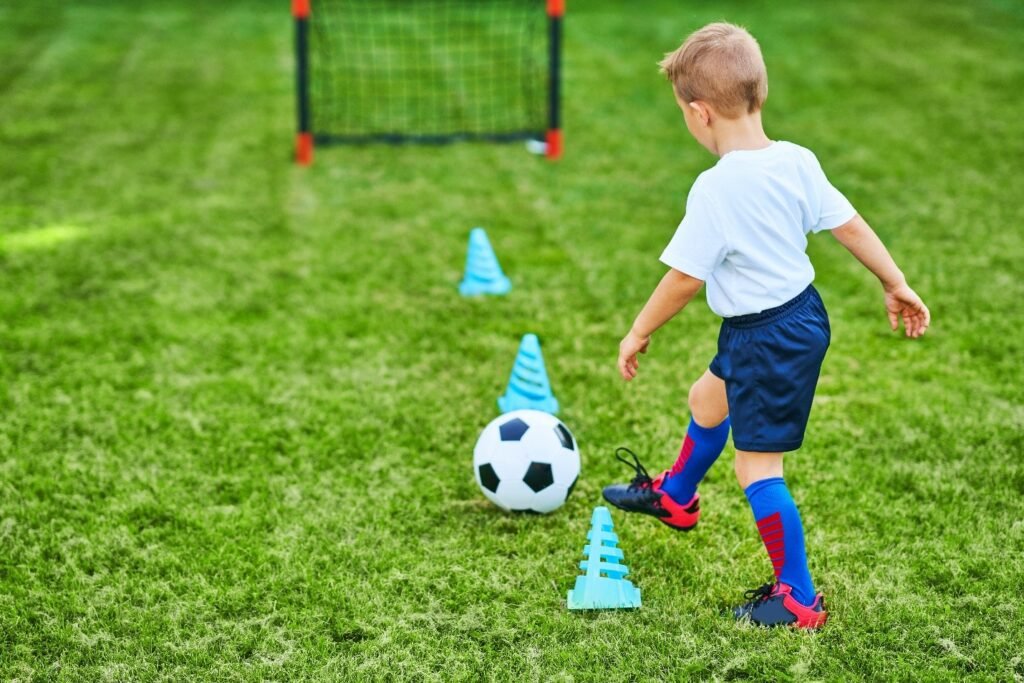
Start Early and Build a Habit. The habits of physical activity that persist into adult life are largely formed before the age of twelve. Primary schools are the front line. Investment in sport at primary level, in coaching, in time, in encouragement, produces compounding returns that stretch across a lifetime. Waiting until secondary school to take sport seriously is waiting too long. University sport is valuable, but by that age habits and athletic ability are well established. Only accomplished players compete at that level; the rest watch from the stands.
UNDERSTAND. RE-IMAGINE. PARTNER. TAKE THE LEAD.
The starting point is understanding: a genuine, unhurried appreciation of the relationship between physical activity and human development. When a school truly grasps that sport does not compete with learning but deepens it, something shifts. The timetable is read differently. The coach is valued differently. The student who struggles academically but excels on the field is seen differently, not as an anomaly, but as evidence of a broader intelligence that the school has an obligation to develop. Understanding that connection does not merely make schools better at sport. It makes them better at education in its fullest sense, and it opens possibilities for students that examination results alone could never unlock.
When schools and parents partner with professional sports management outfits, the student’s developmental journey can be mapped with a precision and ambition that neither could achieve alone. Performance, character, wellbeing, and aspiration are tracked together, holistically, as parts of a single story rather than separate concerns. That partnership also opens pathways: to domestic sporting networks, to regional and national competition, and to international connectivity through sport that carries a young person far beyond the boundaries of his school and his community. Progressive domestic colleges and universities have long recognised the well-rounded personality that serious sporting engagement produces. The world’s leading global institutions go further still: they actively seek out the sports-active student, understanding that the young person who has competed, led a team, overcome injury, and performed under pressure is not merely an athlete. He is the future young leader that every institution of ambition wants at its table.
Leave a Reply