
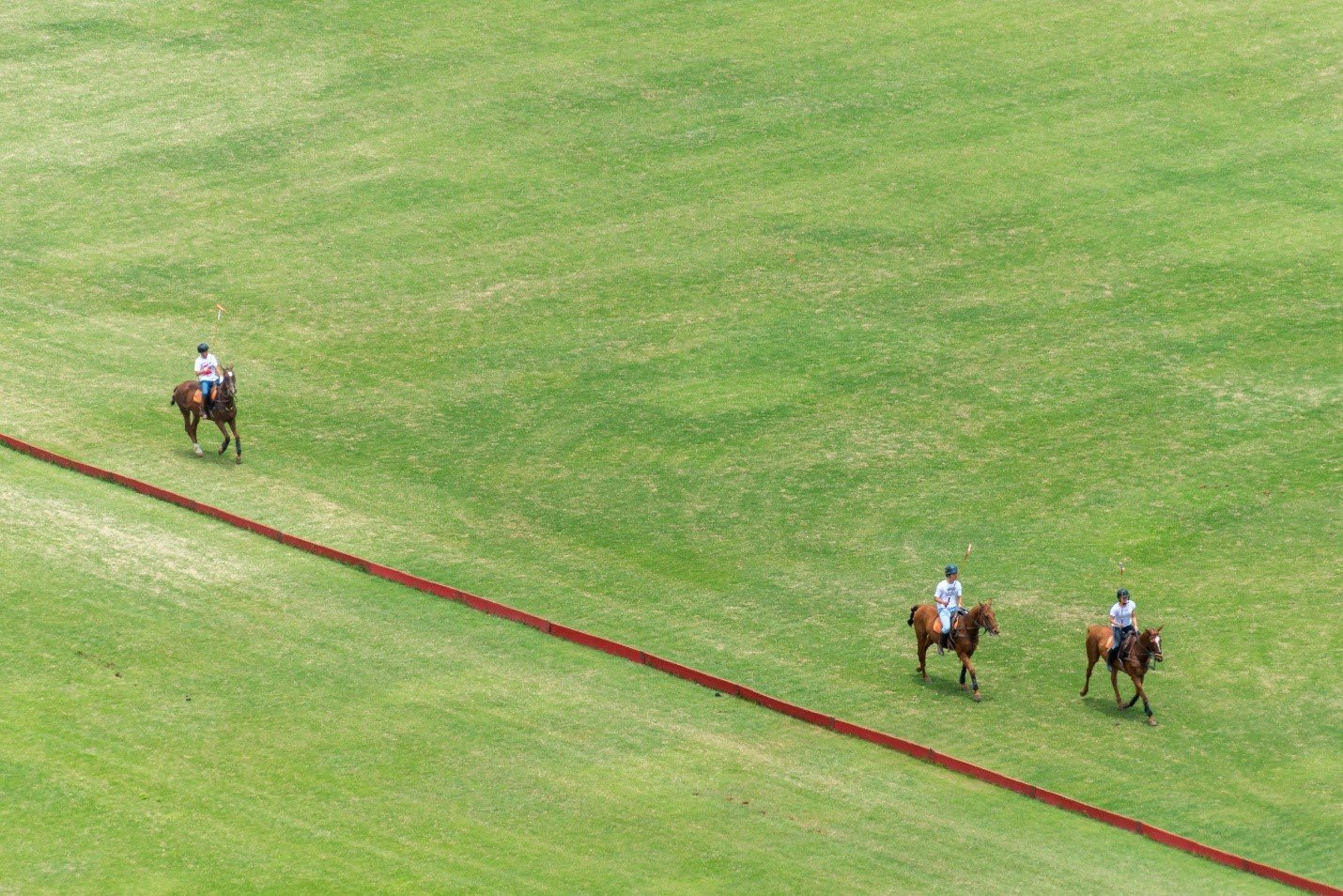
“In polo, as in leadership, you cannot control everything. But you can learn to ride complexity with clarity, trust, and purpose.”
The Moment Everything Changes
There are sports that challenge you. Then there is polo.
When I first stepped onto a polo field, I brought years of experience in demanding disciplines, including judo, which teaches body control, timing, and force management. I thought that background would give me a head start. I was wrong. Polo exists in a category of its own: layered, visceral, and strategically rich enough that no prior athletic experience fully prepares you for it. It does not merely test your body. It transforms your mind.
What began as a personal sporting journey revealed itself to be something greater: a living masterclass in leadership.
The Game
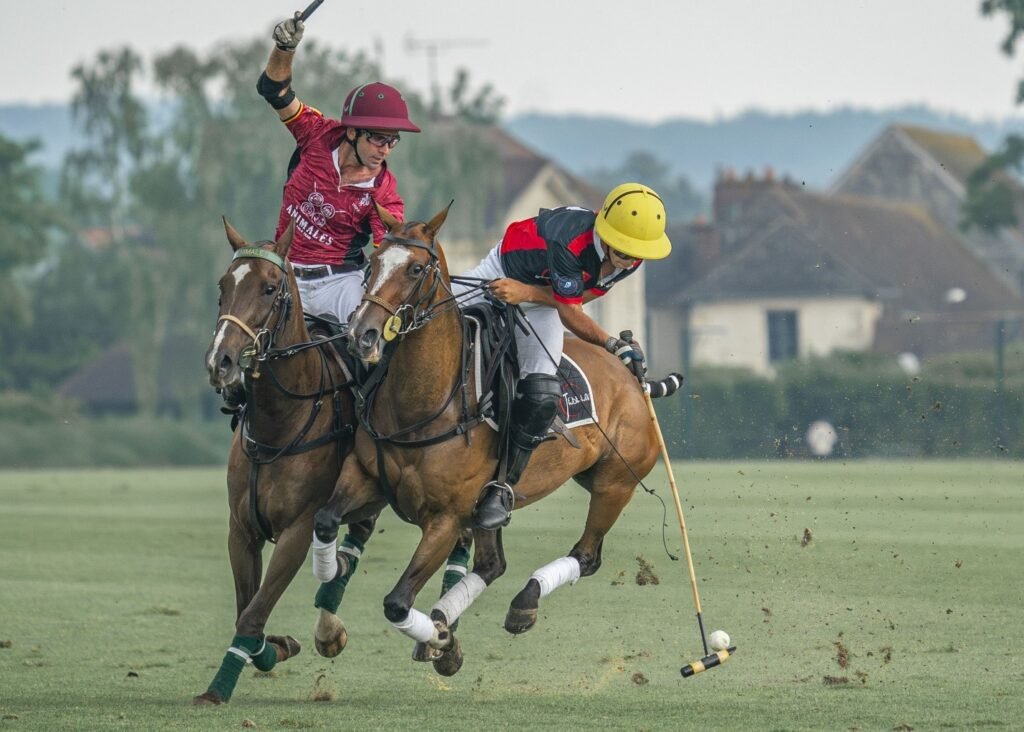
To the uninitiated, polo looks like horse riding with sticks. Nothing could be further from the truth. A polo field stretches roughly 275 metres long and 180 metres wide, far larger than any football pitch. Four players per side must cover every inch of it, defend their goal, and drive the play forward. There is no hiding, no room for passengers.
At elite level, a single player may ride ten to twelve different horses across one match. Each animal is a finely tuned athlete with its own temperament, stride, and tolerance for pressure. The rider adapts on the move, reading the horse beneath while processing the game unfolding ahead.
The technical demands are staggering. You play one-handed, guiding a 500-kilogram horse at up to 60 kilometres per hour, swinging a long mallet to strike a small ball barely above the grass. The margin for error is measured in centimetres and milliseconds. Yet the strike is only part of it. The polo player must calculate direction, power, and precision while managing the horse’s line, tracking teammates and opponents, and holding a strategic picture of the next three plays. It is chess at full gallop.
When a true master plays, it looks effortless. That is the paradox of polo, and of exceptional leadership: the greater the complexity managed, the more seamless the performance appears from the outside.
Three Tensions Every Leader Knows
What makes polo such a profound mirror for leadership is the simultaneous balancing of competing tensions. Every great leader navigates the same three.
Instinct and Control
In polo there is no time to deliberate every action. Your instincts must be trained through thousands of hours of repetition until the right decision fires automatically. Yet raw instinct without control produces chaos: a bolting horse, a wild swing, a broken team pattern. The elite polo player, like the elite leader, trains their instincts to be trustworthy, then channels those instincts through disciplined intention.
Individual Skill and Team Coordination
No amount of individual brilliance wins a polo match. Four players, vast distances, a shared goal: the sport is designed to demand collective intelligence. Each rider must be exceptional alone yet aware of the full team at all times, suppressing the ego’s urge to chase every ball and trusting that a teammate is better placed. The strongest individual performers are not always the strongest leaders. True leadership amplifies the whole.
Short-Term Reaction and Long-Term Vision
A polo player must react to events in real time: an opponent’s sudden turn, a missed strike, a horse that misjudges its footing. But the player who only reacts will always be behind the game. The best polo minds hold a simultaneous awareness of what is happening now and what should happen two or three plays ahead. This is precisely what separates good managers from great leaders: the ability to act in the present without losing grip of the future.
"Whether on the field or in the boardroom, you face fast, unpredictable situations where you must decide instantly, yet never lose sight of the bigger strategy."
Fair Play at the Highest Stakes
One quality of polo deserves to be stated plainly, because it is extraordinary.
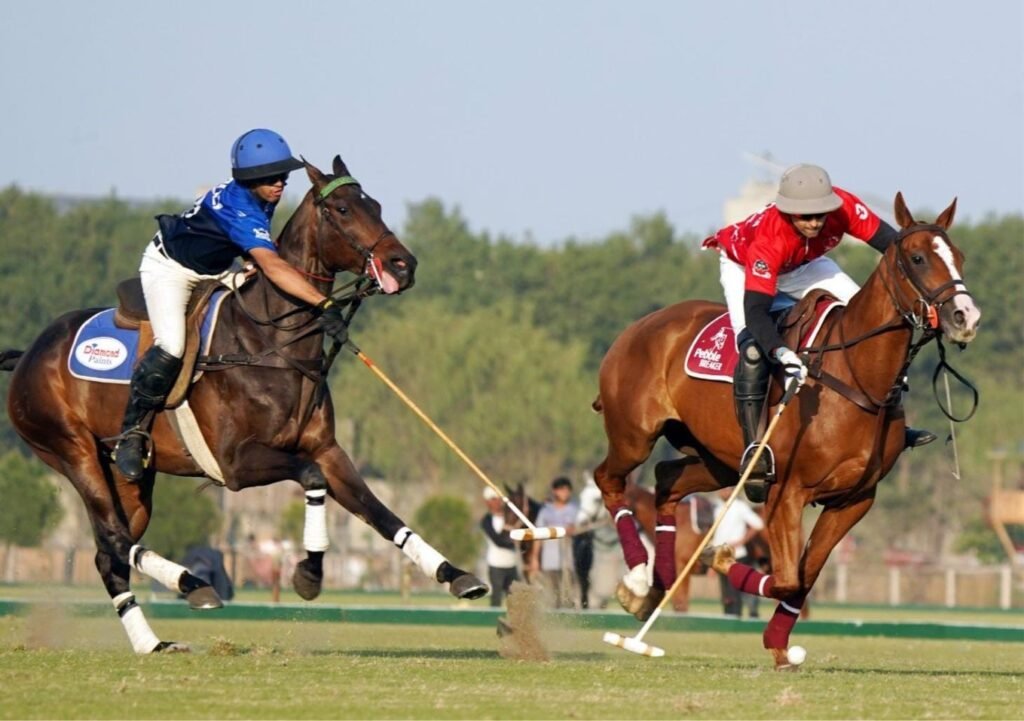
Polo is one of the most dangerous sports played. Riders career across the field at speed, mallets swinging, horses colliding in contests of muscle and momentum. The physical risks are real. Yet in all my years in the sport, I have not once witnessed what has become routine in so many others: simulation. Feigning a foul. Manufacturing an advantage through theatre.
Polo’s culture does not tolerate it. The sport’s code of honour, inherited from centuries of tradition and reinforced by the equestrian world’s demand for authenticity, makes dishonesty on the field unthinkable. You either earned it or you did not.
For those who believe leadership must be grounded in integrity, polo offers a powerful reminder: the highest levels of competition do not require deception. Excellence and honour are not opposites. They are allies.
The Lesson That Lasts
Every great sport offers lessons. Very few offer transformation. Polo is one of the latter.
It teaches you that complexity is not an obstacle to mastery. It is the very condition in which mastery reveals itself. The field is vast, the pace relentless, the variables infinite. Yet in the hands of a true player, all of that resolves into something fluid, intentional, and beautiful.
Leadership works the same way. The organisations that achieve extraordinary things are rarely those that found simplicity. They are the ones whose leaders learned to ride complexity: to hold instinct and strategy in the same hand, to trust their team the way a rider trusts their horse, to act decisively in the present while holding a clear picture of the future.
The polo field is not a metaphor for leadership. It is a laboratory for it. The lessons learned at a gallop last a lifetime.
The author Rabii BENADADA is Researcher in sports management at the ISCAE Business School Casablanca, Morocco.
Leave a Reply