

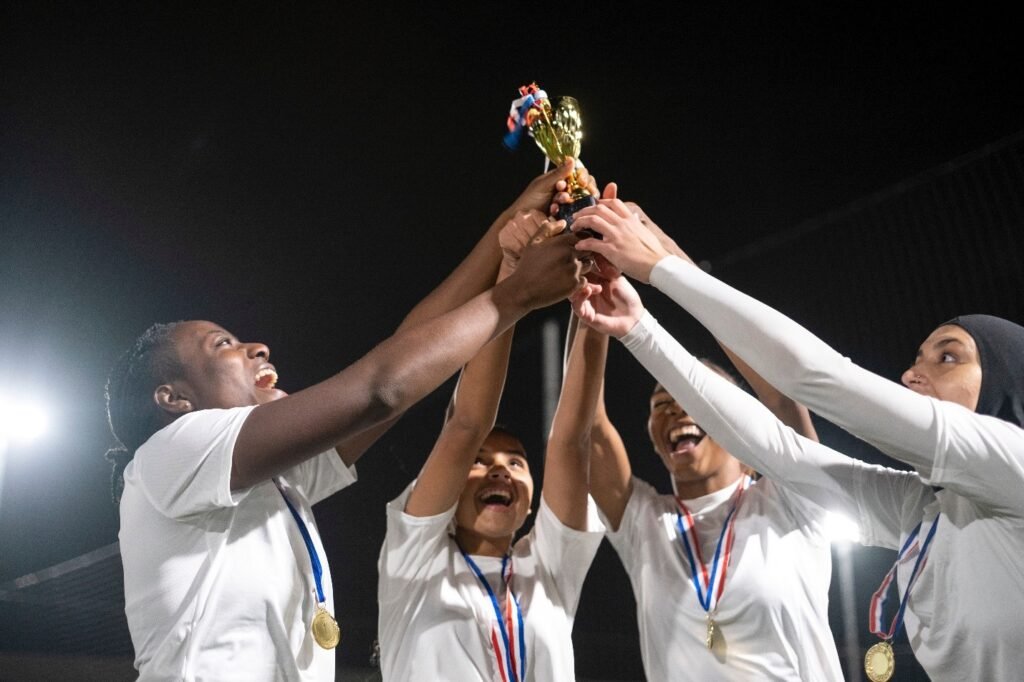
INTERNATIONAL WOMEN’S DAY | 08 MARCH 2026
From the dust of marathon tracks to the roar of sold-out football stadiums, women in sports are no longer fighting for a seat at the table — they are building one of their own. As the world marks International Women’s Day on 08 March, the sporting landscape stands at a historic inflection point: a moment where achievement, investment, and visibility are converging to reshape what global sport looks like, who it belongs to, and where it is headed.
A CENTURY IN THE MAKING: THE HISTORICAL JOURNEY
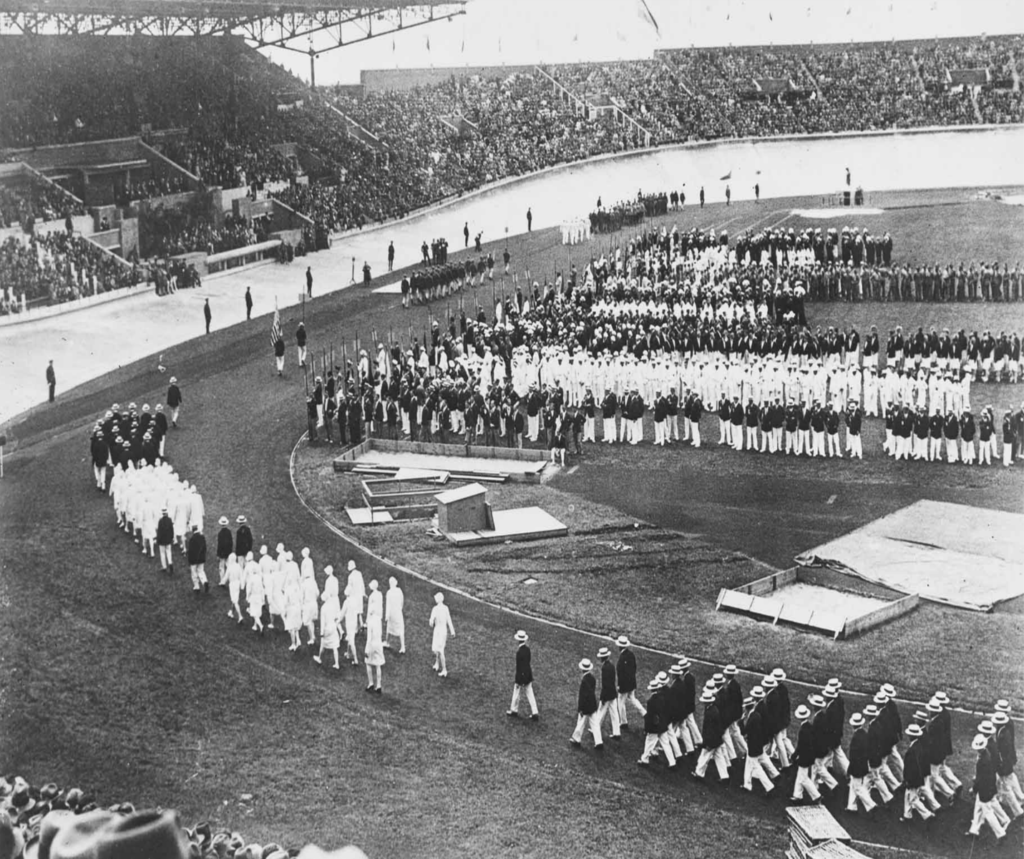
The story of women in sports is a story of relentless persistence against institutional resistance. In 1900, only 22 women competed at the Paris Olympics — a mere 2.2% of all athletes. For decades that followed, women were barred from distance running on grounds of dubious medical claims, excluded from key tournaments, and systematically underpaid in the disciplines they were permitted to enter.
The passage of Title IX in the United States in 1972 marked a legislative turning point, mandating equal educational opportunities in sport. Globally, the 1980s and 1990s saw national federations progressively open their doors — often reluctantly — to women’s categories. By the 2012 London Olympics, every participating nation fielded female athletes for the first time in Olympic history. The trajectory was set.
At the Paris 2024 Olympics, women accounted for exactly 50% of competing athletes — a landmark that was not gifted but earned through decades of advocacy, legal battles, and world-class performance.
THE NUMBERS THAT DEFINE A REVOLUTION

Participation
Global female sports participation has grown exponentially. According to FIFA’s most recent census, over 30 million women and girls now play registered football worldwide, a figure that has doubled in under a decade. The International Olympic Committee reports that women’s sports now account for approximately 40% of all sports content produced during major Games — up from under 10% in the early 1990s.
Viewership and Attendance
The 2023 FIFA Women’s World Cup, co-hosted by Australia and New Zealand, shattered every previous record. Cumulative viewership surpassed two billion globally, with the final between Spain and England drawing peak audiences that rivalled many men’s international fixtures. In 2024, the NWSL (National Women’s Soccer League) announced a landmark $240 million broadcast deal — the largest in women’s football history — signalling that audiences are not merely watching; they are investing.
Prize Money and Sponsorship
The financial gulf between men’s and women’s sports — once a chasm — is narrowing. The Women’s Tennis Association (WTA) achieved equal prize money parity at Grand Slams in 1973, a benchmark that most other sports have been slow to match. However, recent years have seen major sponsors redirect significant capital into women’s sport.
MEDIA, VISIBILITY, AND THE NARRATIVE SHIFT
For decades, women’s sport occupied the margins of sports media — brief mentions, back-page coverage, and airtime grudgingly allocated after the conclusion of men’s fixtures. That dynamic is undergoing a structural shift, though full parity remains a work in progress.
Broadcast Evolution
Dedicated women’s sports networks and streaming platforms have proliferated. Several broadcasters have made women’s leagues and tournaments flagship content rather than filler programming.
Social Media as an Equaliser
Where traditional broadcast gatekeepers historically underserved women’s sport, social media has democratised access. Female athletes now build direct audiences of millions, shaping their own narratives and commanding their own commercial influence.
GOVERNANCE, LEADERSHIP, AND STRUCTURAL EQUITY
The most durable form of progress in women’s sport will come not from individual excellence alone, but from structural change within the institutions that govern global sport. On this front, the picture remains mixed.
The IOC’s gender equality roadmap and FIFA’s Women’s Football Strategy 2023–2027 represent genuine institutional commitments, but implementation is uneven across national federations. As of 2024, women constitute just 29% of members on national Olympic committee executive boards globally — a figure that has risen steadily but still reflects deep-seated underrepresentation at decision-making levels
The appointment of female administrators, coaches, performance directors, and board members is not merely a matter of equity — it is a strategic imperative. Research consistently shows that organisations with diverse leadership make better decisions and produce better outcomes for athletes.
Meaningful progress will require governing bodies to move beyond aspirational targets and implement binding accountability mechanisms: transparent reporting, financial incentives tied to equity milestones, and independent oversight.
THE FUTURE THEY HOLD
A New Commercial Architecture
The commercial infrastructure surrounding women’s sport is being rebuilt from the ground up. Private investment in women’s football has accelerated sharply, with institutional investors, private equity recognising the long-term value in early-stage assets. Women football, basketball, cricket, and rugby have all attracted significant new capital in recent years.
The economic argument for women’s sport is no longer theoretical — it is empirical. Audiences are young, digitally engaged, and brand-responsive. Sponsors aligned with women’s sport report strong return on investment. The commercial gap with men’s sport will narrow faster in the next decade than it did in the previous three.
Grassroots and the Pipeline
When girls see women compete at the highest level, they believe they can too. The pipeline of talent, when properly resourced and supported, will produce the champions and the audiences of the next generation simultaneously.
Technology and Performance
Dedicated research programs examining the female athlete’s hormonal cycle, injury prevention strategies, and recovery protocols are producing insights that will drive performance standards to new heights.
Inclusion as a Competitive Value
The future of women’s sport is also inseparable from the broader conversation about inclusion. Paralympic and para-sport women’s categories continue to grow. The intersectionality of gender with race, class, disability, and sexuality shapes access to sport in ways that demand intentional policy responses. The most forward-thinking sporting organisations are those that treat inclusion not as a compliance exercise but as a source of competitive depth and cultural vitality.
CONCLUSION: BEYOND BREAKING BARRIERS
On International Women’s Day, it is worth pausing to acknowledge how far the sporting world has come — and how far it still has to travel. The achievements of women in sport over the past century represent one of the most remarkable social transformations in modern history, accomplished against active resistance by institutions, media, and culture.
The women who compete today are not breaking into someone else’s sport. They are creating something new: a sporting culture defined by performance, passion, and purpose that belongs to everyone and excludes no one.
The records will keep falling. The stadiums will keep filling. The sponsors will follow the audiences. And the girls watching at home and at the arenas will continue to be inspired by women athletes. This is their moment!
#sport, #games, #athlete, #magazine, #youth, #action, #lifestyle, #speed, #energy, #talent, #Pakistan, #PakYouth, #PakSports, #wellness, #health, #wellbeing, #nutrition #life, #longevity, #enjoy, #joy, #passion, #positive, #pride, #future, #governance, #support
Leave a Reply