
RECLAIMING OUR HERITAGE: THE CASE FOR REVIVING PAKISTAN’S TRADITIONAL SPORTS
As cricket dominates the national consciousness, and modern fitness trends sweep urban centres, Pakistan’s indigenous sporting traditions face an uncertain future. Yet within these ancient games lies something irreplaceable: a connection to our past and a blueprint for our future. Can the traditional sports withstand the test of time? Can they continue to inspire current and future generations of Pakistanis?
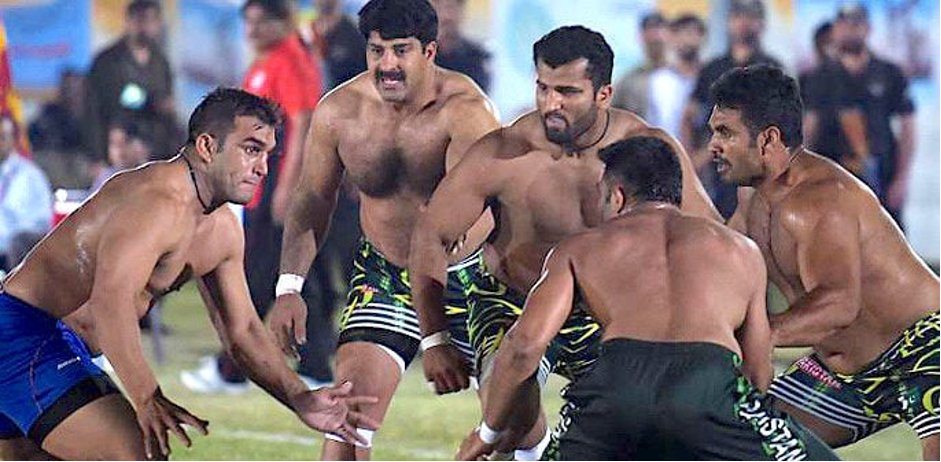
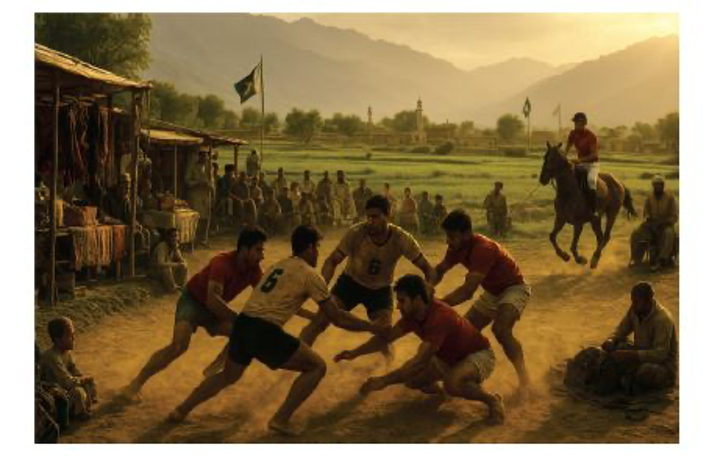
On a dusty field in rural Punjab, a group of young men circle one another, their well-built bodies in anticipation of competition. This is kabaddi, the ancient contact sport that has tested strength and strategy for centuries across the sub-continent. A single raider crosses into enemy territory, chanting “kabaddi, kabaddi, kabaddi” in one continuous breath while his opponents try to tackle him before he can return to safety. Kabaddi is more than a sport for these individuals. It is an expression of their strength, craft, elegance and pride.
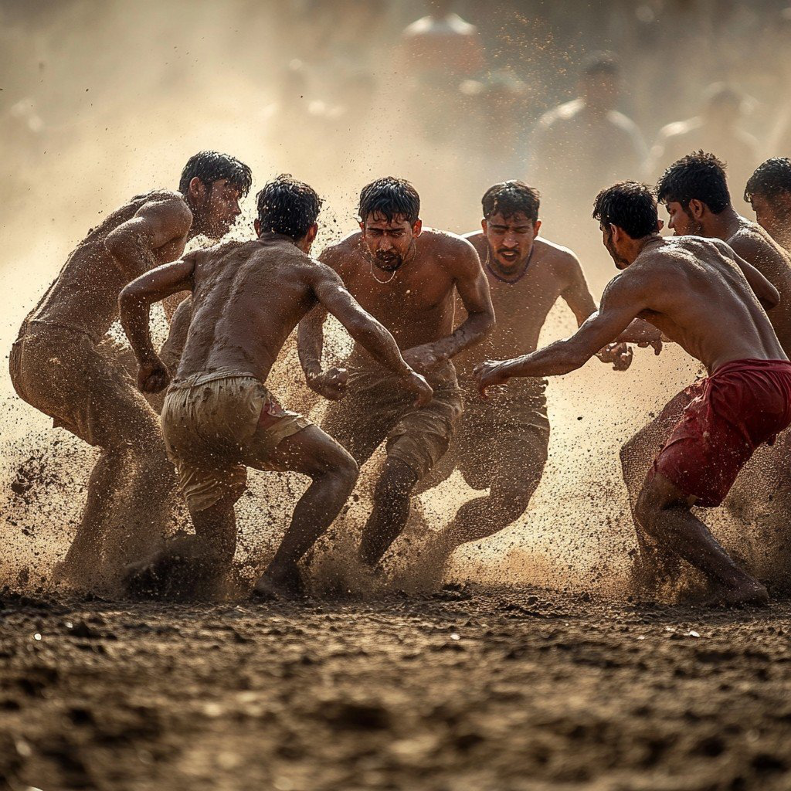
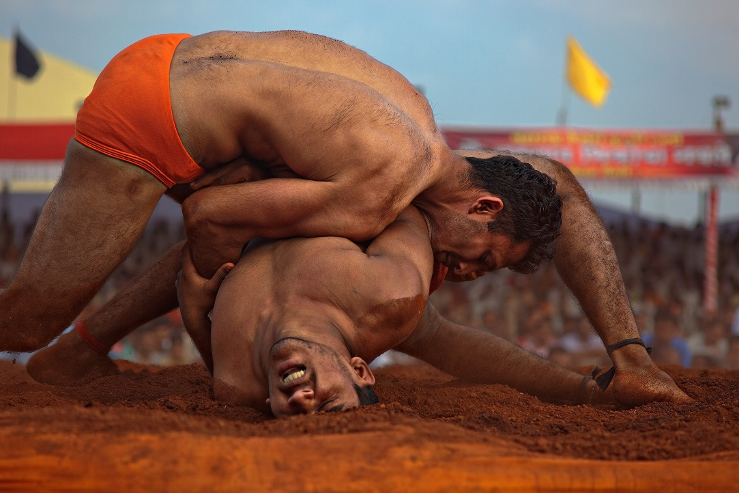
Twenty kilometres away, in the cool shade of a village “akhaara” (a local name for a mud field used for wrestling), two wrestlers, covered in mud and sweat, grapple for dominance, their movements guided by techniques passed down through generations. Then some horsemen thunder in a breath-taking display of tent pegging, their lances striking targets with precision that speaks to centuries of martial tradition. In agrarian settings, you will find farmers who urge their bulls forward in traditional races that blend agricultural heritage with competitive spirit.
These scenes were once woven into the fabric of Pakistani life. But today, they’re becoming rare, and with them goes not just entertainment, but a vital part of our cultural identity.
Kabaddi: The Warrior’s Game
Traditional kabaddi, known as “kauddi” across most parts of Punjab and beyond, is perhaps our most widely recognized indigenous sport. Unlike the modernized international version (known as Asian style kabaddi), traditional kabaddi maintains regional variations that reflect local customs.
In Punjab, the sport is played with intense physicality, with defenders using their full body weight to prevent raiders from escaping. Villages, districts, and cities organize matches and tournaments around the year, with winning teams earning community prestige that lasts generations.
The beauty of kabaddi lies in its accessibility. It requires no equipment, no uniforms, no expensive facilities. Just a marked field and willing participants. This democratic nature made it the sport of the common people, transcending class and economic barriers. Perhaps that is one of the main reasons why it gained both popularity and stood the test of time even in the face of modernism.
Players and especially their ustaads (coaches) consider the act of playing kabaddi a means of spiritual cleansing. It is a common sight to witness them entering the kabaddi field after doing their wudu (partial ablution/ washing performed in Islam to achieve physical and spiritual purification before offering prayers).
Punjabis across the world enjoy, celebrate and preserve kabaddi. So much so that international-level kabaddi events take place in Canada, the USA, and Europe on a regular basis annually.
Pehlwani: The Ancient Art of Wrestling
Pakistani wrestling represents one of the world’s oldest continuous sporting traditions, connecting directly to ancient wrestling cultures of the sub-continent and Persia (mostly present-day Iran). The traditional akhaara functions as far more than a training facility. It is a social institution where young men learn discipline, respect, and perseverance alongside physical techniques.
Traditional wrestlers follow rigorous training regimens beginning before dawn. After morning prayers, they spend hours practicing throws and holds in the mitti (mud pit/ soil) that is specially prepared clay mixed with oil, butter, and turmeric. The preparation of the mitti itself is considered an art, with different akhaaras maintaining secret formulas.
The wrestler’s diet is legendary: pounds of almonds, litres of milk mixed with ghee (organic condensed oil), and special nutritional concoctions fuel their massive frames. These dietary traditions reflect sophisticated nutritional understanding developed centuries before modern sports science.
Traditional wrestling matches during annual melas (festivals) attract thousands of spectators. Victory brings not just prizes but “izzat” (honor) that extends to the wrestler’s entire village. Some wrestling families have produced champions for ten or more generations. Beyond physical contest, pehlwani carries deep spiritual dimensions, with wrestlers viewing their training as a path to self-discipline and moral development.
Regional variations include Balochi wrestling, which emphasizes leg techniques and trips, and Pashtun wrestling in Khyber Pakhtunkhwa, where the sport forms part of the Pashtunwali code. Sindh’s malakhra represents a unique form where competitors tie cloth around opponents’ waists and use only that grip to force them down.
Equestrian Sports: The Heritage of Mounted Warriors
Pakistan’s equestrian traditions spring from our history as a land of horsemen. Several traditional sports preserve this heritage.
Tent Pegging (Neza Bazi): Perhaps the most spectacular equestrian sport, tent pegging evolved from cavalry training. Riders gallop at full speed toward small wooden pegs driven into the ground, attempting to spear them with lances. The sport demands extraordinary horsemanship, hand-eye coordination, and courage. Elite riders can complete these tasks at speeds exceeding fifty kilometres per hour.
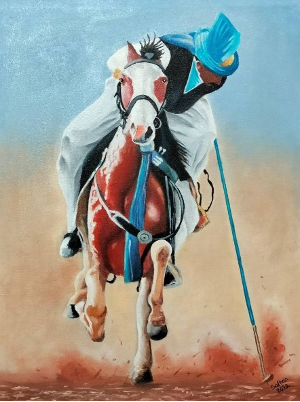
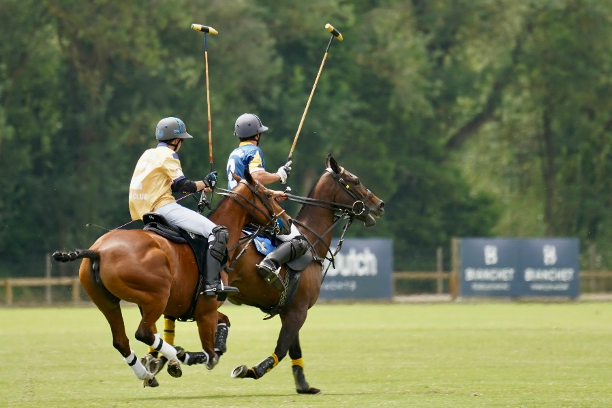
Traditional Polo (Chaugan): While modern polo has become refined and elite, traditional polo originated in this region over two thousand years ago as warrior training. Still played in northern Pakistan, particularly at the Shandur Pass (the world’s highest polo ground at nearly 12,000 feet) and across Gilgit Baltistan, it is a wild, chaotic affair with minimal rules. The annual Shandur Polo Festival draws thousands to watch teams from Chitral and Gilgit-Baltistan clash in matches preserving the ancient spirit of the game.
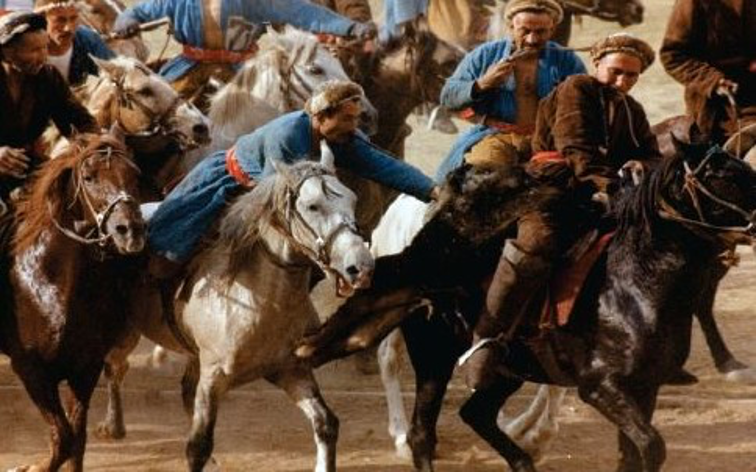
Buzkashi: In northern regions bordering Afghanistan, teams of riders compete to grab a goat carcass and carry it to a scoring area while opponents try to steal it away. The sport requires specially trained horses and demands exceptional horsemanship.
Bull Racing: The Agricultural Heritage
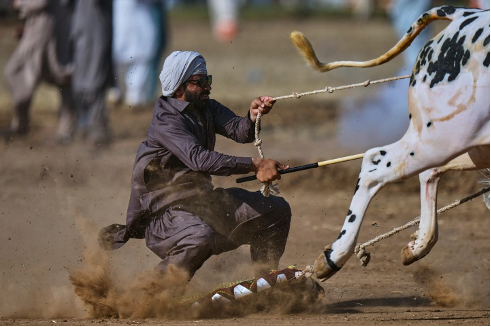
Bull racing represents the deep connection between Pakistani agriculture and sporting tradition. Farmers race pairs of bulls hitched to carts along canal roads or designated tracks, with races often covering considerable distance.
These are not ordinary farm animals. Championship racing bulls are specially bred, trained, and cared for with extraordinary dedication. Owners spend years developing their bulls’ speed and stamina, feeding them specialized diets and conditioning them through careful exercise regimens. The bulls become valued family assets over time.
Bull races typically occur during harvest festivals and agricultural fairs, transforming work animals into athletic competitors. The races celebrate agricultural prosperity while providing entertainment and social bonding for farming communities. Successful bull owners gain tremendous prestige, and their animals’ reputations spread across villages and districts.
The sport faces modern challenges, including animal welfare concerns and urbanization reducing the farming population. However, it remains deeply meaningful, embodying the region’s agricultural identity and providing continuity with ancestral traditions.
Other Traditional Sports
Gilli Danda: Once ubiquitous in Pakistani streets, this involves striking a small wooden stick (gilli) with a longer stick (danda) and hitting it again while airborne. The sport develops hand-eye coordination.
Stone Lifting (Sang-e-Meel): This test of pure strength involves lifting massive standardized stones weighing fifty to over three hundred kilograms. Champions who lift the heaviest stones become legends in their communities.
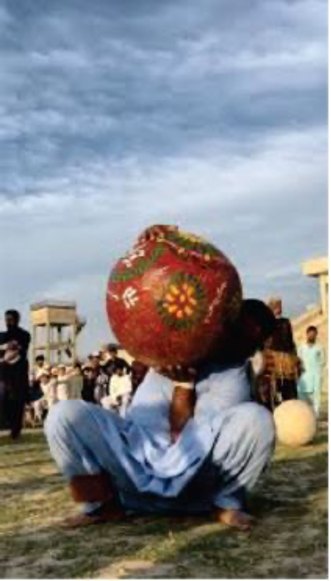
Why Traditional Sports Matter
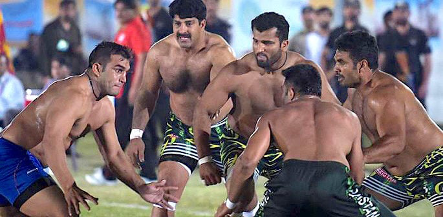
These sports represent far more than physical contests as they are living archives of our history. Traditional kabaddi teaches tactical thinking and teamwork. Pehlwani develops discipline and humility. Equestrian sports demand courage and partnership with animals. Bull racing celebrates agricultural heritage and human-animal bonds.
These traditions emerged organically from Pakistani life. Wrestling developed among agricultural communities where physical strength was essential. Equestrian sports evolved among people for whom horses were instruments of warfare and livelihood. Bull racing grew from farming culture. Each sport carries lessons extending far beyond the field of play.
The accessibility of traditional sports cannot be overstated. While modern sports require expensive equipment and specialized facilities, traditional sports grew from what was available. A kabaddi field needs only flat ground. An akhaara can be established anywhere with space for a mitti pit. This accessibility made traditional sports truly democratic — the son of a laborer could wrestle alongside the son of a landlord, with victory determined purely by skill.
Traditional sports also strengthened community bonds in ways modern athletics rarely replicate. Wrestling tournaments brought entire villages together. Kabaddi matches during festivals celebrated communal achievement. Bull races unite farming communities. The intergenerational transmission of sporting knowledge created continuity and preserved expertise that might otherwise be lost.
When we allow these traditions to fade, we lose more than games. We lose cultural knowledge embedded in each sport’s techniques and rituals. We lose community institutions like akhaaras that served multiple social functions. We lose accessible pathways to athletic achievement. We lose tangible connections to ancestors who developed these activities over centuries. And above all, knowingly or unknowingly, we move towards a society where co-existence, tolerance, celebration of cultural diversity and respect for elders diminish by the day.
The Current Crisis
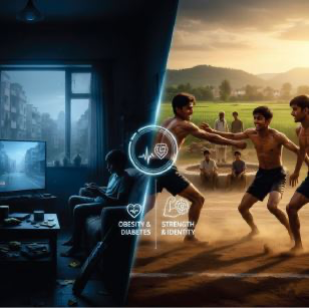
The declining prominence of traditional sports coincides with troubling trends. Pakistan faces rising rates of obesity, diabetes, and cardiovascular disease, particularly in urban areas. Children spend increasing hours on screens, developing neither physical fitness nor social skills.
Our national obsession with cricket, while understandable, creates a dangerously narrow definition of athletic achievement. Children who don’t excel at cricket often conclude they’re “not sporty” and abandon physical activity altogether. On the other hand, traditional sports offer dozens of alternative pathways. A child who struggles with bat and ball might possess the strategic mind for kabaddi, the determination for wrestling, or the courage for equestrian sports.
The commercialization of modern sports has created additional barriers. Cricket equipment, gym memberships, and organized leagues require resources many families cannot afford. Traditional sports, by contrast, remain largely accessible regardless of economic status. Village kabaddi tournaments charge no entry fees. Akhaaras traditionally accept students regardless of ability to pay.
There is also an identity dimension. As Pakistani children grow up consuming globalized media, many develop weaker connections to their heritage. They can name international cricket stars but not legendary Pakistani wrestlers. They know football rules but not kabaddi. This cultural disconnection has consequences. When people lack strong connections to heritage, they lose anchors of identity and meaning.
The Path Forward
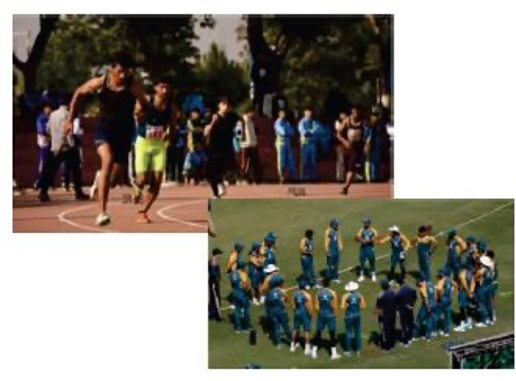
Reviving Pakistan’s traditional sports requires coordinated effort across multiple sectors.
Government Action: Traditional sports must be incorporated into national curricula. Schools should teach at least one traditional sport, exposing millions of children to their heritage. Traditional sports champions deserve recognition equivalent to cricket stars through national awards, media attention, and financial rewards.
Media Responsibility: Through superior media coverage, traditional sports can be mainstreamed over time.
Corporate Engagement: Traditional sports offer virgin territory for brand building, allowing companies to connect with underserved audiences and demonstrate cultural commitment. Sponsorship and Corporate Social Responsibility (CSR) investments, if diverted towards supporting traditional sports, can generate meaningful connections of organizations with the people of the country around sports that matter immensely to these communities.
Educational Institutions: Schools should organize traditional sports festivals that make participation fun and accessible. Physical education teachers need training in traditional sports. Universities should establish traditional sports clubs with resources matching cricket or football teams, creating pathways for talented athletes to continue development while pursuing education.
Community Organizations: Grassroots revival depends on local communities embracing their sporting heritage. Youth organizations can organize traditional sports activities while reviving local traditions, designating spaces for occasional tournaments. Philanthropic organizations should direct charitable contributions towards traditional sports infrastructure and athlete support.
Individual Action: Parents can introduce children to traditional sports through organized programs or informal play. Existing athletes must become ambassadors through media appearances and school visits. Coaches should adapt teaching methods for contemporary contexts while maintaining traditional essence. Ordinary Pakistanis can support traditional sports by attending events and demanding media coverage.
Economic Opportunities
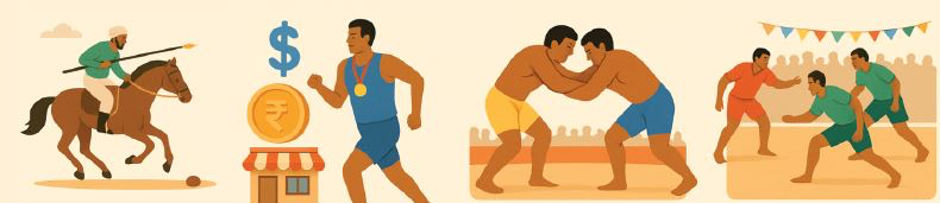
Beyond cultural value, traditional sports offer concrete economic benefits. Properly promoted events can attract domestic and international tourists seeking authentic cultural experiences. Wrestling championships in historic akhaaras, kabaddi tournaments during festivals, national tent pegging competitions, each could generate considerable revenue.
Media rights and broadcasting create another revenue stream. Traditional sports also sustain craftspeople and small businesses, like wrestlers require specific dietary products, equestrian sports support horse breeders, bull racing maintains livestock breeding traditions.
Success in traditional sports can provide alternative routes to economic mobility for talented athletes from disadvantaged backgrounds. Currently, cricket offers one of few pathways from poverty to prosperity through athletic achievement. Expanding professional opportunities in traditional sports would create additional pathways for young Pakistanis.
International Examples
Mongolia has successfully maintained strong traditions around wrestling, horse racing, and archery through the annual Naadam Festival while embracing modernization. South Korea transformed taekwondo from traditional martial art into Olympic sport while preserving its cultural essence. Japan maintains robust sumo wrestling alongside modern athletics. India’s Pro Kabaddi League successfully popularized kabaddi through professional presentation and media coverage. Pakistan achieved success through successful conduct of Super Kabaddi League. Naturally, there is far more to be done and achieved.
Choices to Make!
The question facing Pakistan is whether we can maintain cultural diversity in our athletic pursuits—creating space for both international and indigenous games, honoring our past while embracing the present.
Pakistan’s traditional sports are not museum pieces but living practices that can continue enriching our communities if we choose to value and sustain them. The young men grappling in village akhaaras, the riders thundering across the fields, the kabaddi champions diving into enemy territory, the farmers racing their prized bulls all carry forward traditions spanning centuries, connecting us to ancestors while creating traditions for descendants.
In preserving and promoting traditional sports, we are not simply maintaining athletic activities. We are sustaining cultural knowledge, strengthening community bonds, providing accessible pathways to physical fitness, creating economic opportunities, and affirming that our heritage has value worth protecting.
Whether our traditional sports survive this era of globalization and commercialization is not predetermined; it is a choice we must make consciously and soon. The time is now, and the stakes are nothing less than the survival of irreplaceable cultural treasures that have defined Pakistani identity for generations.
Traditional sports represent not just physical activity but cultural continuity. Their promotion is an investment in Pakistan’s identity, health, and social cohesion, a recognition that some games are too valuable to lose.
Leave a Reply